


Hot Keyword:
Author:KUNYUAN Machine ManufacturerTIME:2026-08-27
Practical machine answer
An industrial circular knitting machine is a production system that makes knitted fabric continuously around a cylindrical needle bed. The useful definition is not its round frame but the combination of knitting elements, yarn delivery, take-down and controls configured for a particular fabric family.
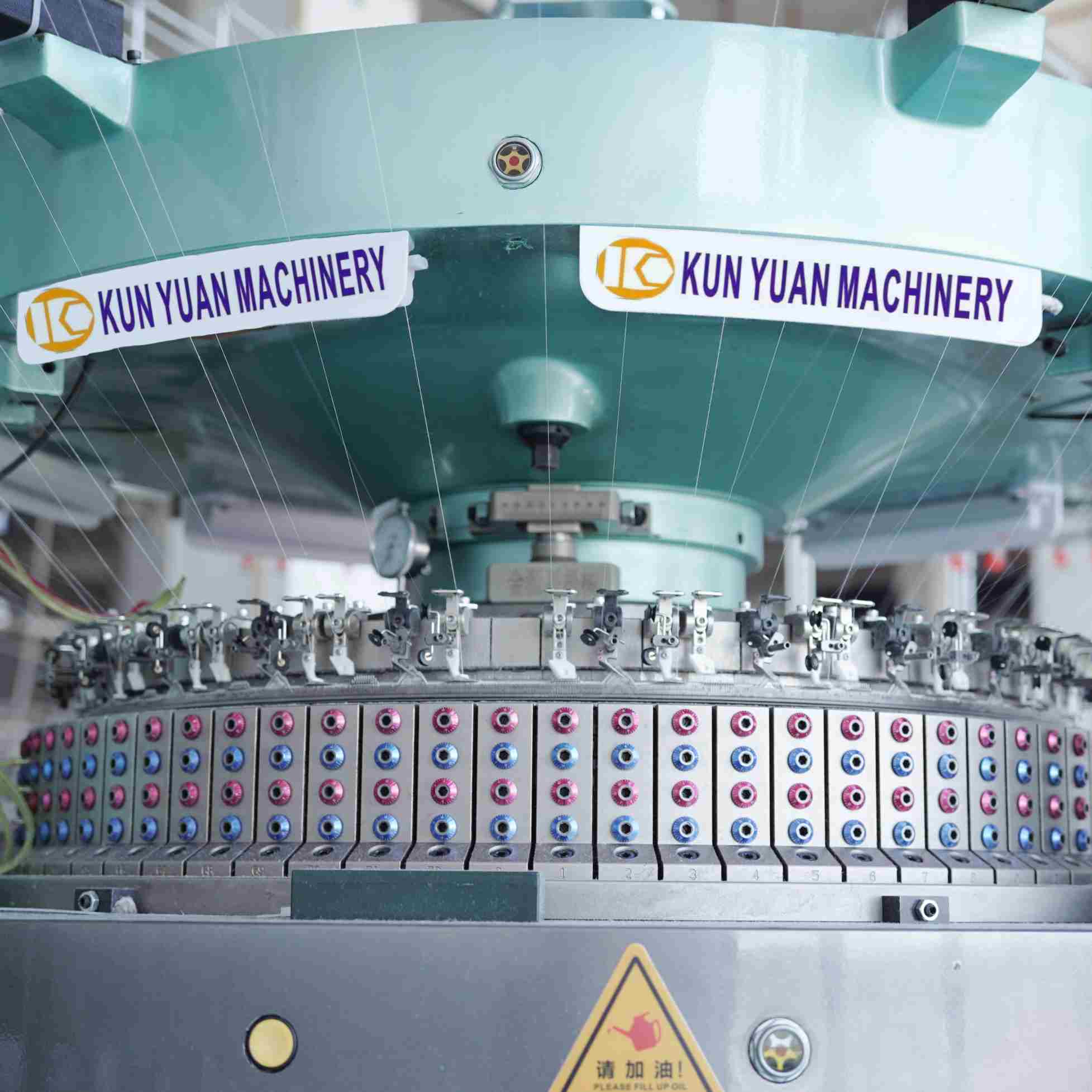
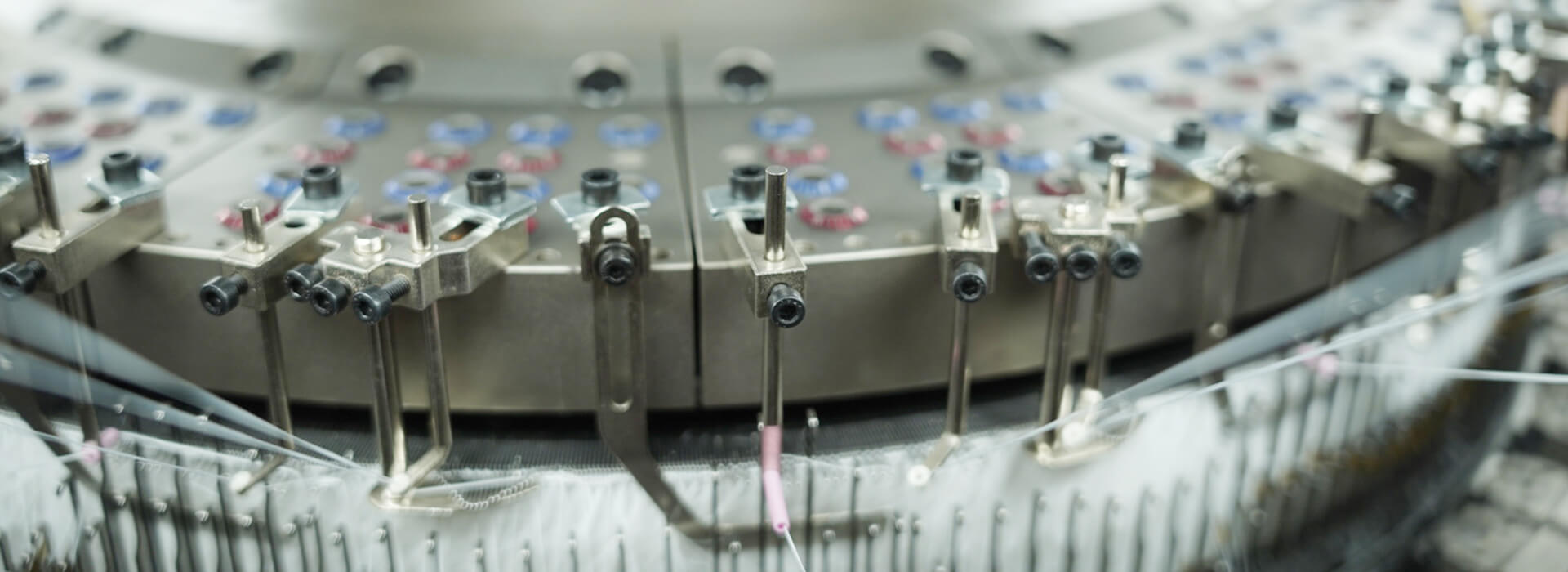
During each revolution, needles follow cam paths, receive yarn at multiple feeders and draw new loops through the previous course. Positive feeders regulate delivery, the take-down holds loop formation under repeatable tension, and lubrication protects the fast-moving needle and cam surfaces. Changing any one of these relationships can alter stitch length, weight and appearance.
A single-jersey frame, a rib or interlock machine and an electronic jacquard model may share a diameter, yet their cylinders, dials, cam systems and selection mechanisms are not interchangeable promises. Buyers should start with a fabric sample and construction data. The commercial label comes after the loop structure is understood, not before.
A useful quotation names the machine type, diameter, gauge, feeder count, needle system, take-down form, controls, voltage and supplied accessories. It should also state the yarn and settings used for the reference fabric trial. Output alone is not a specification because speed that is stable for plain cotton jersey may not be stable for a delicate plated or patterned construction.
| Item | Why it matters |
|---|---|
| Fabric construction | Determines the needle-bed and cam arrangement |
| Diameter and gauge | Set the knitting circumference and needle spacing |
| Yarn and target weight | Shape feeder, loop-length and take-down choices |
| Acceptance sample | Connects the written configuration to an observable result |
Practical limit: If a supplier recommends a model before asking for the fabric structure, yarn and finished form, the proposal is still incomplete.

 Tel: +86-13859034518
 Email: info@kunyuanmachine.com
 MP/WhatsApp: +86-13859034518
 Manufacturer Address:Bacuo Village, Yonghe Town, Jinjiang City, Fujian Province