


Hot Keyword:
Author:KUNYUAN Machine ManufacturerTIME:2026-08-27
Practical machine answer
Circular knitting machines are classified most usefully by the fabric structure they form: single jersey, rib, interlock or other double jersey, fleece, terry, jacquard and pile constructions. The name describes a knitting capability, not just the appearance of the frame.
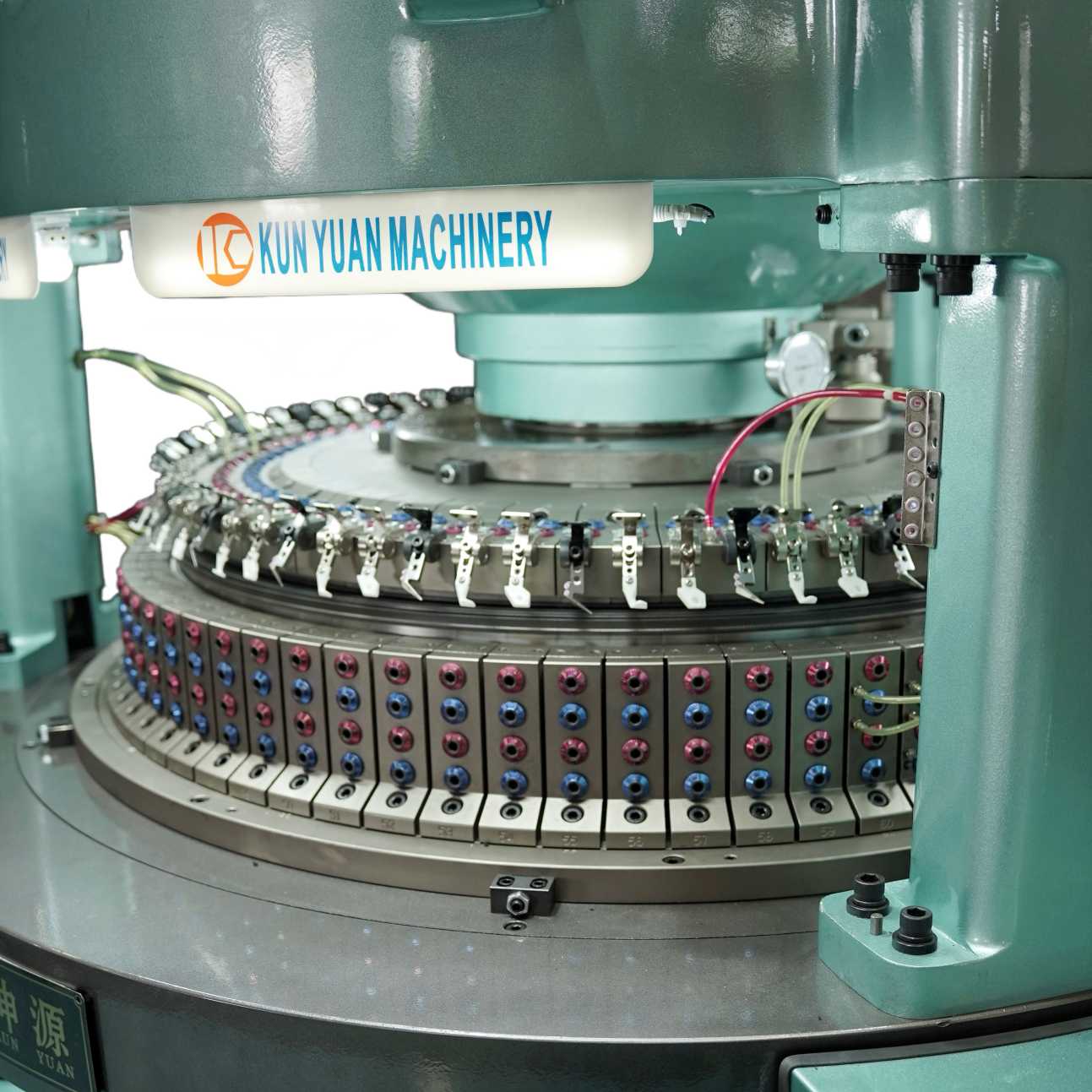
Single-jersey machines use one main needle bed for lightweight plain, plated and selected derivative fabrics. Rib and interlock machines combine cylinder and dial needles to form two-sided structures with more body, cover or recovery. Three-thread fleece introduces ground, tie and fleece yarn roles, while terry and pile systems manage loops intended to remain or be cut.
Jacquard is a selection method rather than one universal fabric. Mechanical or electronic selection decides which needles knit, tuck or miss, but the base machine still needs the correct single- or double-knit architecture. A colored pattern, raised pile and brushed fleece may look decorative for entirely different mechanical reasons, so a photograph alone is poor selection evidence.
The safest purchase is usually the platform that makes the planned fabric directly and repeatedly. An overly broad conversion claim can add change parts, setup time and quality risk. List the fabrics expected in the first year, identify which share a knitting architecture, and ask the supplier to mark any item that needs a different cylinder, dial, cam set or take-down.
| Machine family | Typical decision clue |
|---|---|
| Single jersey | One-bed structures and lighter fabric |
| Rib/interlock | Two-bed structure, recovery or double-knit cover |
| Fleece/terry | A defined back yarn or loop surface |
| Jacquard | Individual or grouped needle selection for patterning |
Practical limit: Send one physical sample for each genuinely different construction; several colorways of the same construction do not require several machine families.

 Tel: +86-13859034518
 Email: info@kunyuanmachine.com
 MP/WhatsApp: +86-13859034518
 Manufacturer Address:Bacuo Village, Yonghe Town, Jinjiang City, Fujian Province