


Hot Keyword:
Author:KUNYUAN Machine ManufacturerTIME:2026-08-27
Practical machine answer
The main advantage of circular knitting is efficient, continuous fabric formation with many yarn feeds working around one needle bed. It can provide high output per floor area and consistent repeat production, but only when the machine family, yarn preparation and fabric plan are well matched.
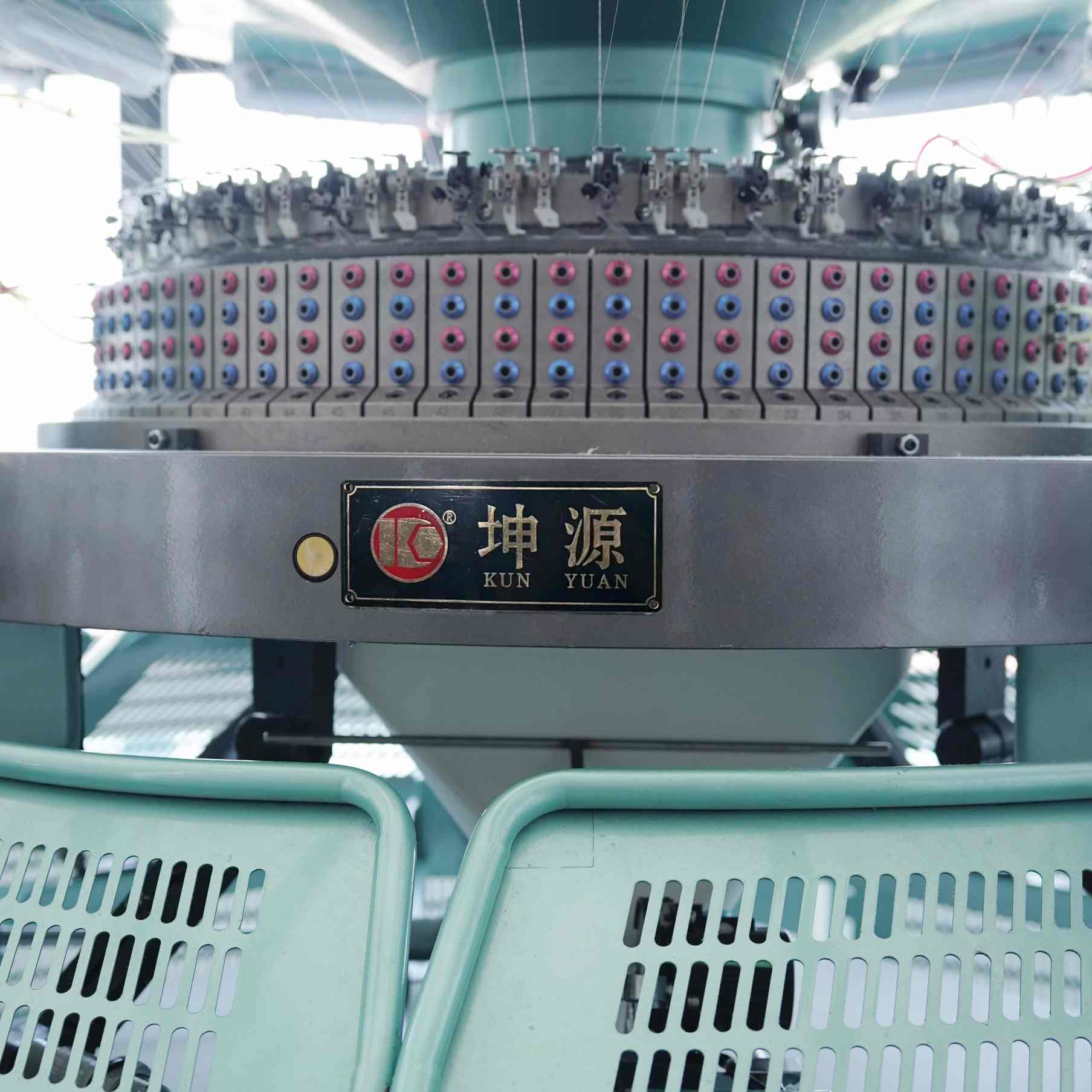
Multiple feeders form many courses during one cylinder revolution, so a stable plain construction can be produced continuously with few interruptions. Tubular fabric also leaves the machine without side seams, while open-width take-down can be selected where crease control or downstream processing favors it. Fast style changes are possible when recipes, yarn paths and change parts are organized.
Speed is not an independent benefit. Fine yarn, elastane plating, fragile filaments, long floats or pile surfaces may require a lower stable operating point. A specialized fleece, terry or jacquard machine can add product value, but it also introduces skills, spare parts and cleaning demands that a mill should price into the decision.
Compare saleable kilograms, not theoretical revolutions. Record first-quality yield, stops per shift, changeover hours, energy, needle consumption and finishing loss for the target fabric. A slightly slower setting that holds weight and shade consistently may deliver more accepted fabric than an impressive short trial with frequent defects.
| Claim | Useful plant measure |
|---|---|
| High output | Accepted kilograms per staffed hour |
| Consistency | Weight and loop-length variation by roll |
| Flexibility | Changeover time between approved styles |
| Efficiency | Stops, waste and energy per accepted kilogram |
Practical limit: Ask for a trial using the planned construction and yarn; results from a simple demonstration fabric should not be transferred to a harder style without qualification.

 Tel: +86-13859034518
 Email: info@kunyuanmachine.com
 MP/WhatsApp: +86-13859034518
 Manufacturer Address:Bacuo Village, Yonghe Town, Jinjiang City, Fujian Province