


Hot Keyword:

Author:KUNYUAN Machine ManufacturerTIME:2026-08-27
Practical machine answer
Circular knitting machines can process many spun and filament yarns, including cotton, polyester, viscose, nylon, blends and elastane combinations. A yarn is suitable only when its count, package, friction, strength and preparation fit the gauge, feeder arrangement and intended loop structure.
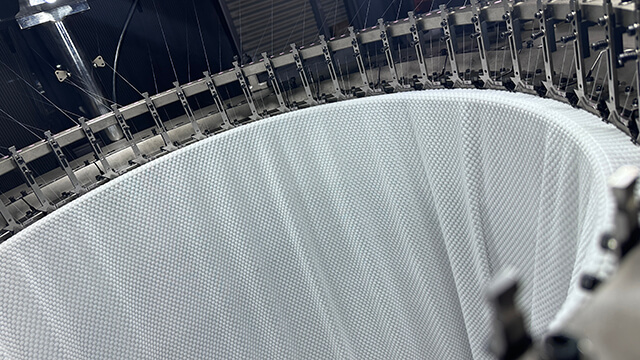
Nominal fiber content does not predict running behavior. Uneven packages, weak splices, excess hairiness or inconsistent wax can create stops and vertical variation even when yarn count is correct. Fine gauges leave less clearance for large knots and fly, while coarse or bulky yarn may overload a feeder or produce a loop that cannot clear reliably.
For plated fabric, the ground yarn and elastane must arrive at the needle in the intended relationship. Draft, tension, guide position and take-down all influence cover and recovery. Replacing one elastane specification without rebuilding the recipe can change fabric width, weight and shrinkage even if the machine speed remains unchanged.
Use production packages from the intended supplier, condition them as the mill normally would, and record lot numbers. Knit enough fabric to inspect more than the start-up meters, then compare stops, tension behavior, defects and finished measurements. Retain the approved sample and settings so a later yarn lot can be assessed against the same reference.
| Yarn property | What to confirm |
|---|---|
| Count and variation | Matches gauge, loop size and weight target |
| Package quality | Unwinds without tension peaks or collapsing edges |
| Friction and finish | Runs through guides without excess heat or deposits |
| Strength and joins | Survives the yarn path without recurring breaks |
Practical limit: A supplier statement that a machine 'runs cotton or polyester' is only a starting point; provide the actual count, construction and package format for a meaningful check.

 Tel: +86-13859034518
 Email: info@kunyuanmachine.com
 MP/WhatsApp: +86-13859034518
 Manufacturer Address:Bacuo Village, Yonghe Town, Jinjiang City, Fujian Province