


Hot Keyword:
Author:KUNYUAN Machine ManufacturerTIME:2026-08-27
Practical machine answer
Circular knitting machines are well suited to large-scale production when the mill repeats defined fabric families and controls yarn, settings, maintenance and roll inspection. Scaling should be based on sustained first-quality output, not the maximum speed printed for an unloaded or easier construction.
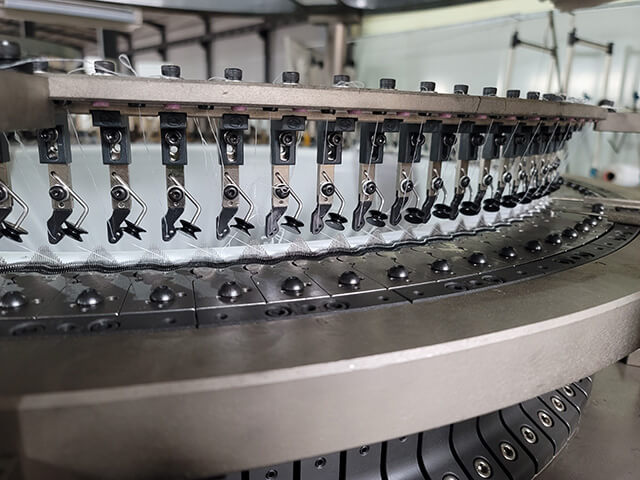
A high-volume plain jersey program can exploit many feeders and long repeat runs. Frequent switches among rib, fleece and jacquard structures change the calculation because each may need a different platform, skill set and setup window. Forecast by style hours and accepted kilograms, including cleaning, yarn change and fabric approval rather than assuming every scheduled hour is a knitting hour.
Machines in one production group should use controlled recipes, compatible spare parts and the same inspection language. Yarn storage, package staging, oil management and preventive maintenance affect utilization as much as nominal rpm. A bottleneck in rolling, fabric inspection or finishing can erase the advantage of adding another knitting machine.
For a critical program, decide which components and skills must be available on site. Keep wear parts according to installed configurations and use condition records to replace them before a quality failure. If one specialized jacquard or pile machine carries the whole order, the value of backup files, trained cover and supplier response is higher than for a fleet of interchangeable plain machines.
| Planning input | Use in the capacity model |
|---|---|
| Style mix | Assigns suitable machine hours by construction |
| Stable production rate | Uses accepted output after normal stops |
| Changeover allowance | Includes threading, cleaning and sample approval |
| First-quality yield | Converts knitted kilograms into saleable capacity |
Practical limit: Before expanding a fleet, verify whether knitting, inspection or finishing is the true constraint; more cylinders do not solve a downstream bottleneck.

 Tel: +86-13859034518
 Email: info@kunyuanmachine.com
 MP/WhatsApp: +86-13859034518
 Manufacturer Address:Bacuo Village, Yonghe Town, Jinjiang City, Fujian Province