


Hot Keyword:
Author:KUNYUAN Machine ManufacturerTIME:2026-08-27
Practical machine answer
Diameter describes the needle-bed size, while gauge describes the number of needles per inch around that bed. Together they influence nominal needle count, tubular width potential, stitch scale and compatible yarn range, but finishing and fabric structure still determine the final measurements.
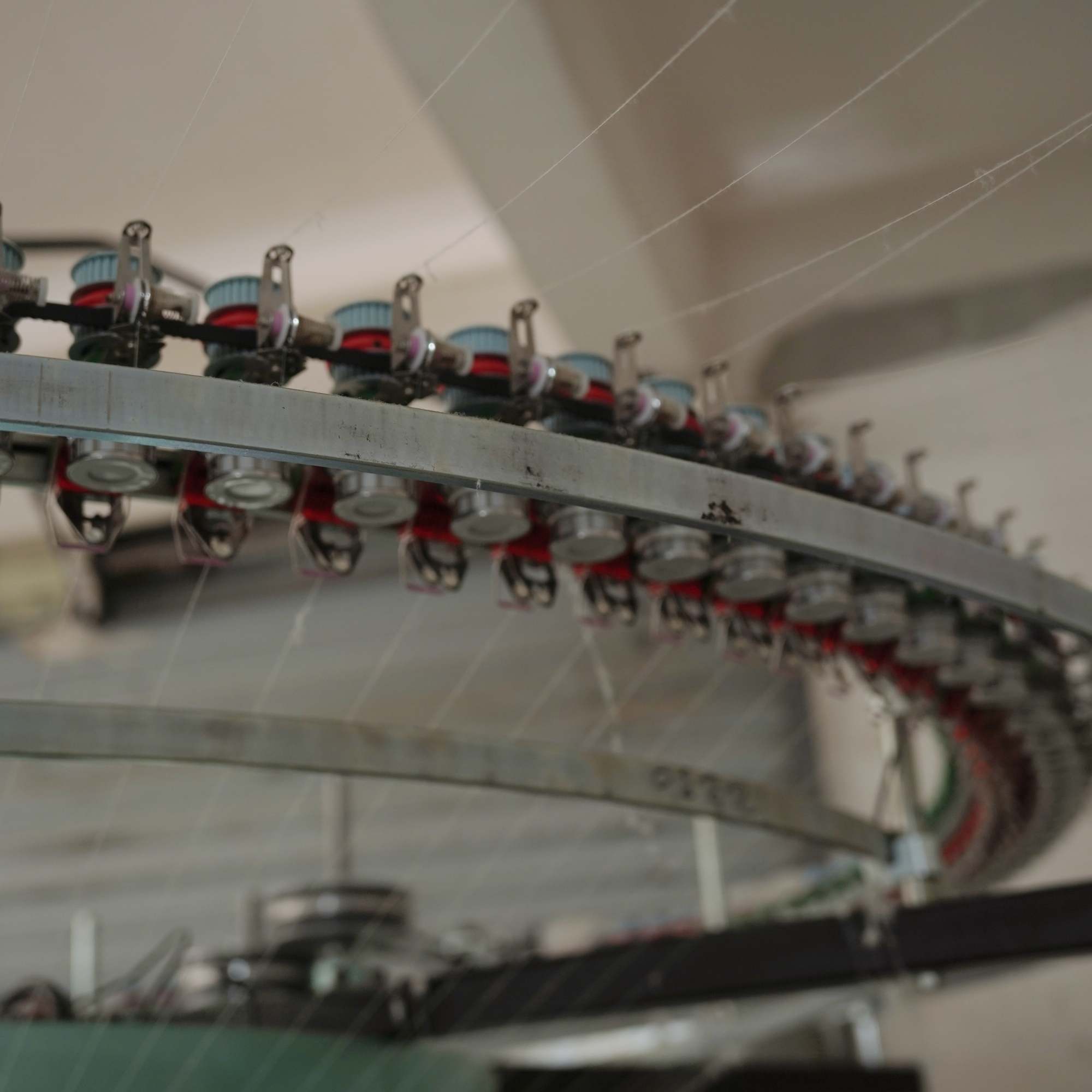
A larger cylinder has a longer knitting circumference and usually more needles at the same gauge. Yet a relaxed rib, a dense interlock and a plain jersey knitted on comparable equipment do not leave finishing at the same width. Loop length, yarn, elastane, take-down and shrinkage must be included before a buyer converts machine diameter directly into saleable width.
Higher gauge means closer needle spacing and generally favors finer yarn and smaller stitches. It also reduces clearance for thick yarn, knots and fly. A coarse gauge can accommodate larger loops or bulkier yarn but does not automatically create a heavy fabric. Weight is a construction result shaped by stitch density, yarn linear density and finishing.
For selection, ask for the actual needle count and knitting-element specification, not diameter and gauge alone. Provide greige and finished width, weight, structure, yarn count and expected shrinkage. A trial with the intended yarn can then confirm whether the proposed loop length and take-down produce the target without over-tight knitting or unstable cover.
| Input | What it influences |
|---|---|
| Cylinder diameter | Knitting circumference and needle count potential |
| Machine gauge | Needle spacing and practical yarn/stitch scale |
| Fabric structure | Width, thickness, recovery and needle utilization |
| Finishing route | Relaxation, shrinkage and final usable width |
Practical limit: Two quotations showing the same diameter and gauge can still differ in actual needle count, dial arrangement, feeders and useful fabric range.

 Tel: +86-13859034518
 Email: info@kunyuanmachine.com
 MP/WhatsApp: +86-13859034518
 Manufacturer Address:Bacuo Village, Yonghe Town, Jinjiang City, Fujian Province