


Hot Keyword:
Author:KUNYUAN Machine ManufacturerTIME:2026-08-27
Lightweight single jersey uses a familiar construction, but lower cover and finer yarn can make yarn variation, needle condition, feeder imbalance, oil marks and handling damage more visible. A machine solution should protect saleable roll consistency rather than demonstrate only a high speed or attractive central swatch.
Define the end use, yarn, greige and finished weight, width, face appearance, opacity or cover requirement where relevant, spirality, shrinkage and finishing route. Extremely light or delicate articles may require separate material handling and feasibility work.
Record supplier, composition, count, twist direction, lot and package positions. Compare incoming yarn quality before treating every horizontal shade or weight band as a machine fault. If elastane or plating is planned, identify its feeder duty and inspection limits separately.
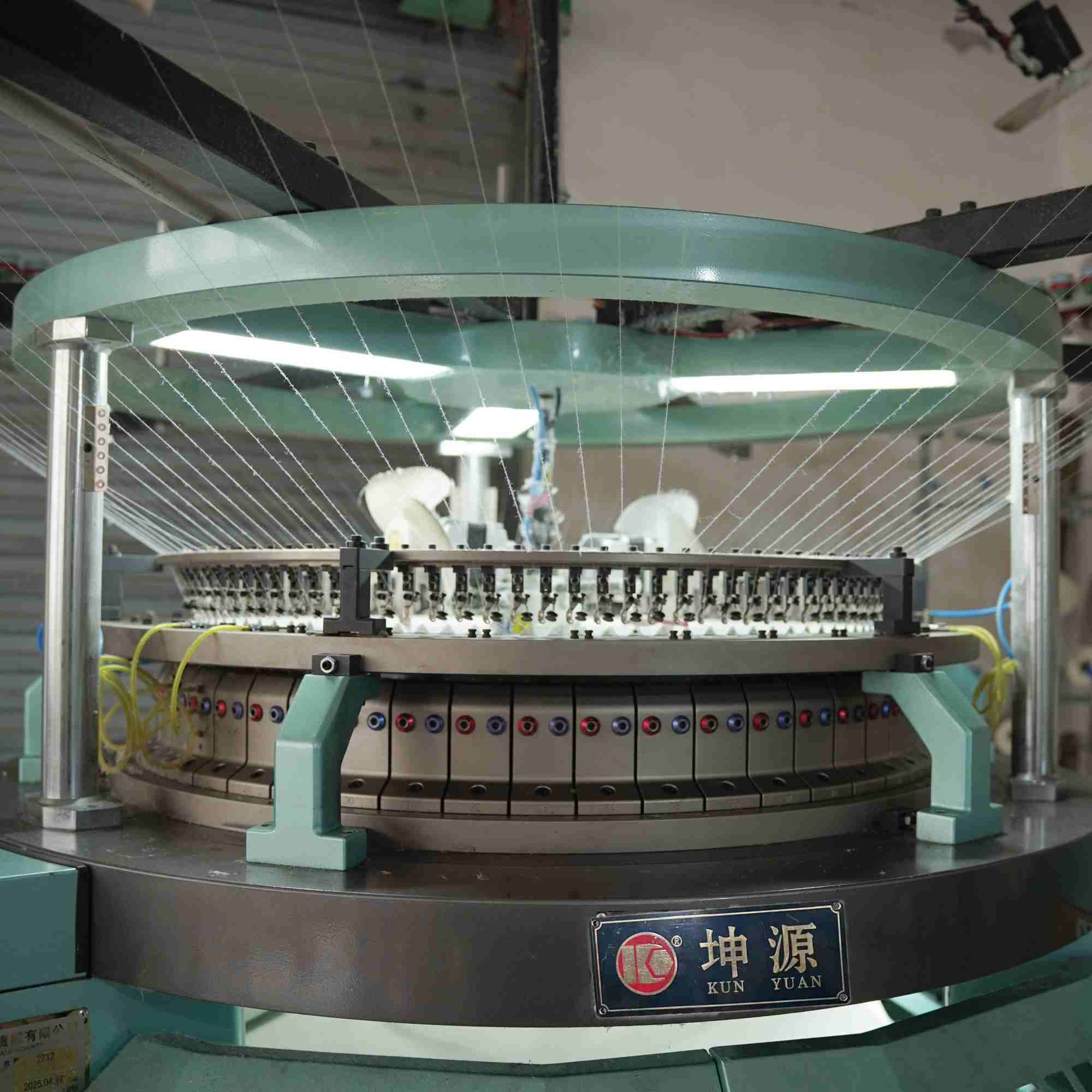
Map feeder positions and machine zones. A stable baseline setting is useful only when it remains tied to the proposed diameter, gauge, feeder arrangement, take-down and production yarn.
| Lightweight-fabric risk | Investigation | Release evidence |
|---|---|---|
| Barre or shade band | Yarn lot/package, feeder tension and stop history | Roll map plus cone and feeder identities |
| Needle line | Fixed machine position, needle/sinker condition and knitting zone | Before/after marked fabric at the same position |
| Hole or handling damage | Yarn fault, knitting event, take-down and roll handling | Event record and defect location |
| Weight/width drift | Stitch setting, take-down, environment and roll position | Beginning/middle/end measurements after relaxation |
Inspect at start-up and at agreed intervals, including after stops and package changes. Mark every sample and intervention on the roll map. Use consistent lighting to check the face for barre, lines, holes and oil marks. Include transition material rather than choosing only clean sections.
Condition samples before final width and weight approval. Apply the planned finish and measure shrinkage, spirality or skew using one agreed method. Keep the greige parent of each finished specimen so a dimensional or surface change can be traced.
Reducing stitch length or changing take-down to reach a number can affect loop formation, handle and defects. Approve the whole target—weight, width, appearance and finished behavior—rather than one metric. Any output claim should state the yarn, accepted fabric standard, roll format, stops and rejected material.
For a style range, lock one baseline recipe and create controlled variants. A heavier or plated article may be routine; an unusually fine yarn or different construction may require another trial or option. The offer should label those boundaries.
Use production-representative yarn from a documented lot. An easier demonstration yarn cannot approve barre, breakage or surface quality for the intended material.
At minimum compare beginning, middle and end, with extra samples around stops or adjustments. State relaxation, sample size, instrument and tolerance.
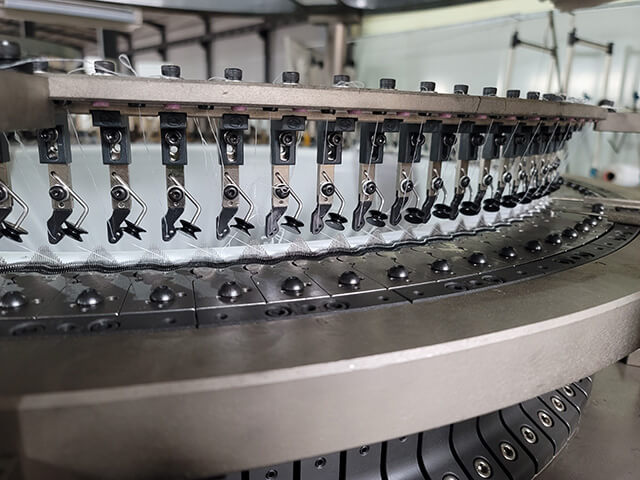
Mark the fabric and corresponding machine position, inspect needles, sinkers and local knitting elements, then retain fabric before and after component work.
If the target needs double-knit stability, rib recovery, fleece loops, pile or body-size shaping, compare the machine family designed for that structure instead of relying on single jersey alone.
Kunyuan can review the buyer’s yarn, lightweight target and finished tests and propose a configuration and roll-sampling plan that proves stable saleable fabric rather than a short maximum-speed run.
Review the single-jersey machine
 Tel: +86-13859034518
 Email: info@kunyuanmachine.com
 MP/WhatsApp: +86-13859034518
 Manufacturer Address:Bacuo Village, Yonghe Town, Jinjiang City, Fujian Province