

Hot Keyword:

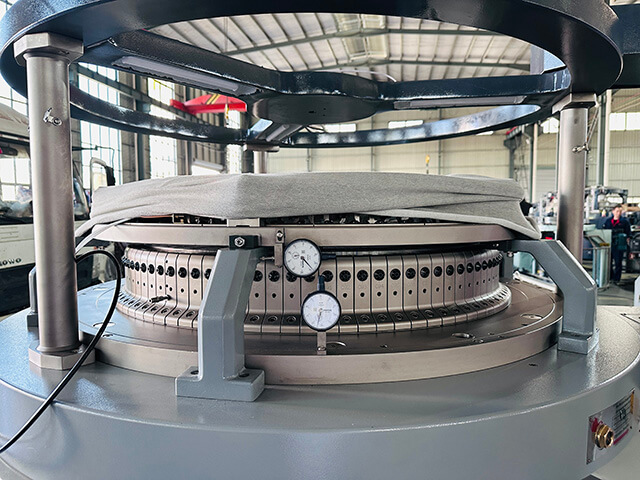
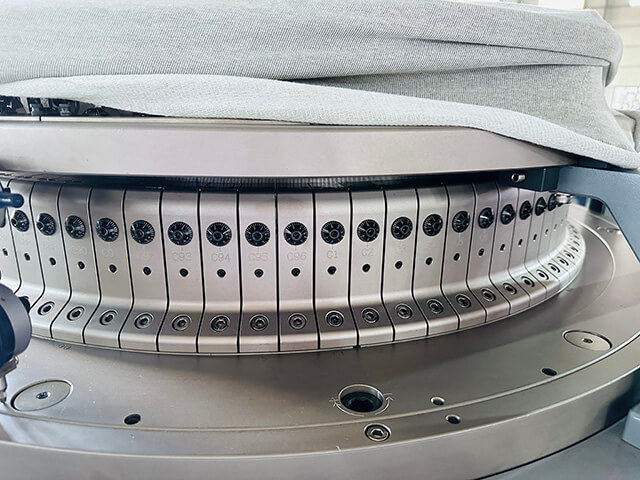
The archive links a Three-Thread Fleece Circular Knitting Machine with Morocco and mentions fashion, sportswear and home-textile applications. It also includes related machine images. Previous language described a successful deployment and customer benefits without a verifiable configuration or signed outcome. This revised case keeps the recorded application themes but treats each as a separate product brief requiring proof.
A sweatshirt fabric, performance-oriented fleece and home-textile surface may use three yarn duties while differing in weight, stretch, face appearance, inner loop, raising and dimensional requirements. The machine discussion should therefore start with a portfolio matrix rather than a promise that one recipe will cover every sector.

For each article, label face, tie and fleece yarn composition, count, supplier and lot. State the greige and finished weight, width, intended use and treatment. If elastane, plating or another special input is planned, document its function separately. This reveals which styles share a practical configuration and which need another feeder plan, setting range or trial.
The face yarn determines the external presentation; the tie yarn secures the structure; the fleece yarn creates the loop surface for finishing. A material change in one duty can alter coverage, anchoring, lint, handle or weight even when the other two remain unchanged.
| Portfolio brief | Priority checks | Separate proof needed |
|---|---|---|
| Fashion fleece | Face appearance, weight, colour, drape and inner-surface character | Approved finished garment-fabric sample |
| Sportswear fleece | Stretch/recovery if specified, weight stability, face quality and intended moisture/handle tests | Buyer-defined performance and dimensional report |
| Home-textile fleece | Width, surface coverage, handle and finishing consistency | Roll-position samples after the planned treatment |
| Baseline recipe | Three-yarn map, knitting settings and accepted greige structure | Locked greige standard used to diagnose every variant |
The buyer should specify which tests matter for each end use. A soft hand does not prove recovery, and a uniform raised surface does not prove a dimensional requirement. Keep general visual inspection separate from buyer-defined performance testing. The archive contains no laboratory evidence, so no technical property is assumed from the country or application label.
During knitting, inspect face coverage, tie security, fleece loops, weight and repeating bands. After finishing, compare the relevant surface, loose fibre, dimensions and handle. Preserve matched greige and finished pieces so a defect introduced by raising or washing is not blamed automatically on the knitting machine.
Approve one high-priority article as the baseline with production-representative yarn. For each other brief, list the yarn, feeder, setting, part and finishing changes. After a variant trial, return to the baseline and produce a verification sample. This tests the usefulness of the recipe and reduces drift across a mixed product schedule.
The exact diameter, gauge, feeders and output are not established by this case archive. They must appear in the offer with the supported style matrix, required options, spares and training. Capacity estimates should use the expected application mix, change frequency and saleable yield after finishing.
No. Fashion, sportswear and home-textile briefs can differ in yarn, weight, stretch, width, surface and testing. Use a separate specification and evidence set for every intended article.
Keep a labelled greige specimen with clear face, tie and fleece loop evidence, plus its finished pair. It should belong to the locked yarn map and settings used for machine acceptance.
Process a controlled section from known greige fabric, record equipment and conditions, and compare surface, dimensions and weight with its untreated parent. Do not revise knitting settings until the finishing effect is understood.
No. The archive supplies no laboratory or customer report. Any stretch, recovery, moisture, durability or other performance claim requires buyer-defined testing on the actual finished article.
The Morocco record gives three useful fleece directions without proving that they share one setup. Kunyuan can review the buyer’s portfolio, identify a baseline configuration and define separate yarn, finishing and acceptance gates for every priority application.

 Tel: +86-13859034518
 Email: info@kunyuanmachine.com
 MP/WhatsApp: +86-13859034518
 Manufacturer Address:Bacuo Village, Yonghe Town, Jinjiang City, Fujian Province