

Hot Keyword:
Author:KUNYUAN Machine Manufacturer TIME:2026-08-28
A motor turns the machine, but rotation alone does not knit fabric. Yarn must arrive at a controlled condition, needles must follow their tracks, old loops must clear and new loops must be drawn while take-down removes fabric without distorting the next course.
Start at one yarn package and one feed. Following that path is clearer than listing every component at once. The exact arrangement differs between single-jersey, double-jersey, rib, interlock and electronically selected machines, so the diagram should be read as a functional sequence rather than a universal parts drawing.
The machine manual defines safe observation and adjustment. Never remove guarding or reach into the knitting zone to understand the cycle. Use approved slow-motion, hand-turning or service procedures only when authorized for the exact model.
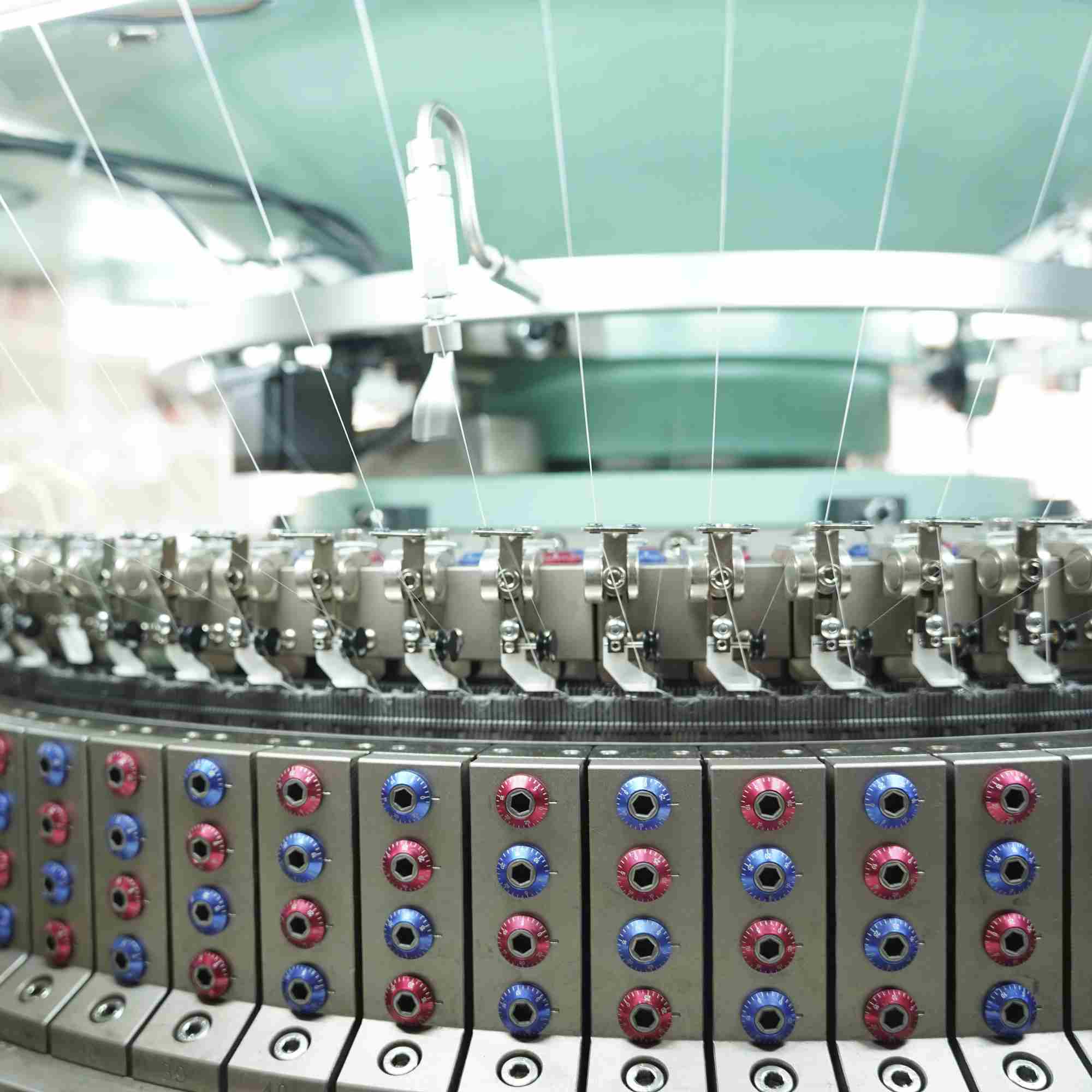
The path begins at the package, then passes balloon control, guides, storage or positive-feed equipment and tension elements before the final guide. Each contact can add friction or a sudden change. Record the package lot, path and device setting used for an accepted run.
A feeder does not correct every upstream defect. Poor winding, snagging layers or a worn guide can create an intermittent line even when the delivery device itself is functioning.
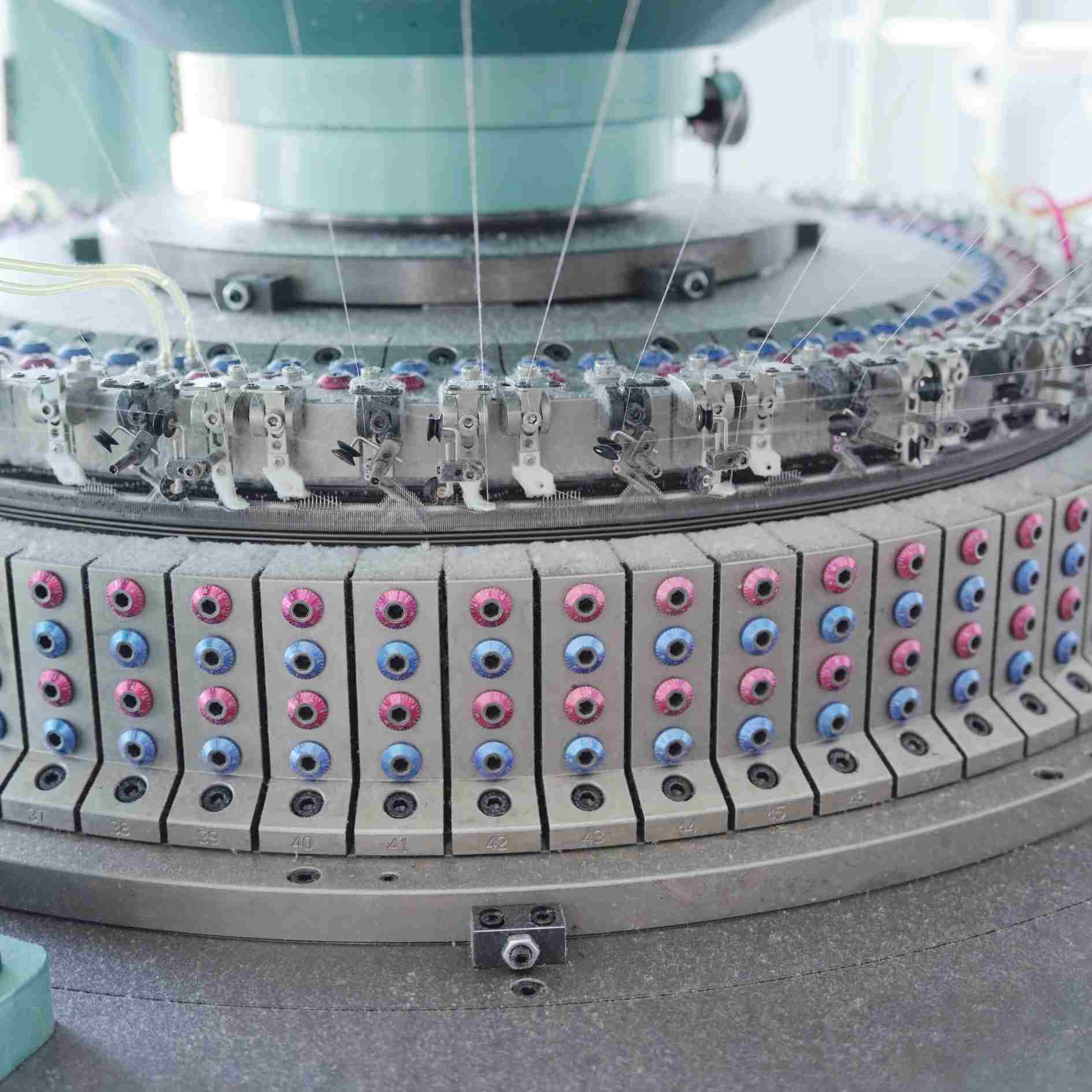
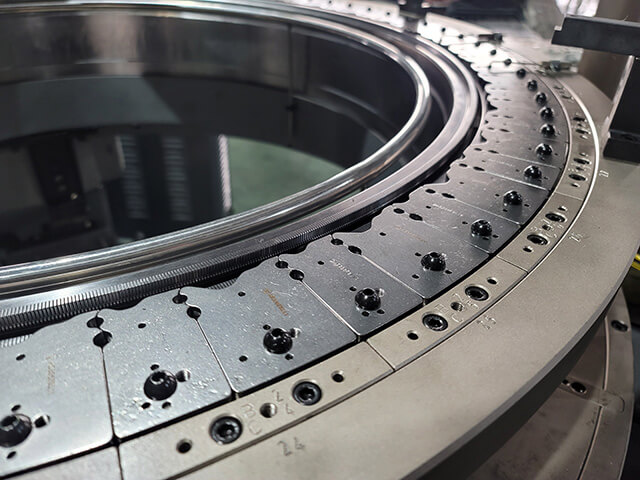
Needle butts follow cam tracks that raise, hold or lower needles. Electronic selection, where fitted, can decide which needles perform available actions, but it still operates within the mechanical paths and installed elements.
Cylinder-only machines and cylinder-and-dial machines do not form the same structures. Identify the bed, needle and track arrangement before using terms such as jersey, rib or interlock.
As a needle rises, the existing loop moves relative to the latch and hook; the new yarn is presented, captured and drawn through as the old loop is cast off. Sinker or dial actions, where part of the design, help control fabric and loop formation.
A missed loop can therefore come from yarn arrival, needle condition, selection, track action or withdrawal. Preserve its course and machine position before replacing parts.
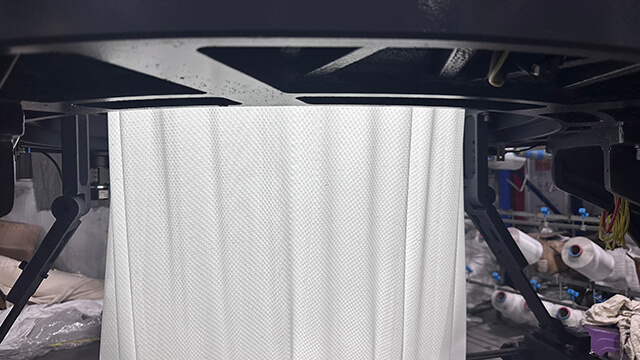
Take-down and winding pull the new fabric away at a controlled rate. Too little, too much or uneven withdrawal can change loop load, width and defect appearance around the circumference. The accepted record should link withdrawal settings to stitch setting and fabric condition.
After a stop, observe whether delivery, needle action and take-down return together. The restart courses are often more informative than a long steady section.
| System stage | Primary duty | Observable evidence | Typical question |
|---|---|---|---|
| Package to feeder | Present yarn consistently | Path, package and tension event | Where did demand change? |
| Cam/selection | Move chosen needles | Position and command record | Which action was requested? |
| Knitting point | Capture and draw loop | Marked face/reverse course | Was yarn correctly formed? |
| Take-down | Remove fabric evenly | Width, roll and restart mark | Did withdrawal alter load? |
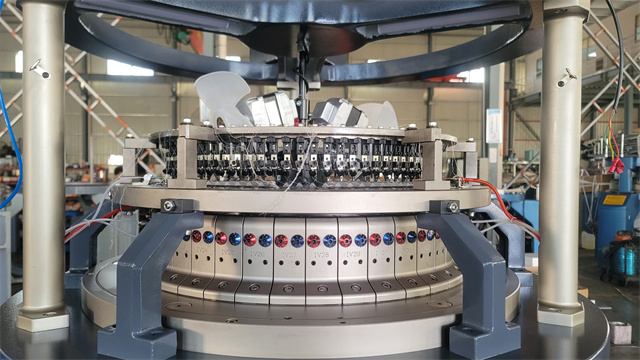
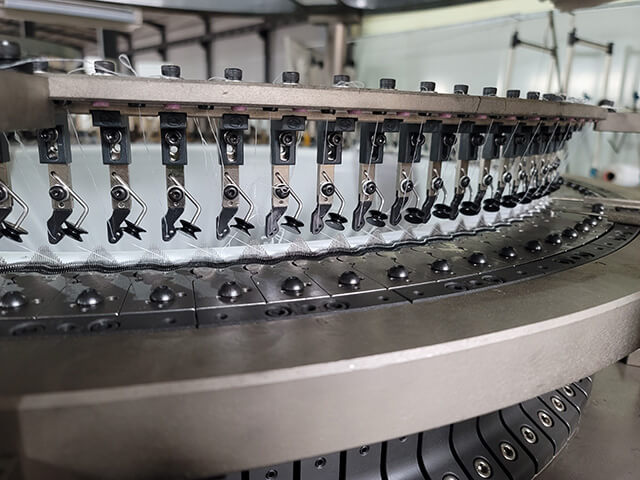
The drive supplies motion; stitch formation depends on synchronized yarn delivery, needle action and fabric control.
No. Some have a cylinder only, while double-knit configurations may use cylinder and dial beds.
It commands available needle actions for patterns or zones; it does not replace the mechanical knitting system.
A recurring machine position or feed may influence successive courses, so preserve the position before diagnosis.
Trace one labelled yarn through one feed and compare the matching marked fabric under the exact operating manual.
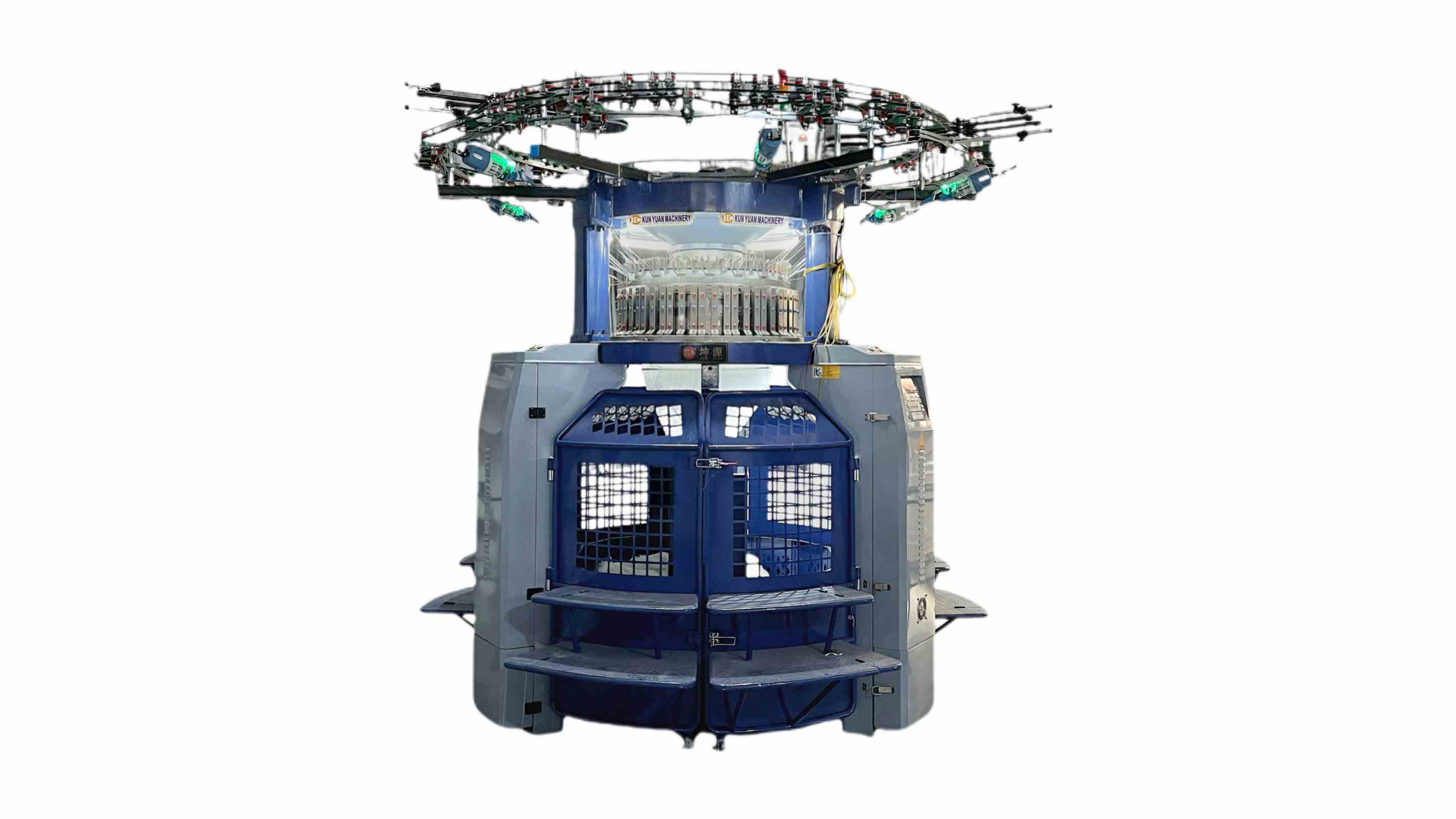
A circular knitting machine is easier to understand as four linked duties: deliver yarn, move selected needles, form loops and withdraw fabric. That chain explains why adjusting a single component without preserving evidence can move rather than solve a defect.
Use the functional blueprint while reviewing the circular knitting machine range and ask how the offered single- or double-knit configuration performs each handoff for the target fabric.

 Tel: +86-13859034518
 Email: info@kunyuanmachine.com
 MP/WhatsApp: +86-13859034518
 Manufacturer Address:Bacuo Village, Yonghe Town, Jinjiang City, Fujian Province