

Hot Keyword:
Author:KUNYUAN Machine Manufacturer TIME:2026-08-28
Automatic lubrication, controls and alarms matter, but they do not replace the cylinder-and-dial relationship that forms rib fabric. Buyers should connect each feature to an observable fault, an allowed intervention and proof that finished recovery remains stable.
Define the rib set-out, yarns, gauge, greige and finished dimensions, recovery method and finishing route before discussing advanced functions. This makes feature claims comparable: the question is not whether a screen or sensor exists, but whether the exact build helps the mill hold that fabric.
Mechanical timing and clearances are model-specific. Use trained personnel, approved instruments and the exact manual. The fault map below guides observation; it does not prescribe generic adjustment values.
Mark machine direction and the course at which the fault appears. Decide whether it is a single vertical line, a repeating band, a random yarn event, a hole or a restart bar. Inspect face and reverse under fixed light.
A line that follows one position points the investigation differently from a band that repeats with a feed or take-down cycle. Preserve the sample before cleaning or replacing several parts.
| Fabric signal | First evidence | Relevant control area | Proof after action |
|---|---|---|---|
| Vertical line | Position and both faces | Needle/track/feed at index | Adjacent marked swatch |
| Repeating band | Interval and stop log | Delivery or withdrawal event | Repeat interval removed |
| Poor recovery | Finished extension record | Yarn role, stitch, timing basis | Same method passes |
| Restart bar | Marked stop course | Startup delivery and take-down | Controlled restart repeats |
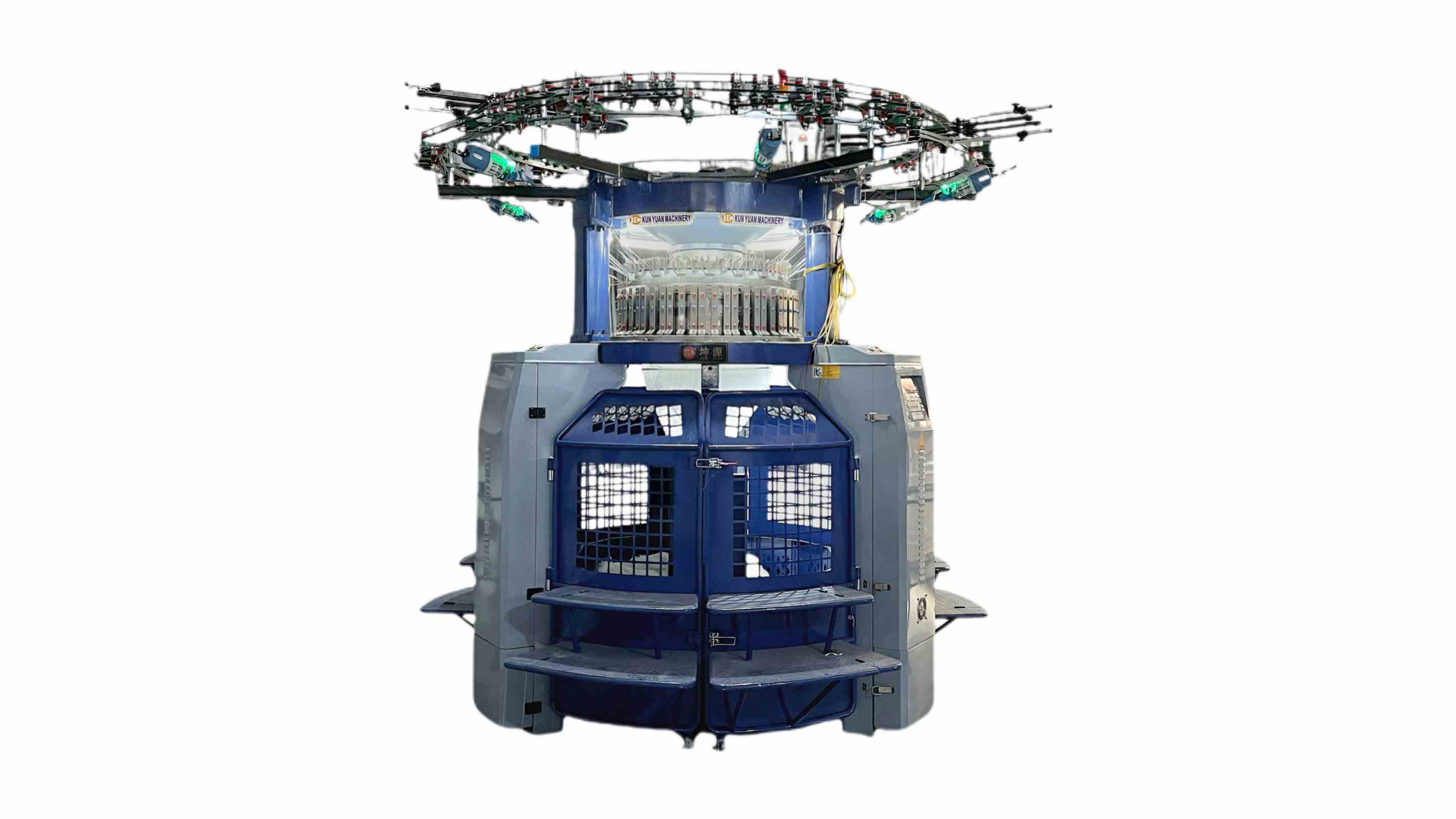
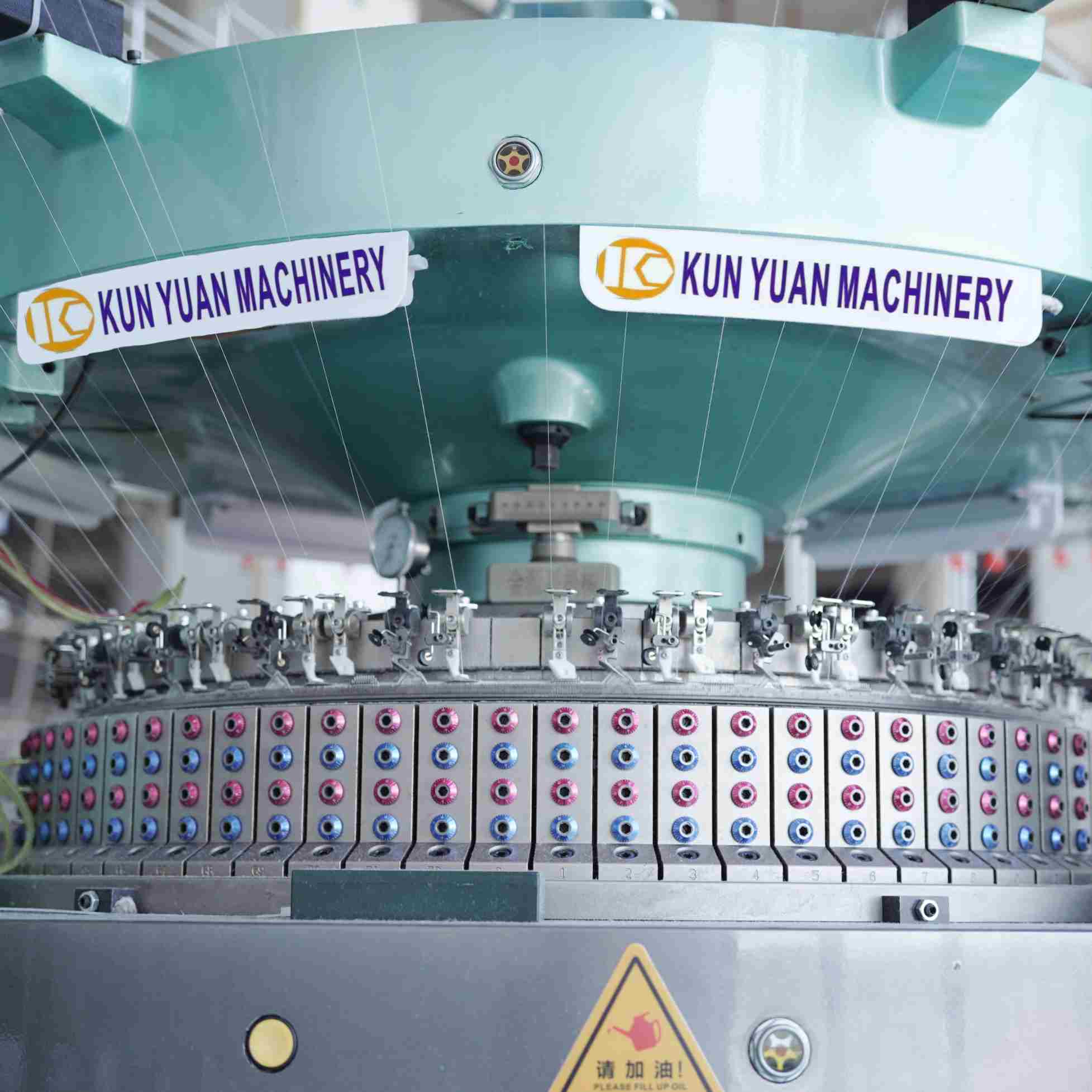
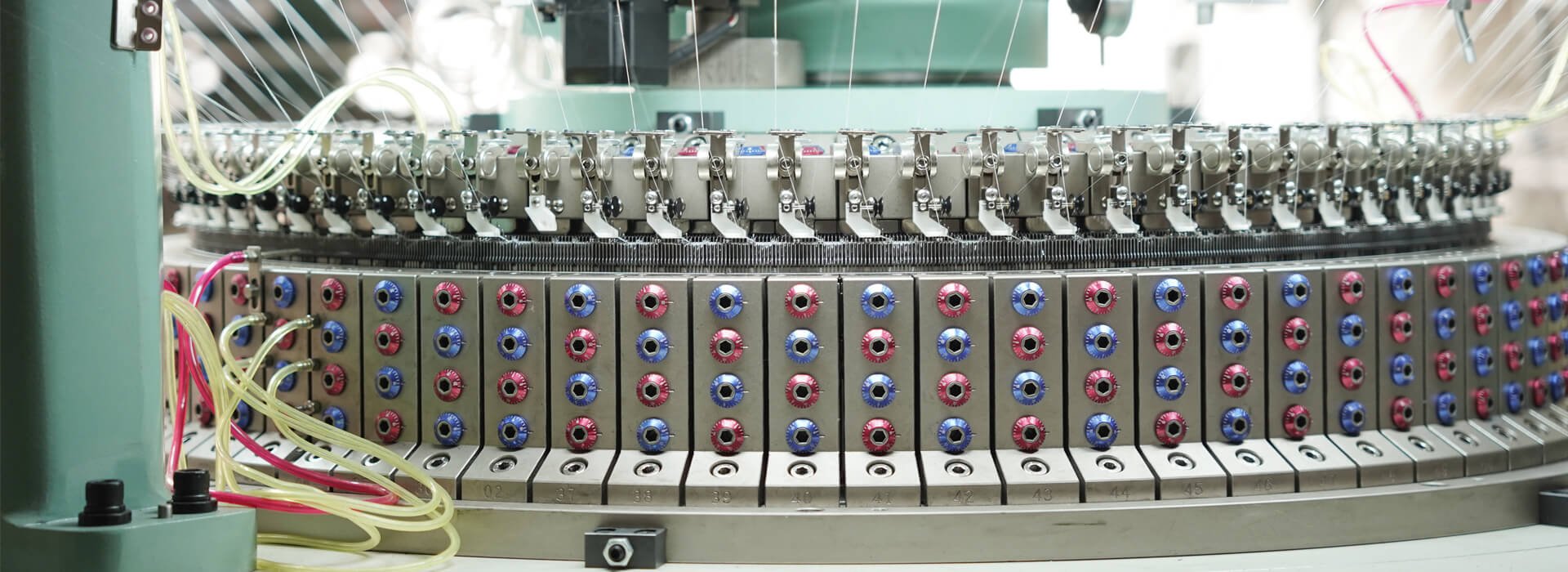
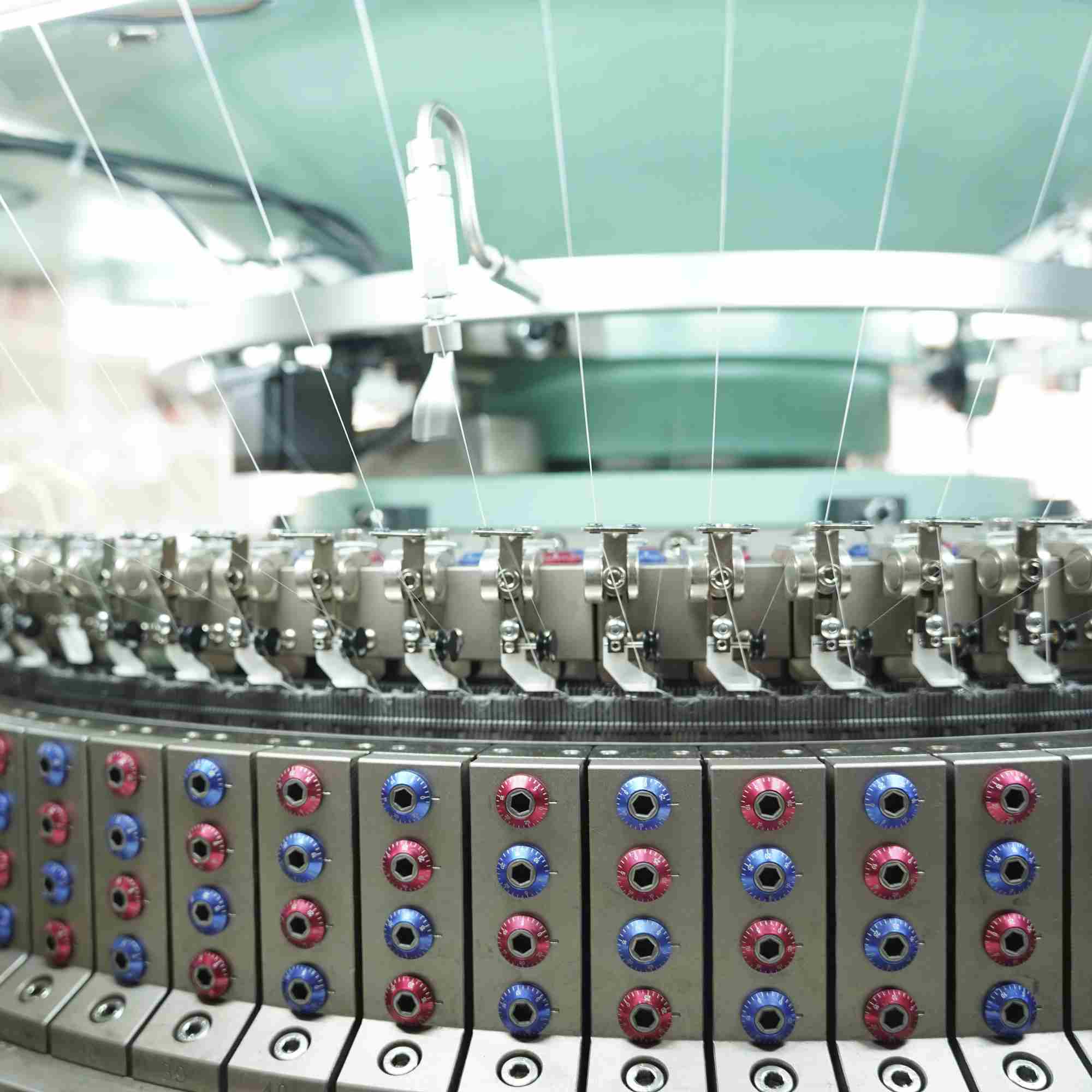
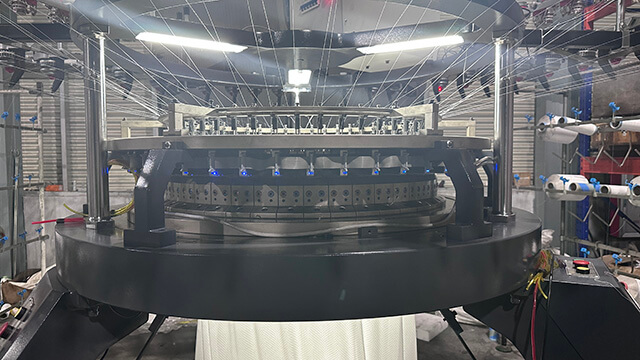
Confirm the installed needle identities and set-out from controlled documents. Inspect the matching cylinder and dial positions, their tracks and yarn presentation under the approved method. A single visible mark does not prove which bed caused it.
Record the measured starting condition before any technician change. Without a baseline, a later clean sample cannot show which action mattered.
Compare labelled packages, guides, delivery devices and yarn roles at the affected feeds. Elastomer or plated yarn needs a separate path record because a position error may show only under extension.
Swap or isolate one known variable where the procedure permits, mark the roll and observe the next section. Randomly increasing tension can hide the source and weaken recovery.
Return to the approved recipe, perform a documented stop and restart, and knit enough fabric to judge the initial bar and stable section. Record speed, interventions and take-down condition.
After the stated relaxation or finish, repeat width, appearance and recovery checks. A machine-side improvement is not complete if the commercial fabric changes downstream.
It identifies a detected condition. Preserve the operating state and fabric evidence before deciding the cause.
No. Use the exact machine documentation and qualified procedure for the installed diameter, gauge and build.
The reverse can reveal missed loops or bed-related differences hidden on the commercial face.
For diagnosis, preserve evidence and isolate one cause where safe; broad replacement can obscure what solved the problem.
When it helps the team detect, control or repeat a named fabric result within the accepted process.
Rib-machine features earn value through diagnosis and control, not through their number on a brochure. A symptom map joined to cylinder-and-dial evidence, yarn paths and a finished restart test turns features into an operating method.
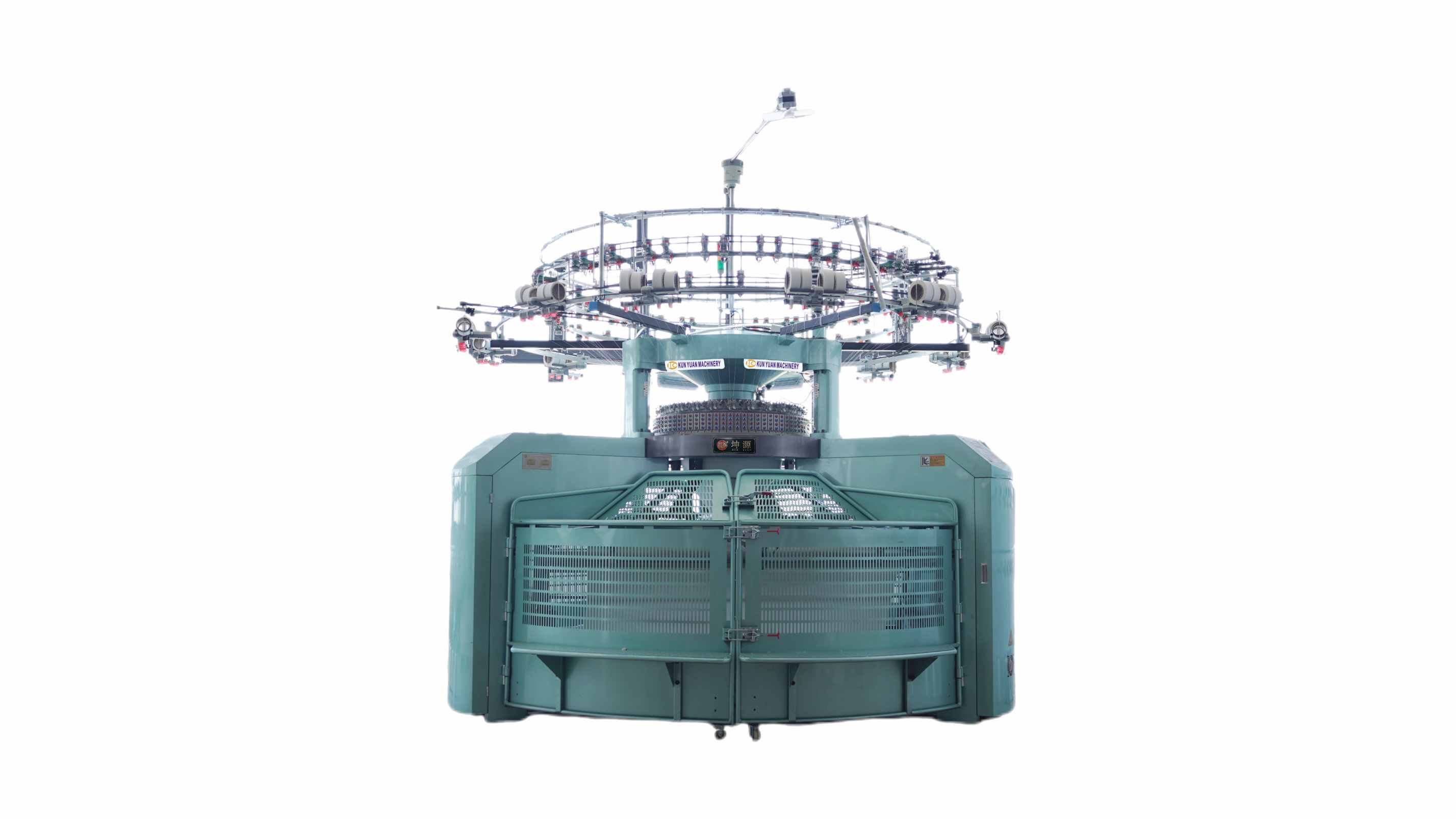
Apply the fault map when reviewing the rib double-jersey circular knitting machine and request evidence that the offered controls support the actual rib set-out and recovery requirement.

 Tel: +86-13859034518
 Email: info@kunyuanmachine.com
 MP/WhatsApp: +86-13859034518
 Manufacturer Address:Bacuo Village, Yonghe Town, Jinjiang City, Fujian Province