

Hot Keyword:
Author:KUNYUAN Machine Manufacturer TIME:2026-08-28
Jacquard history is often reduced to a story about punched cards becoming computers. For a circular-knitting buyer, the practical change is more specific: pattern decisions can be encoded, simulated, transferred and revised, while the machine still has physical selection, feeder and loop-forming limits that the file cannot ignore.
Early mechanical systems linked pattern repeat to hardware and imposed a comparatively rigid change process. Electronic circular jacquard opened a broader design workflow, but it did not make every structure available on every machine. Cylinder selection, dial capability, transfer, number of ways, feeds, gauge and yarn handling remain model-defined.
A useful pattern specification therefore has two layers. The design layer identifies repeat, colours and visual intent. The technical layer converts each course and wale into permitted knit, tuck, miss or transfer actions, then records the machine identity and software revision used to generate the file.
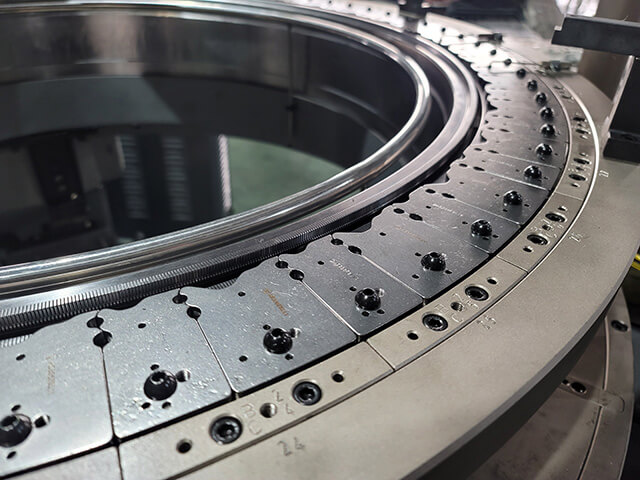
A clean graphic can contain edges, colours or repeat dimensions that the selected machine cannot execute as drawn. The programmer must know the needle count, feeds, selection arrangement, yarn-finger or striper options, transfer capability and structure rules before converting pixels into loop actions.
Keep the customer artwork, edited technical design and machine-ready file as separate revisions. When a motif is resized, document who approved the edge correction and whether the colour repeat, float length or garment placement changed.
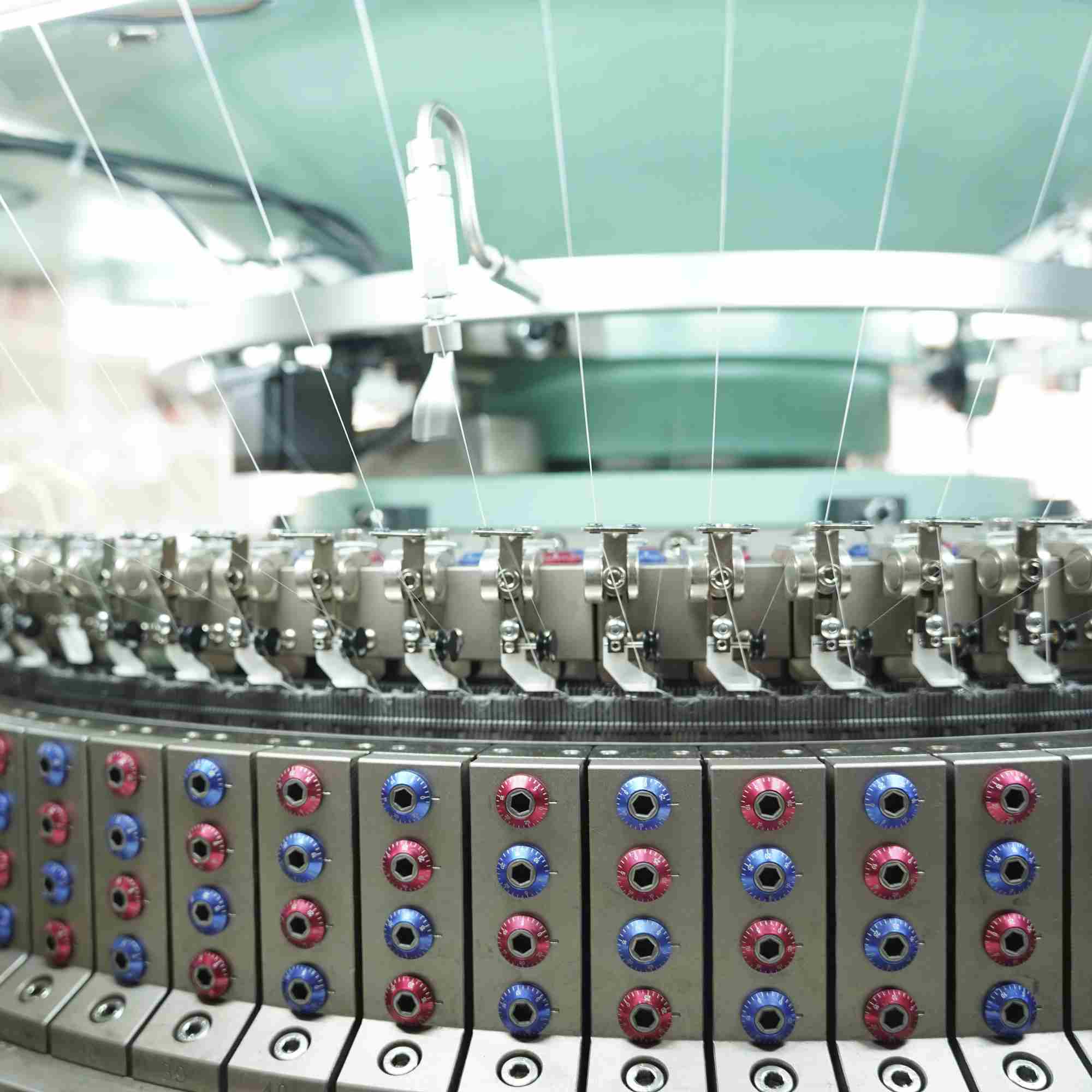
Electronic jacquard is not one uniform mechanism. Some machines select cylinder needles while the dial follows fixed tracks; others offer additional dial selection or transfer arrangements. Ask the supplier to mark each controlled action on the model sheet and pattern trial rather than relying on the word computerized.
Use a simple diagnostic pattern that exercises every intended selection state before loading a complex commercial design. A small grid of knit, tuck, miss and transfer—only where the machine supports them—can expose channel mapping or actuator problems more clearly than a dense motif.
Name files by article, revision and machine or configuration. Store the original, the approved machine file, palette or yarn map, simulation output and one checksum or immutable dated copy. Record how the file reached the controller and which software version produced it.
Permissions matter. Operators need a defined boundary between loading an approved pattern, adjusting allowed production values and editing design logic. Untracked edits create a fabric difference that later appears to be a mechanical fault.
Choose a trial containing the smallest detail, longest float, busiest transition, colour change and any transfer or relief area planned for sale. Inspect registration around the full tube, not only the most attractive panel. The reverse face can reveal trapped ends, floats or yarn-control problems hidden from a front photograph.
After a stop and reload, repeat the difficult part of the motif. Acceptance means the named file and yarn map produce the same construction again, with defects and manual interventions inside the agreed limits.
| Controlled item | Design record | Machine record | Fabric proof |
|---|---|---|---|
| Repeat | Artwork dimensions and edge rule | Needle/course mapping | Full-repeat sample |
| Selection | Requested loop action | Cylinder/dial capability | Diagnostic grid |
| Yarn map | Colour and yarn role | Feed or yarn-finger assignment | Face and reverse inspection |
| Release | Approved visual revision | File name, software and controller | Reloaded boundary motif |
No. Pattern memory may be large, but needle count, course repeat, feeds, selection arrangement, yarn handling and fabric stability still define practical limits.
Artwork records visual intent; machine data records how that intent was translated into executable loop actions. Either can change independently.
Do not assume it. Confirm machine data, selection logic, interfaces and software compatibility, then run a controlled diagnostic pattern.
Include difficult edges, long floats, transitions, the reverse face, a controlled stop/restart and a reload of the approved file.
No. Simulation helps find mapping or design issues, but yarn behaviour, selection hardware, take-down and finishing must be judged on physical fabric.
Digital jacquard control makes patterns easier to revise only when the revision remains connected to a known machine and fabric. A well-managed project can answer four questions: which loop action was intended, which element selected it, which file carried the instruction and which physical sample proved the result.
Review the exact selection and pattern-data boundary in the computerized jacquard circular knitting machine range before committing artwork conversion, training and the boundary-motif trial.

 Tel: +86-13859034518
 Email: info@kunyuanmachine.com
 MP/WhatsApp: +86-13859034518
 Manufacturer Address:Bacuo Village, Yonghe Town, Jinjiang City, Fujian Province