

Hot Keyword:
Author:KUNYUAN Machine Manufacturer TIME:2026-08-28
A useful terry-machine maintenance round begins at the cloth, not at the toolbox. A weak loop line, a polished sinker edge, rising lint near one feed and oil that will not wash out are different problems. Recording where each symptom appears prevents a mechanic from changing several settings at once and losing the cause.
Terry fabric gives the technician two surfaces to read. First mark whether the defect is on the loop face, the ground side or both. Then mark its direction. A vertical line that follows one wale suggests a different inspection path from a horizontal bar repeated around the roll. An isolated pulled loop may follow a damaged element or yarn event; a broad change in loop height may involve delivery, stitch setting, take-down or the yarn lot.
Keep the first faulty section attached long enough to mark the machine direction and roll position. Write down the active style, yarn lots, nominal stitch settings, speed and the last intervention. If possible, compare the defect with a retained approved swatch under the same light. This simple record is more valuable than a photograph with no feeder or time reference.
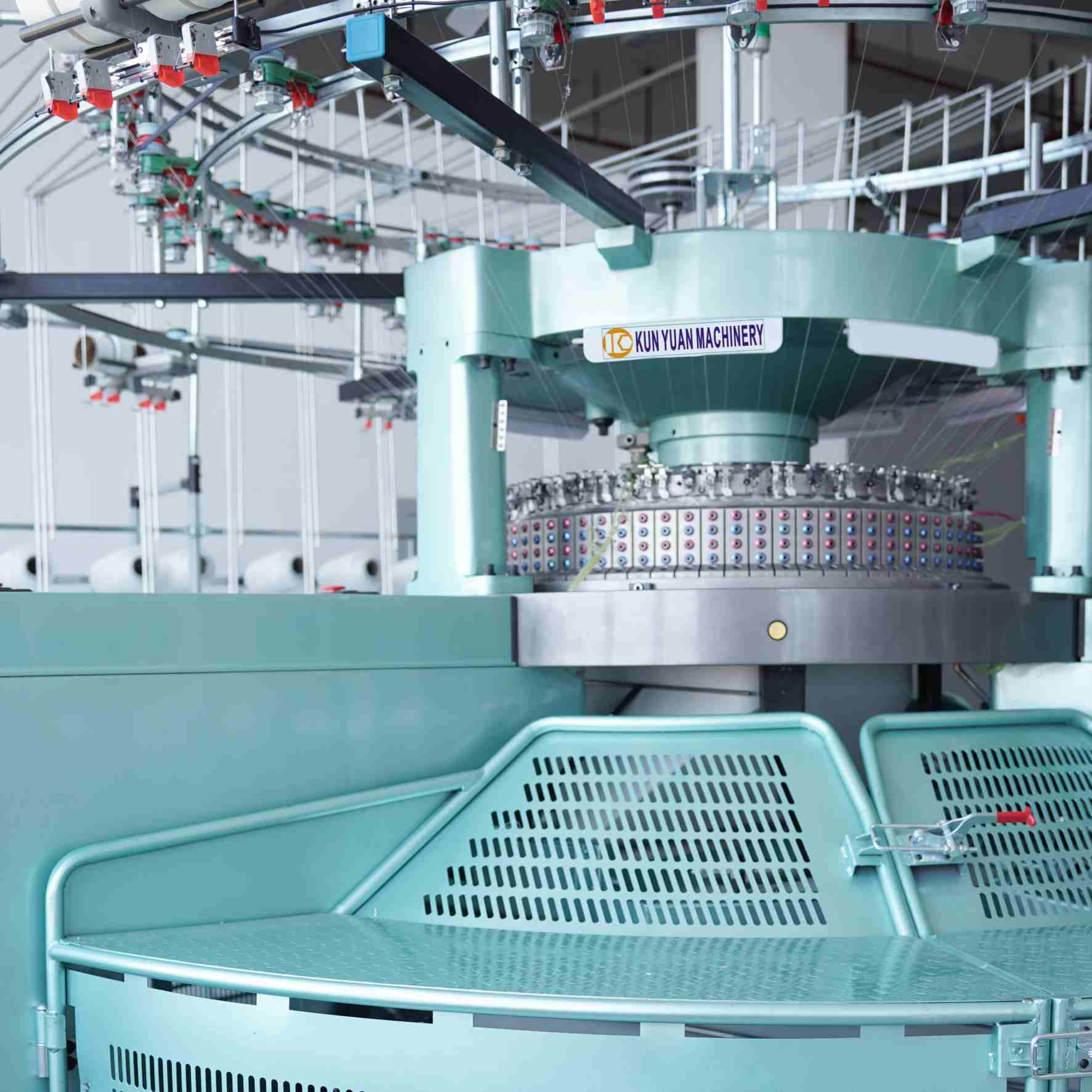
Stop immediately for abnormal metal noise, a broken or displaced knitting element, a loose guard, a burning smell, electrical damage or an oil leak that can reach the fabric or floor. Isolate energy according to the mill's lockout procedure before reaching into the knitting zone. Minor lint accumulation may be handled at the next approved cleaning stop, but it should not be used as a reason to run through a developing line defect.
A controlled stop preserves evidence. Note the dial or cylinder position and identify the nearest feed before removing debris. Do not rotate the machine by hand unless the manufacturer permits it and the energy state is safe. When the machine manual gives a stricter instruction, the manual governs.
Loose lint should be removed with the method and pressure approved for the machine. Directing a strong air jet into the needle track can push contamination deeper or scatter it into electrical equipment. Work from clean areas toward the extraction point, protect sensors and yarn monitors, and account for tools and covers before restart.
Cleaning frequency should follow the material and actual accumulation rather than a copied calendar. Hairy spun yarn, terry loop yarn and a dry room can change the lint load. A shift team can grade accumulation at fixed inspection points—feeders, yarn guides, cam area and take-down—then adjust the interval when the grade trends upward. This makes the interval explainable without pretending that one schedule fits every mill.
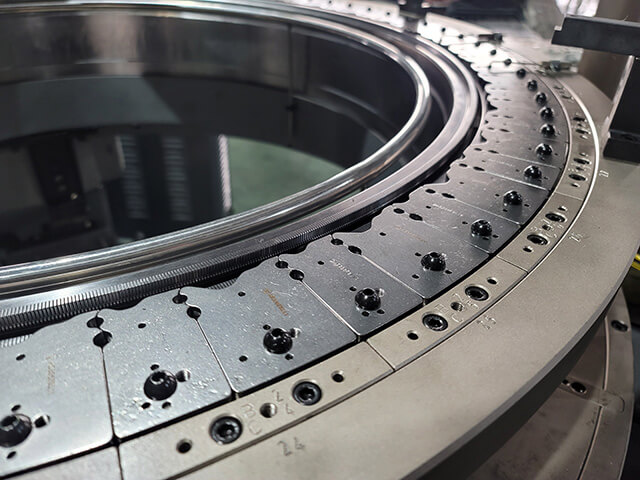
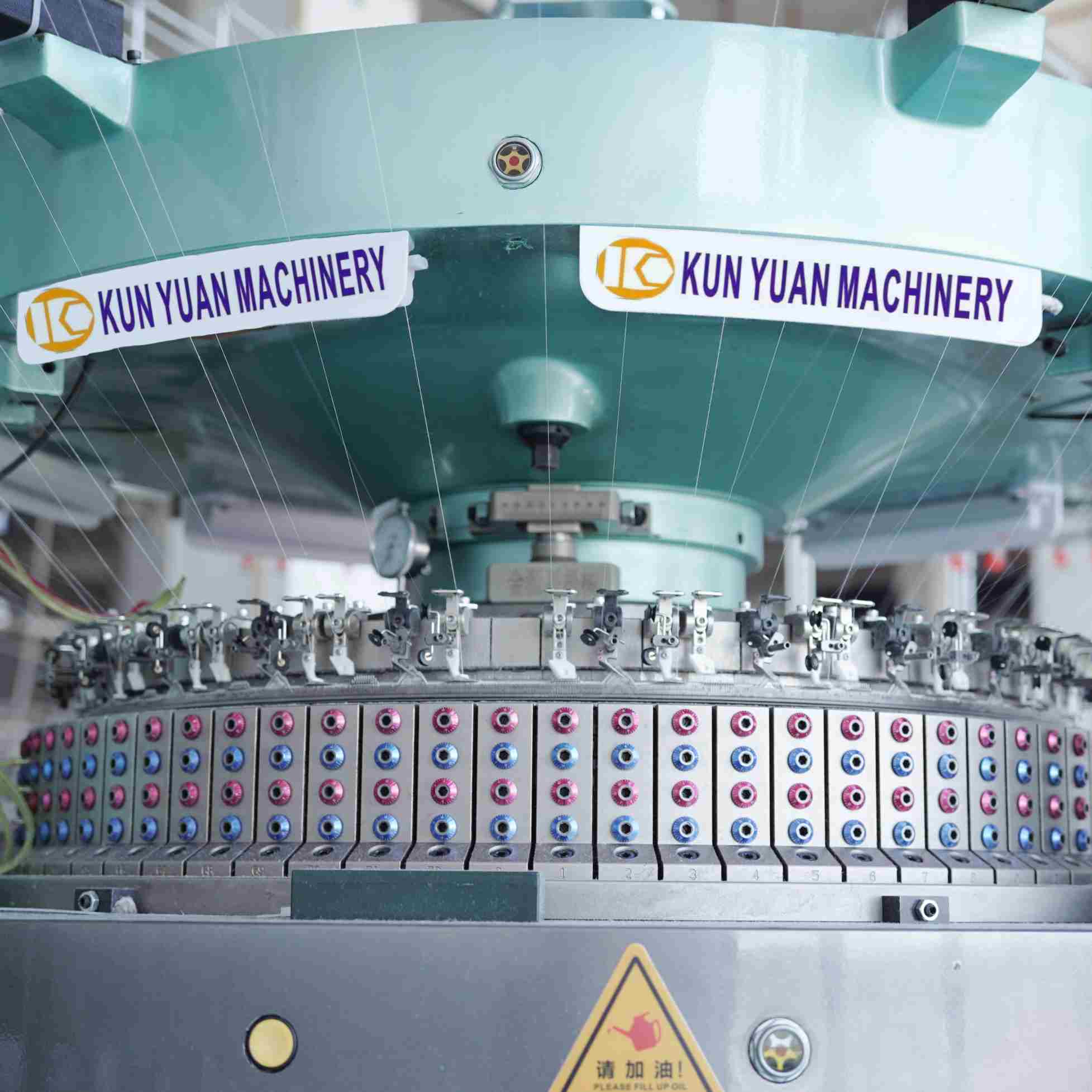
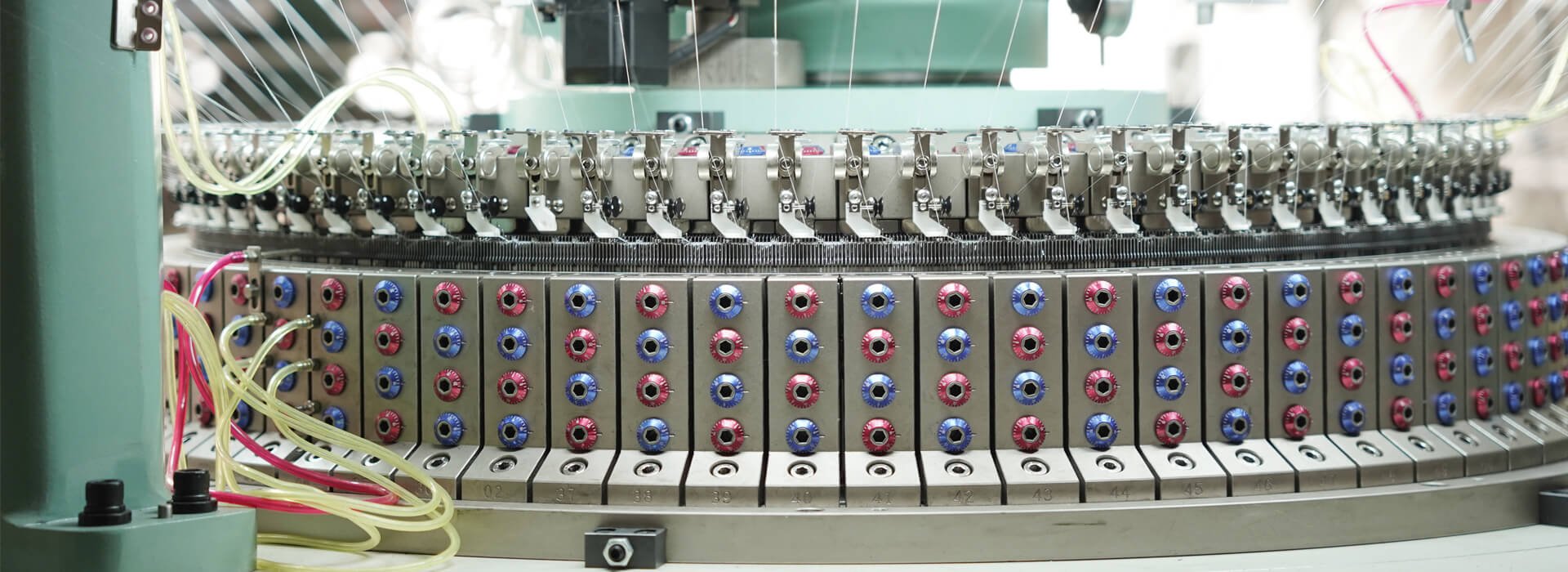
On a terry route, the loop-forming result depends on the condition and movement of more than one element. Compare suspect needles and sinkers with known-good parts of the exact designation. Look for bent hooks, latch movement that differs from its neighbors, burrs, polished contact faces, heel wear and contamination that restricts travel. A part can look intact at rest yet bind under cam load.
Replace damaged elements with the specified type; do not mix close-looking parts. After an impact or repeated breakage at one position, inspect the corresponding track and cam path before installing another replacement. If several adjacent elements show the same wear pattern, investigate alignment, lubrication and contact conditions rather than treating them as unrelated failures.
| Fabric or machine signal | First isolation check | Avoid | Restart evidence |
|---|---|---|---|
| One persistent vertical loop line | Mark wale and inspect matching needle/sinker path | Changing every feeder tension | Line absent on an identified short roll |
| Loop height shifts across a wide band | Compare delivery, stitch setting, take-down and yarn lot | Replacing a random element set | Loop profile agrees with approved swatch |
| Repeated element damage at one point | Inspect track, cam contact and part designation | Installing another part without finding contact | Stable movement after slow and production-speed checks |
| Oil marks after speed change | Review delivery rate, oil condition and collection points | Adding a different oil without compatibility review | Clean fabric and acceptable wash test |
Needle and sinker oil has to lubricate the working area and still suit the fabric's downstream cleaning route. Use the grade named for the machine and process; record the product, refill quantity and any change in consumption. Darkening oil, particles, blocked delivery points or a sudden rise in use are inspection signals, not an invitation to compensate blindly with more oil.
When changing oil, confirm compatibility and the maker's flushing instruction. A small fabric wash trial should follow any material or dosage change because a mechanically acceptable oil can still create a finishing problem. Groz-Beckert's published material treats lubricant performance and washability as linked selection questions, which is why the mill should retain both the maintenance record and the washed sample.
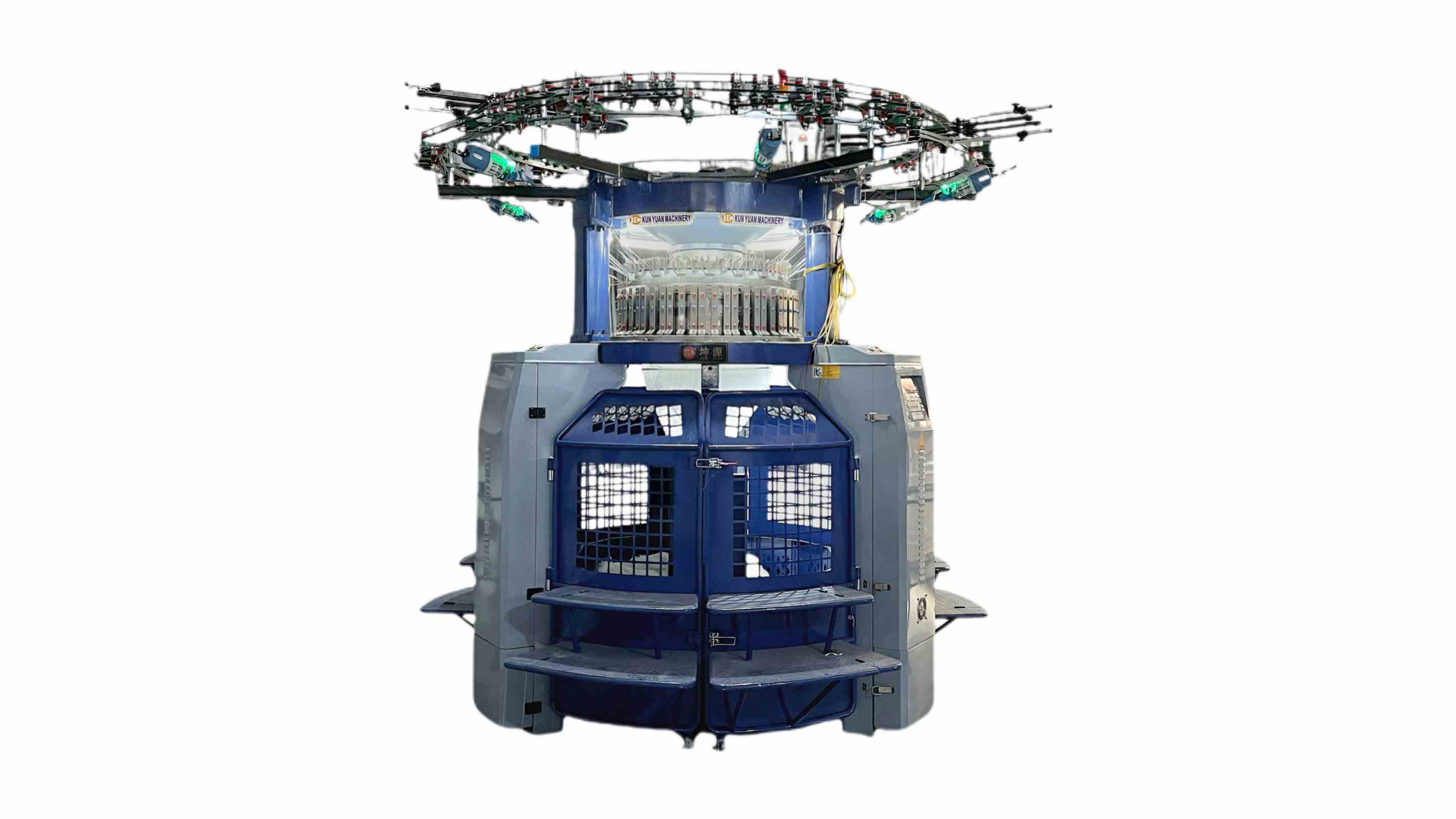
Restart at the maker's permitted low-speed procedure, observe the repaired position, then progress to the approved production setting. Separate the first fabric and label it with the fault, changed part or adjustment, operator and time. Evaluate loop appearance, ground integrity, weight and any mill-specific wash or absorbency requirement before releasing the roll.
The maintenance log should answer three practical questions: what changed, what result proved the change and when the same position must be checked again. A photograph of a removed part is useful when paired with its machine position. A list that says only “cleaned and adjusted” cannot reveal repeat failures or help the next shift.
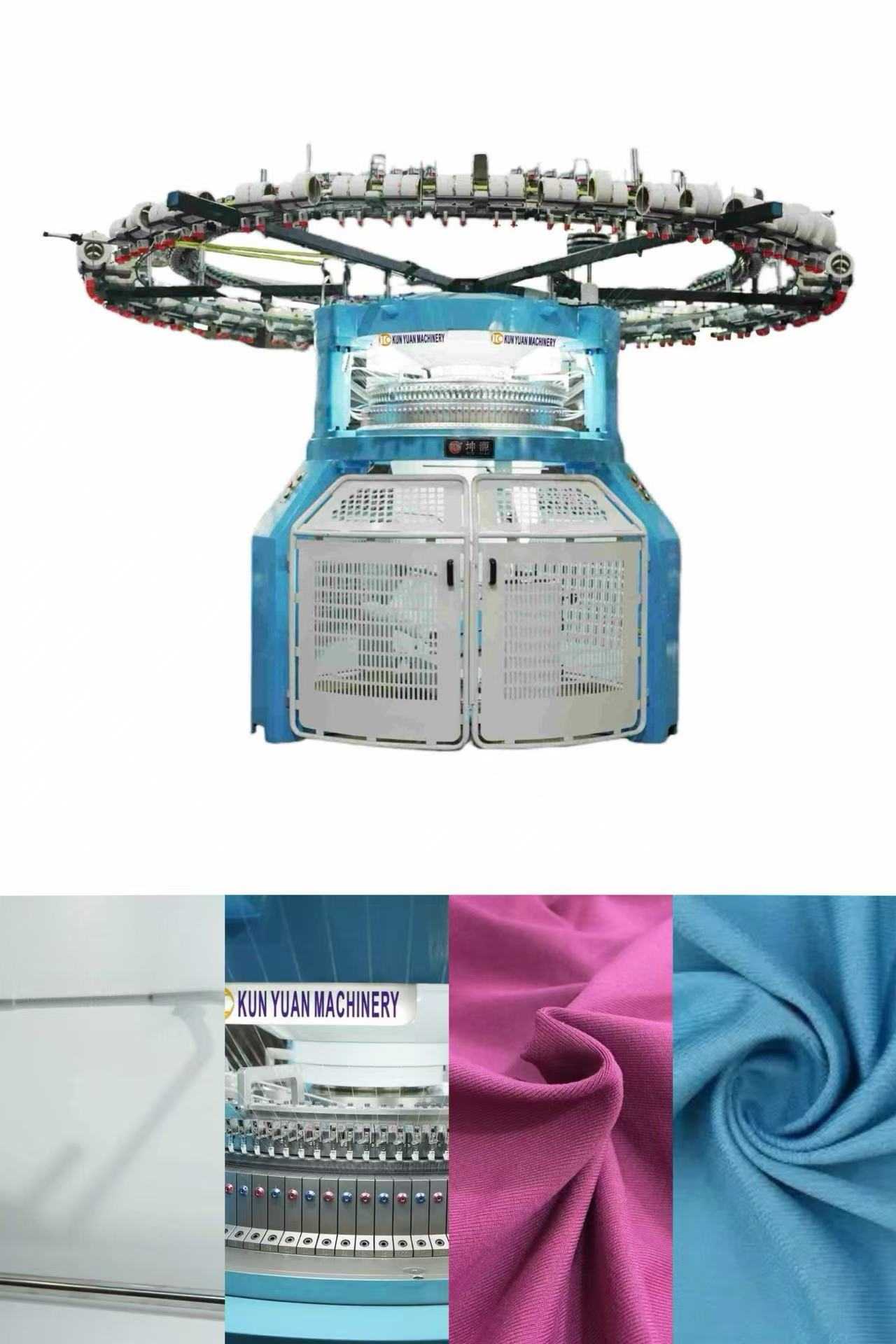
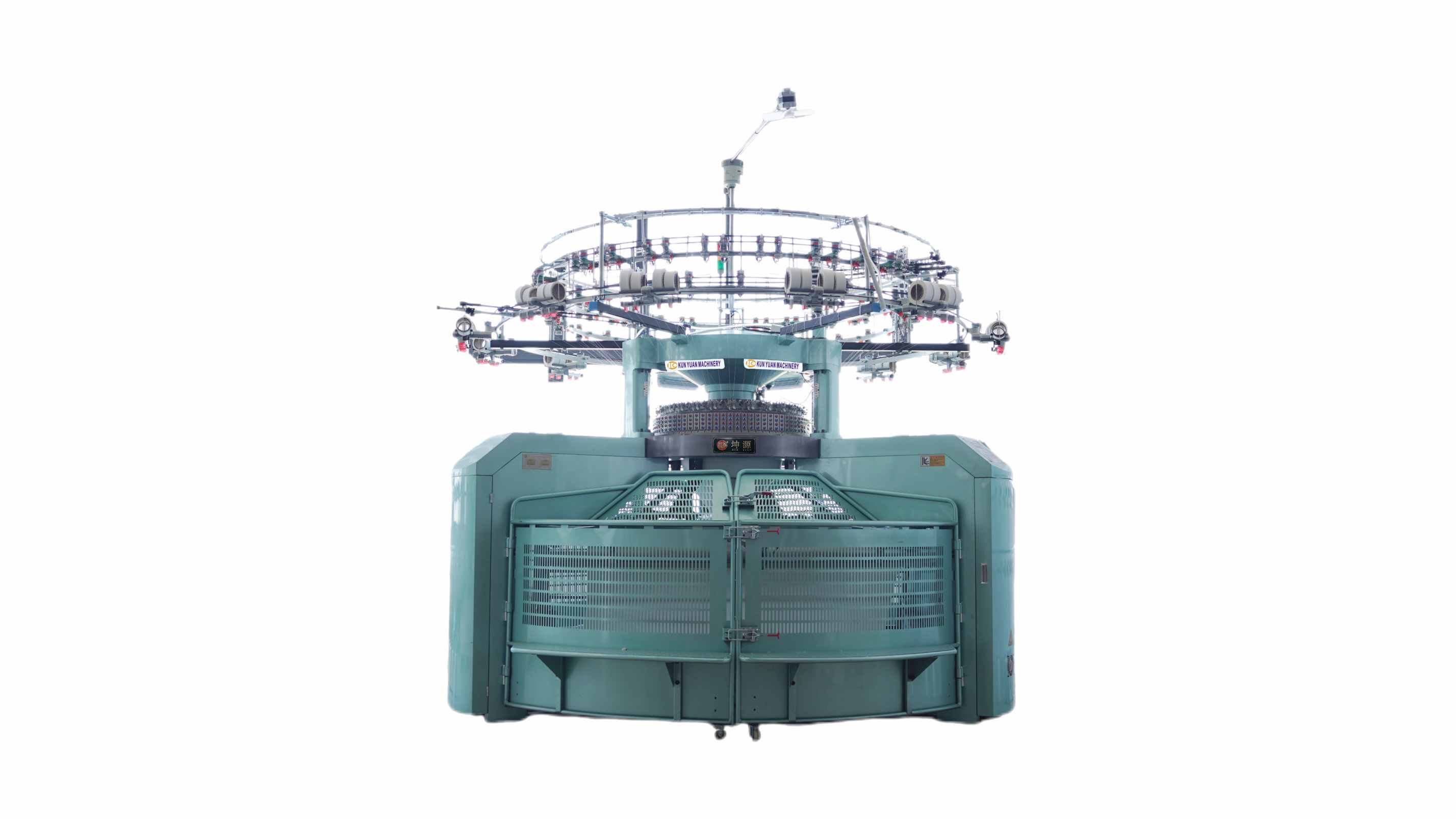
For mills defining a terry project as well as its service plan, the related circular knitting machine range provides a starting point for discussing structure, diameter, gauge, yarn route and after-sales scope. Final maintenance intervals and approved consumables should come from the selected model manual.
Not as a universal rule. Follow the machine maker's method and assess actual lint at named points. Excess pressure can move debris into tracks or electrical areas.
It can, but the wale should be marked and the matching needle, sinker movement, track and yarn path checked before assigning the cause.
No. Oil type and delivery must follow the machine and process requirement. Excess use can stain fabric and hide a blocked or poorly adjusted delivery point.
Keep an identified section produced after the controlled restart, plus any washed sample required by the finishing route and the original marked defect where practical.
Escalate recurring element breakage, timing or alignment concerns, electrical faults and any intervention outside the mill team's authorized service scope.
Terry circular knitting machine maintenance becomes reliable when a visible loop symptom is tied to a position, one controlled intervention and a labelled restart sample. Cleaning, needle and sinker inspection, lubrication and record keeping are separate jobs with different evidence. That discipline protects fabric quality and gives the service team a history it can actually use.

 Tel: +86-13859034518
 Email: info@kunyuanmachine.com
 MP/WhatsApp: +86-13859034518
 Manufacturer Address:Bacuo Village, Yonghe Town, Jinjiang City, Fujian Province