A feeder controls delivery; the whole path controls the fabric
Striped circular knitting fails at transitions, not only during steady running. Package unwinding, storage, braking, guide geometry, selection timing and waste-yarn handling must be recorded as one path.
The word feeder covers different jobs. A storage unit can buffer irregular withdrawal; a positive feeder can meter yarn in a defined relationship; an electronic or striper device can coordinate commanded changes. The installed arrangement and yarn demand decide which behaviour matters.
Never copy one tension value to every yarn. Material, count, twist, elastane content, package build and colour treatment can change friction and recovery even when the yarn labels look similar.
01
Start the fault map at the package
Record cone type, winding direction, residual package size, joins and balloon control. Observe whether a stop appears at a particular package diameter or only after a colour has waited on the creel. Those clues separate supply problems from needle-area faults.
Keep guides clean and aligned. A polished eyelet can still cut one yarn if its angle changes during a striper move.
02
Match storage behaviour to changing demand
A storage feeder should present yarn without snagging layers or creating a tension jump as demand changes. Check wrap build, separation, outlet brake condition and sensor response. On styles with uneven consumption, compare the transition course with the steady section.
If the feeder adjusts motor speed from yarn demand, preserve the controller or device setting used during the accepted run. A later replacement must reproduce the function, not merely fit the bracket.
03
Verify the command before adjusting tension
Map each colour to its feeder, yarn finger or selection channel and pattern event. When a wrong colour or float appears, confirm the program command, actuator response and mechanical position in that order. Randomly tightening yarn can hide the original fault and create a new line.
Test short runs that include the most crowded change sequence, not only long single-colour bands. Inspect the face and reverse for trapped ends, tails, floats and incomplete engagement.
Give elastic yarn its own delivery record
Bare or covered elastane behaves differently from ground yarn and usually needs purpose-designed control. Record pre-tension, feed device, guide route, plating position and the point at which the yarn is introduced or withdrawn.
Judge recovery after relaxation or finishing. A stripe can look straight at the machine yet pucker when elastic delivery changes across a colour transition.
Keep elastic delivery and plating position separate from ground-yarn settings.
Feeder-path record
Path point
What to record
Fabric symptom
First isolation check
Package/creel
Lot, winding and remaining diameter
Intermittent line or break
Swap one labelled package
Storage/brake
Wrap, brake and sensor state
Tension band or feed alarm
Observe outlet during transition
Selector/yarn finger
Program channel and position
Wrong colour, float or tail
Compare command with movement
Needle entry
Guide, plating and timing
Missed plating or damaged loop
Inspect one marked feed slowly
Build the trial around change events
Count commanded changes, successful changes, yarn breaks, stop causes, restart waste and manual corrections over a defined repeat. Mark the roll at each intervention. Then inspect the same positions under consistent light.
A pass means the operator can reload the documented program and reproduce the sequence with production packages. One visually clean panel without the event log is not enough.
Link fabric marks to the feeder and pattern event that produced them.Preserve the feeder map and the matching marked fabric sample.
Questions about circular knitting yarn feeders
Is every circular knitting feeder a positive feeder?
No. Storage, positive and electronic feeding devices perform different jobs. Identify the installed unit and the yarn-consumption pattern before setting it.
Why does a stripe fault appear only at colour changes?
The transition combines command timing, mechanical motion, yarn pickup and tail control. Steady running may not exercise those events.
Can identical tension settings be used for all colours?
Not safely. Dyeing, material, package and finish can change friction. Use a measured starting point and validate each yarn in the pattern.
What should be kept after a successful trial?
Keep the pattern revision, feeder map, yarn labels, device settings, event log and a marked fabric sample.
When should a feeder be replaced?
Replace or repair from identified wear or unstable function, using the exact device specification. Do not infer compatibility from appearance alone.
Conclusion
Reliable colour control comes from a traceable path: package, storage or positive feed, command, mechanical presentation and needle entry. When each transition has an event record, a stripe defect becomes diagnosable instead of mysterious.
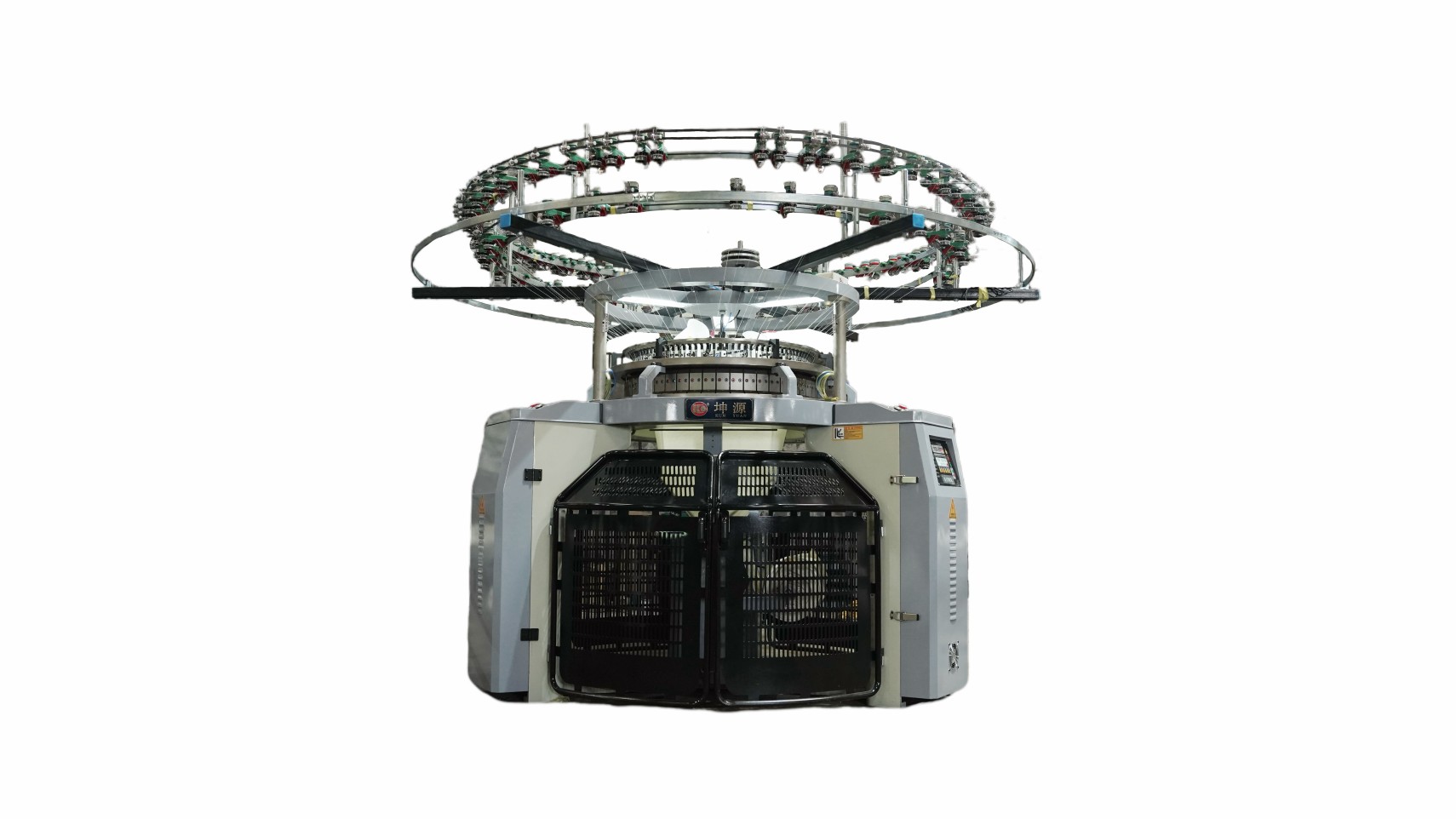
Use the feeder-path record when reviewing the auto striper circular knitting machine so every colour event and installed delivery device has a named acceptance check.




 Tel: +86-13859034518
 Email: info@kunyuanmachine.com
 MP/WhatsApp: +86-13859034518
 Manufacturer Address:Bacuo Village, Yonghe Town, Jinjiang City, Fujian Province