Follow the pile from yarn plan to finished surface
A circular pile knitting project is not one generic loop-making job. Terry loops, raised fleece, patterned pile and cut high-pile surfaces place different demands on yarn allocation, knitting elements, take-down and finishing. Start with the finished face and work backward; that keeps the machine discussion tied to a fabric the mill can inspect.
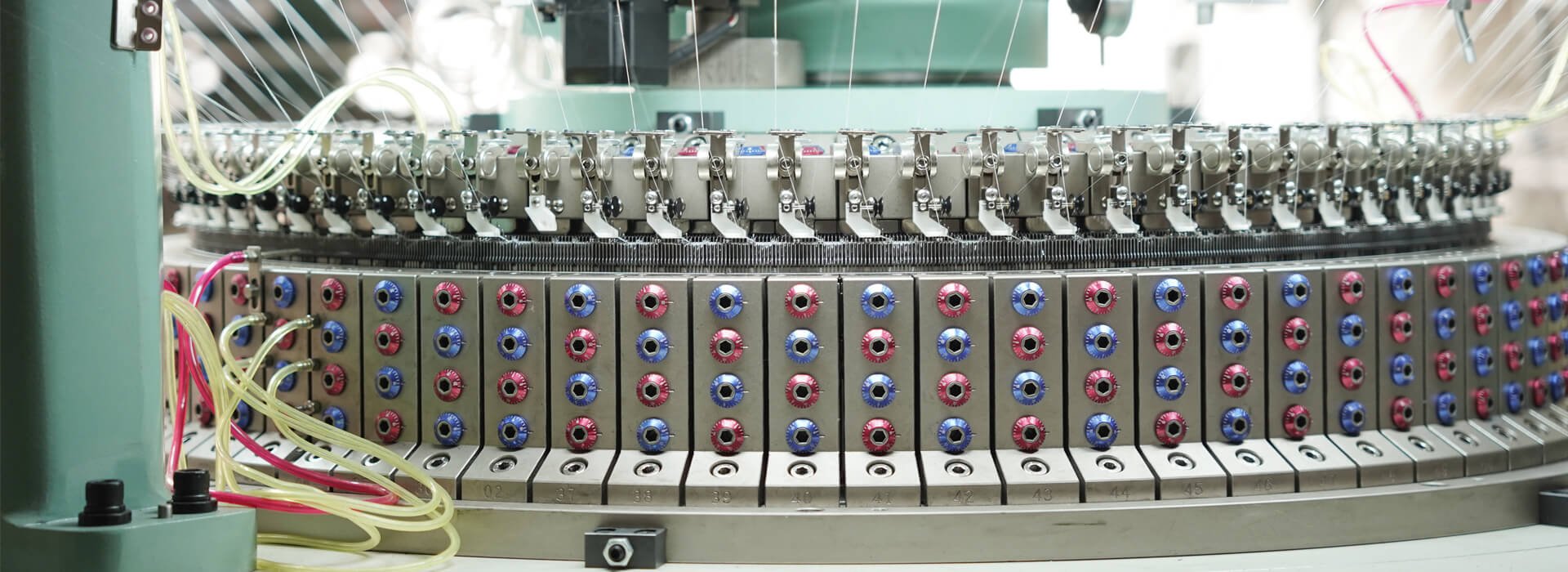
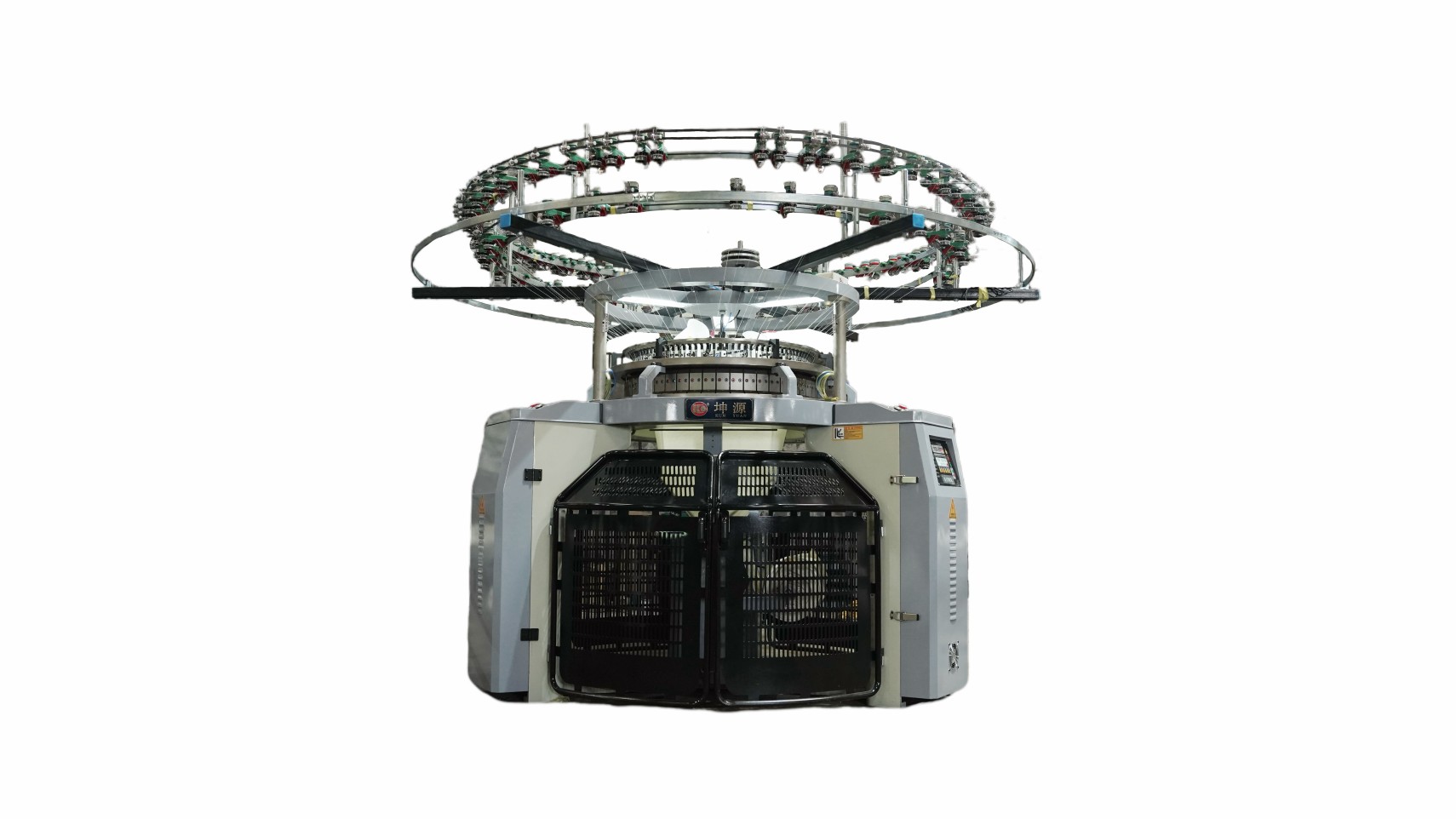
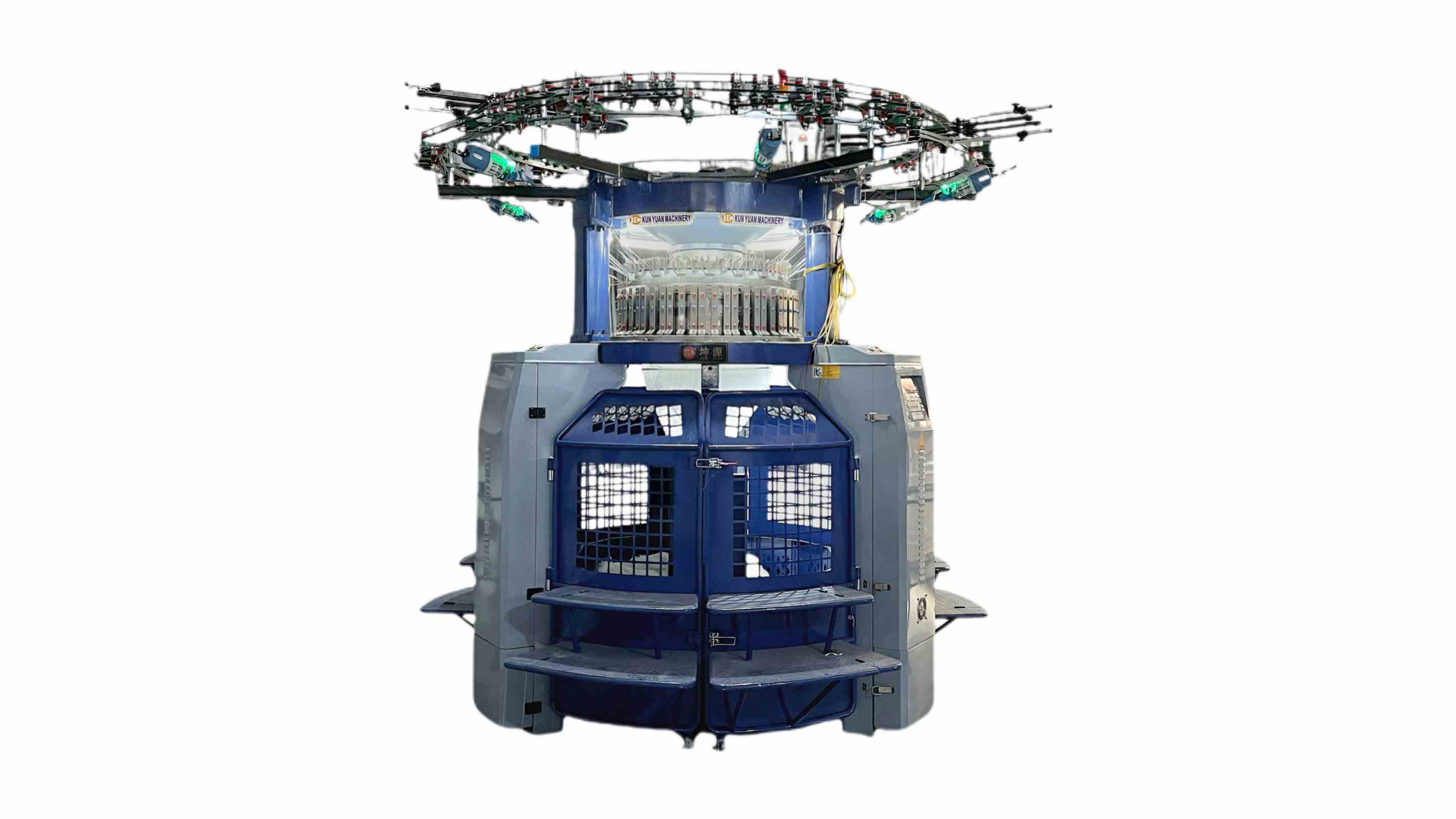
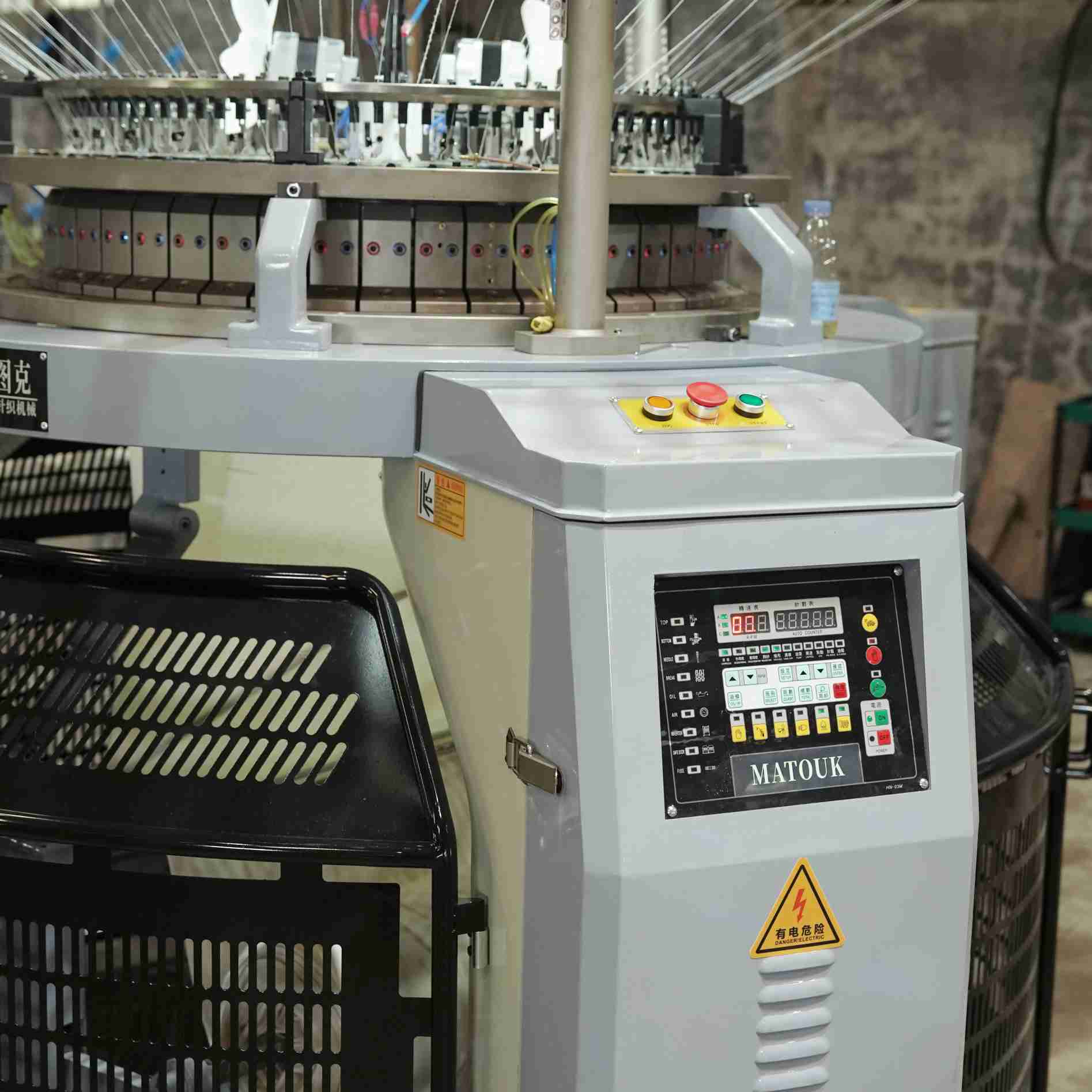
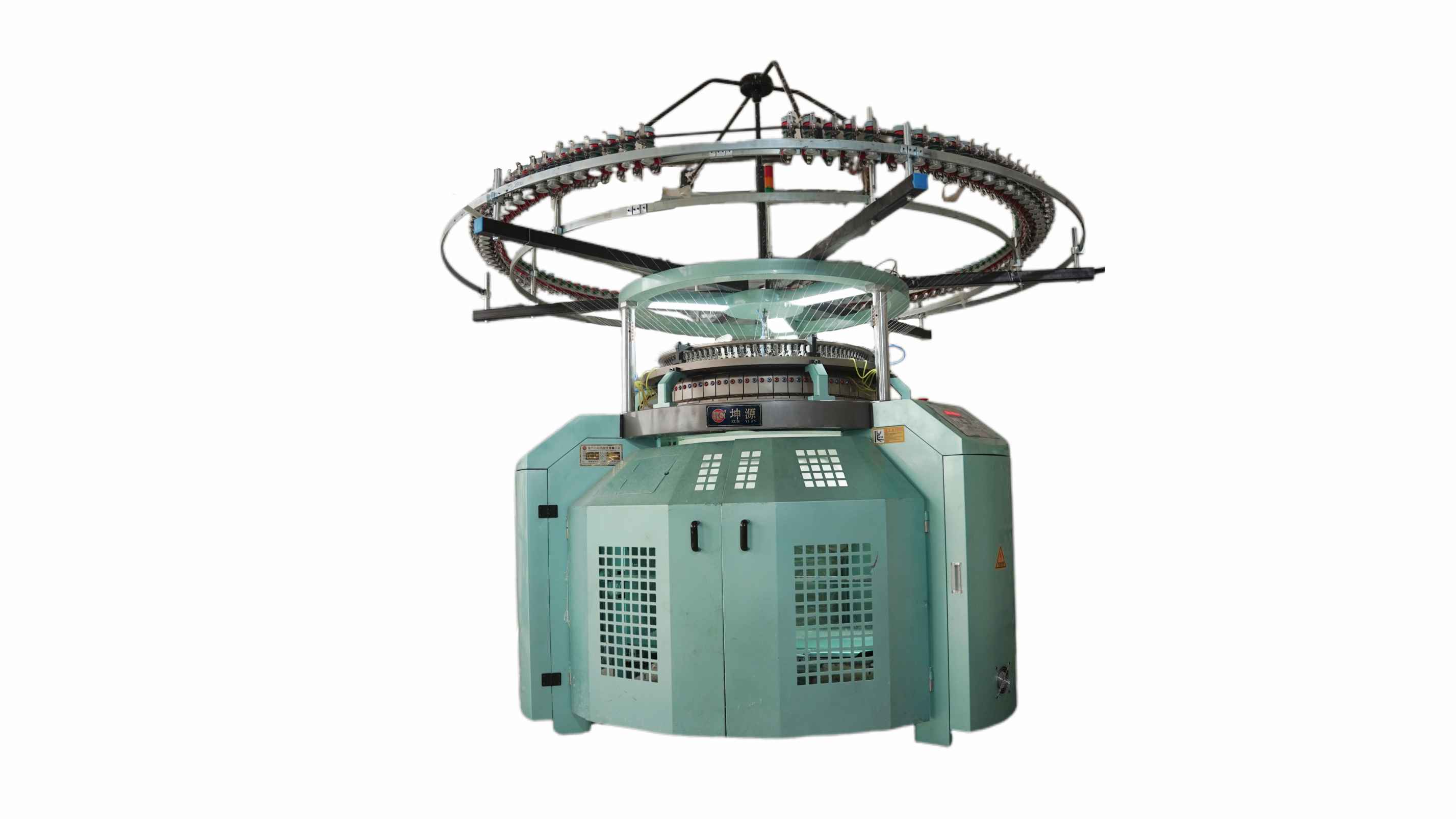
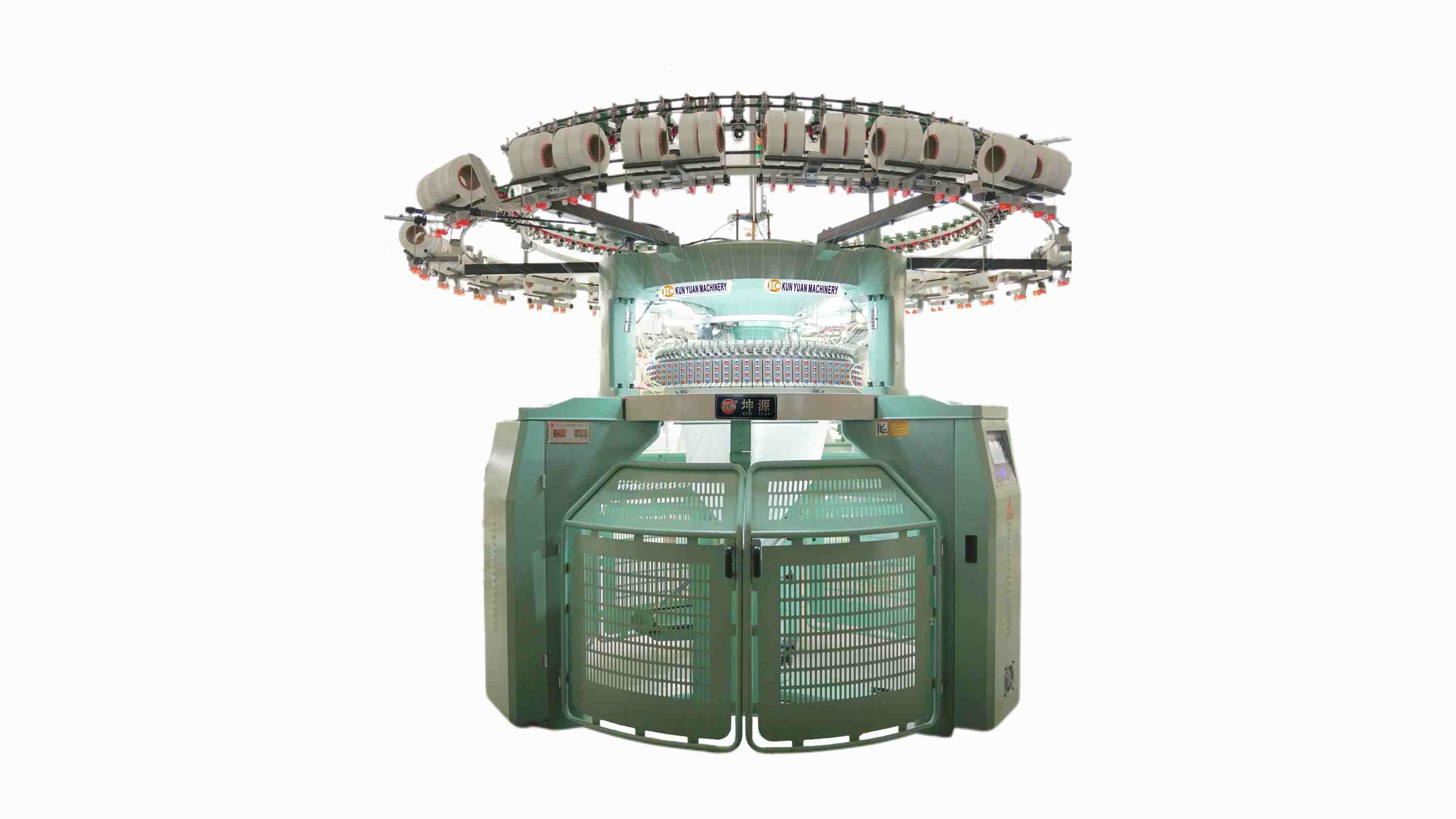
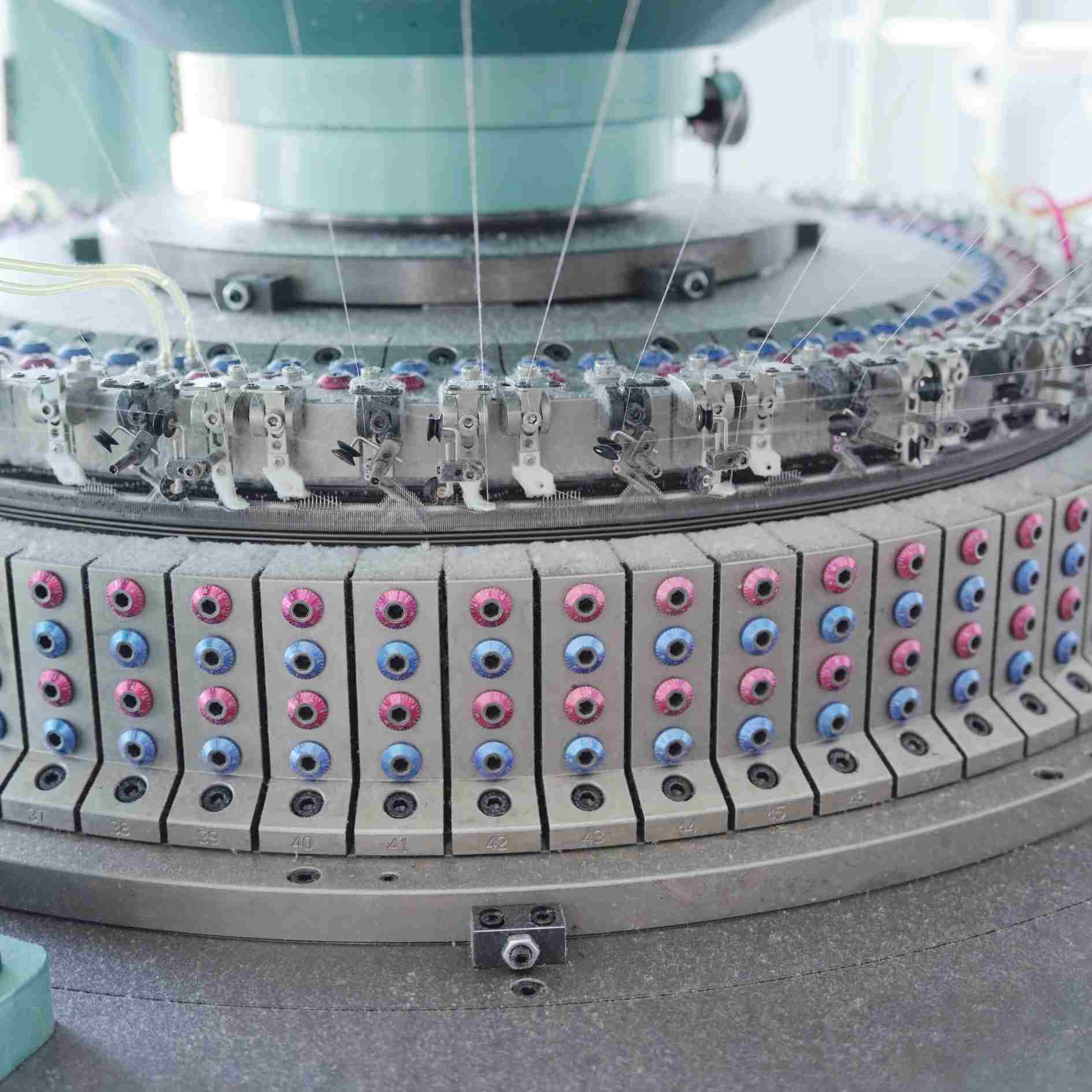
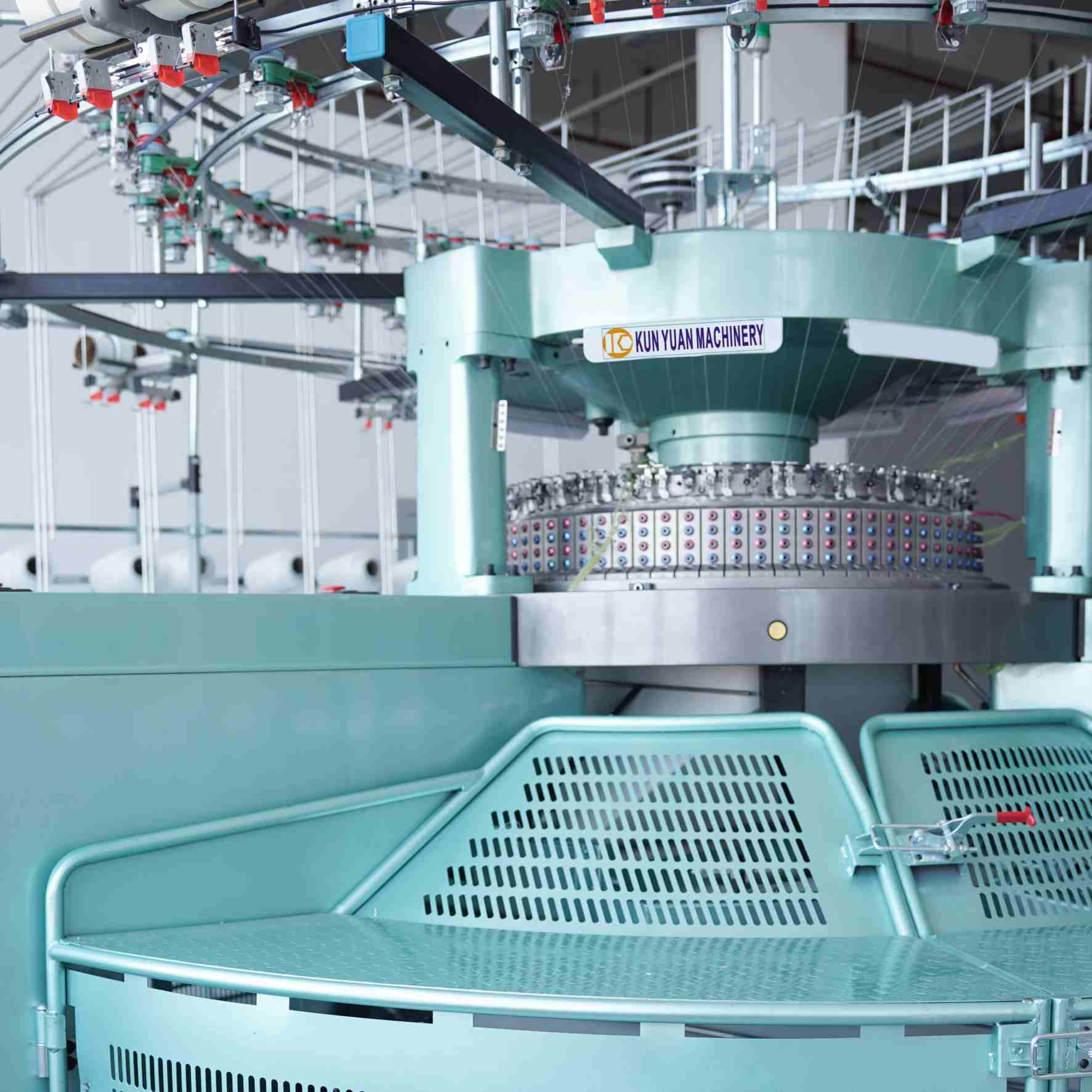
The three retained Kunyuan images show relevant pile-machine and knitting-area references, not a promise that one arrangement covers every pile route. The exact pile mechanism, pile height range, gauge, feeders and change parts must be confirmed on the model sheet and proved with the buyer's yarn.
Choose the pile route before choosing the machine
Describe whether the required surface stays as a loop, is raised after knitting, is cut during loop formation, or uses electronic selection to place pile only in chosen areas. Also record the backing structure. Two samples can look similarly soft in a showroom yet need different knitting elements and finishing sequences.
Separate ground yarn, pile yarn and any binding or effect yarn in the yarn plan. For each system, note material, count, twist, package form and acceptable variation. A pile fault can originate in the pile feed while the backing remains stable; one combined yarn description makes that distinction impossible during a trial.
Approve yarn preparation
Check package build, unwinding direction, joins and contamination before threading. Set a repeatable starting tension for each yarn role instead of copying one value to every feed. Keep one labelled package from the approved trial so a later complaint can be compared with the material actually used.
Confirm the installed pile-forming arrangement and yarn paths on the offered model.
Establish the backing and pile loops
Run slowly enough to observe yarn presentation, needle and sinker movement, loop release and take-down response. The useful setting is not the longest possible loop; it is the loop that remains secure in the backing and survives the planned dyeing, raising, shearing or cutting route.
Use the knitting area to discuss loop-forming elements, access and cleaning rather than judging fabric only from the machine exterior.
Inspect greige fabric by roll position
Mark machine direction, start time and roll position. Compare pile height, coverage, backing visibility, vertical lines and repeating feed marks under consistent light. Do not cut the sample away from its label; the machine position is part of the diagnosis.
A labelled greige sample connects a surface fault to the recorded yarn and machine condition.
Finish a controlled sample
Send a traceable strip through the actual finishing route. Raising can open loops; shearing changes surface height; dyeing and heat can alter hand, width and dimensional response. Approving only greige appearance leaves the main commercial risk untested.
Release against the finished standard
Compare usable width, finished weight, pile appearance, backing stability, shedding or fibre loss where relevant, and the defect limit agreed with the customer. Record the final machine and finishing settings together. The knitting department cannot close a surface claim if the finishing history is missing.
Use a loop-control record, not a list of “best” settings
Settings interact. More pile-yarn delivery without matching loop formation and take-down can create loose, uneven or unstable surface loops. Higher speed may change heat, lint load and yarn behaviour. The trial sheet should therefore capture one controlled change and its fabric response.
Process variable
What the operator observes
Evidence kept with the roll
Pile and ground yarn delivery
Loop height, coverage, backing visibility and tension events
Feed map, yarn labels and one marked sample
Knitting elements and cam route
Loop capture, release, vertical lines and damaged elements
Part designation, track position and service note
Take-down and fabric handling
Course density, surface distortion and roll build
Setting record, width and roll-position map
Cleaning and lubrication
Lint accumulation, oil marks, heat and restart quality
Product used, interval, action and post-clean sample
Carry one sample identity through knitting and finishing
Split the approved greige length into labelled pieces only after the full roll position is recorded. One piece remains as greige evidence; the others follow each finishing route under review. When the finished face changes, the team can then distinguish a knitting variation from a raising, cutting, shearing or heat-setting variation.
Match the application to a failure boundary
Terry or loop surfaces: confirm loop security, absorbent or aesthetic target, snag risk and the intended face.
Raised fleece: keep paired greige and raised samples; brushing can magnify thin coverage or yarn variation.
Cut high pile: confirm cutter or hook arrangement on the exact model and inspect height uniformity plus backing damage.
Patterned pile: test difficult motif edges and transitions, not only a large, easy filled area.
Applications can share a machine family without sharing one acceptance recipe. List every planned fabric in the RFQ and identify which styles need different change parts, yarn maps or separate trials.
Questions buyers ask about circular pile knitting
Can one circular pile machine make terry, fleece and cut-pile fabric?
Not automatically. Those labels cover different loop-forming and finishing routes. Confirm the exact machine arrangement, knitting elements, change parts and finishing trial for each planned fabric.
Which sample should be approved first?
Approve a labelled greige sample for knitting stability, then approve the same traceable material after the intended finishing route. Keep both because either stage can create the visible difference.
How should pile height be specified?
Use the finished-surface target and a measurable inspection method. The achievable range depends on the machine configuration, yarn, backing, take-down and finishing; confirm it in the model-specific trial.
What is the earliest useful sign of a pile fault?
A repeating thin line, sudden backing visibility, loop-height drift, yarn-tension event or change in lint/oil pattern deserves a marked sample before settings are disturbed.
What should accompany a quotation?
Send the physical fabric or construction, separate yarn data, greige and finished targets, usable width, finishing route, defect limits and the production schedule to be demonstrated.
Conclusion
A credible pile-fabric project connects five records: yarn plan, machine configuration, greige roll map, finishing route and finished inspection. When those records agree, the buyer can compare machines on repeatable fabric rather than on a broad pile label.
Use the related pile fabric circular knitting machine range to identify a starting machine family, then ask for a configuration and trial written around the exact pile route.




 Tel: +86-13859034518
 Email: info@kunyuanmachine.com
 MP/WhatsApp: +86-13859034518
 Manufacturer Address:Bacuo Village, Yonghe Town, Jinjiang City, Fujian Province