A rib machine rarely fails in one dramatic moment. Quality usually drifts first: a vertical line appears on one face, a repeat mark follows a feeder, oil staining grows after a style change, or the dial begins to sound different. A useful maintenance plan starts with those signals and the machine manual, then connects each intervention to a marked fabric sample.
Why two knitting beds change the diagnosis
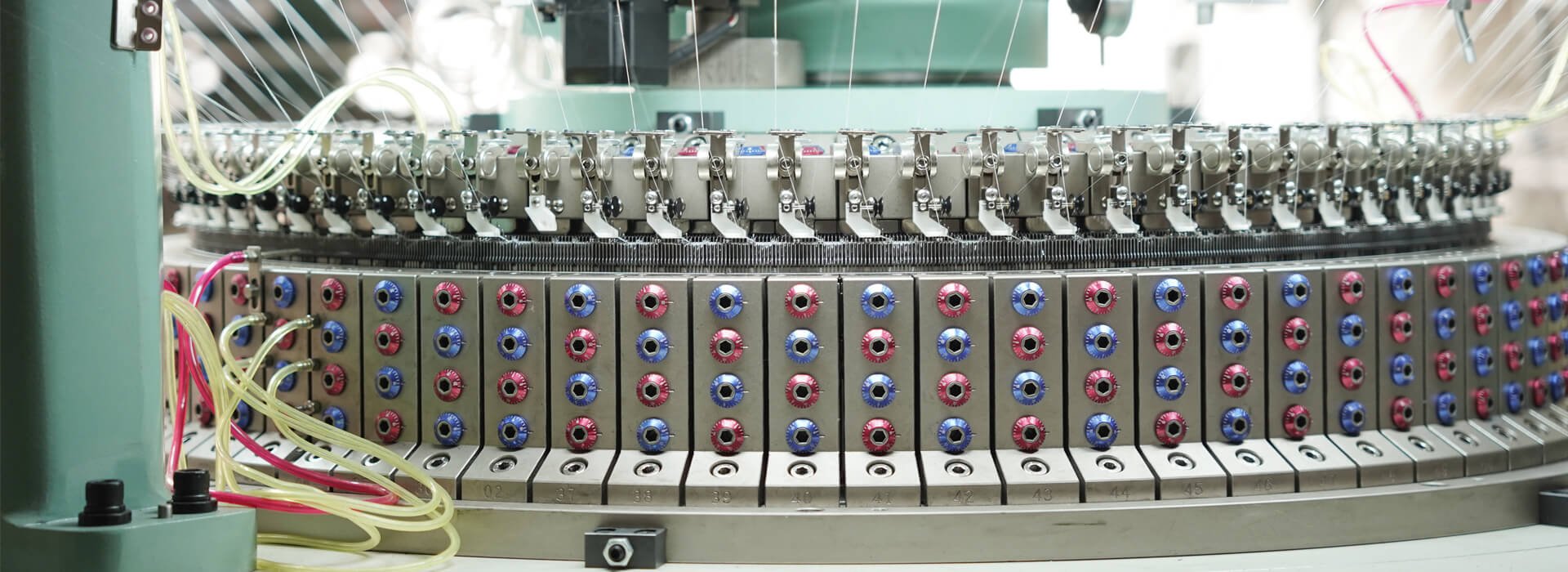
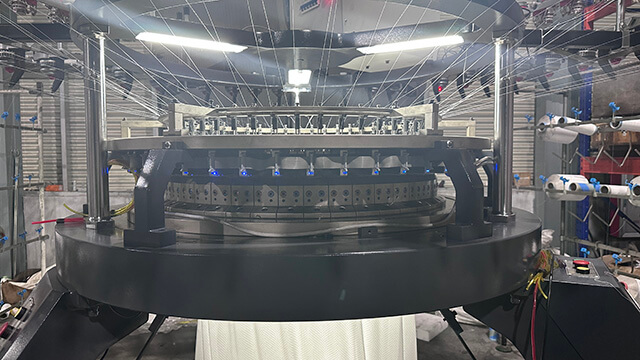
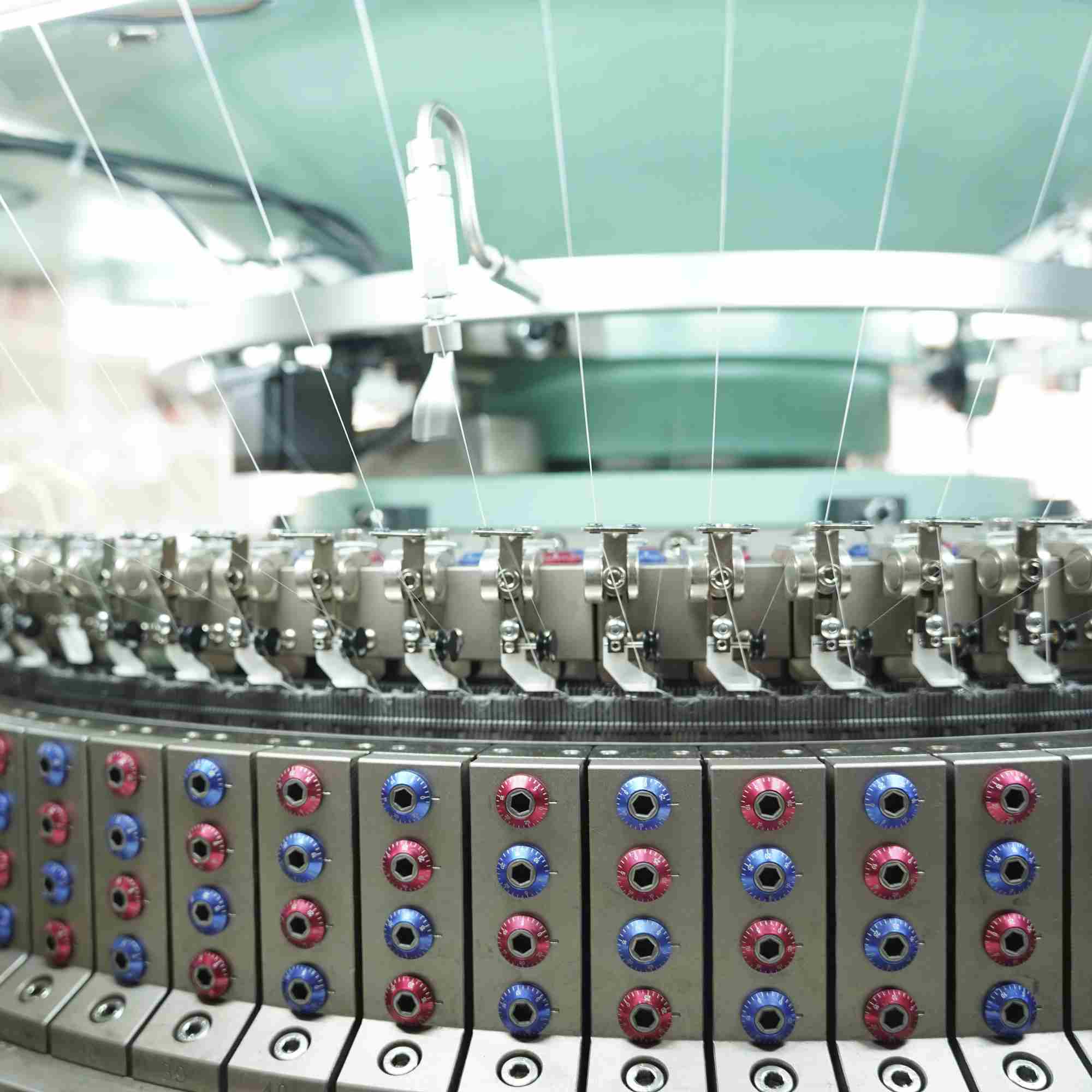
Rib and interlock production uses cylinder and dial elements. That gives the machine more ways to form a stable double-knit fabric, but it also means that timing, needle condition and yarn delivery have to agree across two beds. A defect visible on only one face may point the technician toward one needle path; a mark that crosses both faces calls for a wider check that includes yarn feed, take-down and the relationship between cylinder and dial.
Do not begin by turning a cam or replacing a complete set of parts. Preserve the roll position, mark the machine direction and note the active feeder and structure. Those few observations keep maintenance from becoming trial-and-error. They are especially useful after a style change, when yarn count, stitch length, take-down or fabric tension may have moved at the same time.
Use a known machine position and a marked fabric direction when tracing a repeating rib or interlock defect.
Read the fabric before opening the knitting head
Start with the defect interval. A line that returns at the same wale suggests a local knitting element or track. A course-wise event that follows a feeder deserves a yarn-path and feeder check. Random holes may come from weak yarn, contamination, a damaged element or handling after knitting, so changing needle timing before checking the yarn can hide the real cause.
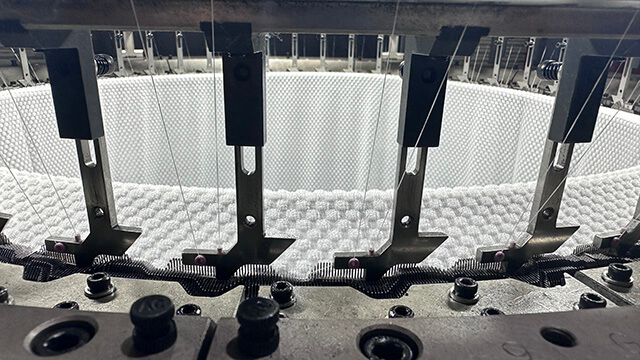
Inspect the sample under consistent light and compare both faces. Then stop and isolate the machine according to the plant's safety procedure. Check the relevant needle, latch movement, sinker or other loop-forming element, visible cam contact and yarn guide without disturbing adjacent settings. If a part is damaged, record its exact type and position; similar-looking needles are not automatically interchangeable.
Fabric signal
First area to inspect
Record before adjustment
One persistent vertical line
Needle path, needle condition and local cam contact
Wale position, face affected and needle designation
Mark repeats with one feed
Yarn guide, tension device and feeder setting
Feed number, yarn package and stitch setting
Pattern loses rib/interlock definition
Cylinder-dial relationship and selected tracks
Structure, timing reference and last accepted roll
Oil mark after a change
Oil delivery, contamination and cleaning practice
Oil type, delivery setting and affected roll section
Build a routine around production events
A calendar alone is a weak maintenance system because lint load, yarn type and running hours change. Tie quick checks to events the mill can observe: before start-up, after a yarn or structure change, at roll doffing, and when an alarm or new sound appears. Longer inspections can follow accumulated hours or the manufacturer’s service plan. The manual remains the authority for covers, guards, torque values and access to electrical or rotating parts.
Before running, confirm guards, oil level or delivery indication, yarn paths and an unobstructed knitting area.
At a changeover, clean the areas specified by the machine maker and confirm the correct needle, sinker and feeder parts for the new structure.
After the first production length, compare both fabric faces with the approved sample before the roll hides an early fault.
At doffing, note unusual stops, replaced elements and the location of any marked defect for the next shift.
A short event-based check catches drift sooner than a generic monthly checklist that ignores running conditions.
Keep cleaning and lubrication separate
Cleaning removes lint and contaminated oil; lubrication supplies the correct film to working surfaces. Adding more oil does not clean a dirty knitting system, and aggressive cleaning can damage sensors, finishes or seals. Use the oil grade and delivery method approved for the machine and knitting process. Needle-oil suitability also affects how easily the finished fabric can be washed, so a change of oil should be treated as a production trial rather than a purchasing substitution.
Check delivery points for blockage and uneven supply, but do not improvise a quantity from another model. Oil demand can vary with speed, gauge, element design and yarn. When changing lubricant, document the previous product, cleaning method, new product, start time and sample roll. This gives the dyehouse and quality team a traceable explanation if staining or washability changes.
Create a log another technician can use
A useful log names the machine, style, yarn, running hours, alarm or defect, exact position, action and result. “Changed needle” is not enough. Record the needle type, slot, reason for replacement and whether the next marked sample cleared the defect. Photographs of the fabric and removed part are often more useful than a long general comment.
Trend the records. If the same feeder, track or part position returns, look for a shared cause such as alignment, contamination, yarn abrasion or handling practice. Repeated replacement without a root-cause check wastes spares and can enlarge the fault. For unfamiliar timing, electronic or drive problems, stop at the safe diagnostic boundary and use a trained service technician.
Link every intervention to a machine position and a post-maintenance fabric sample.
Maintenance questions
How often should a rib circular knitting machine be cleaned?
Use the manufacturer's instructions and adjust the plant routine to yarn lint, running hours and environment. Production events and visible contamination are better triggers than one universal interval.
Should a bent needle be straightened and reused?
A visibly damaged knitting element should be handled according to the maker's service guidance. Reusing a deformed part can move the defect or damage adjacent elements.
Can two needle oils be mixed?
Do not assume compatibility. Confirm the machine and process requirement, consult the lubricant suppliers, and document a controlled change with a washability check.
What belongs in the spare-parts cabinet?
Keep model-specific knitting elements and approved consumables identified by part number. Add the tools and measuring references required by the service manual, not a generic collection of near-matching parts.
When should the mill call a service technician?
Use trained service support when the work crosses the plant's authorized safety boundary or involves uncertain timing, electronics, drives or repeated faults that local checks have not isolated.
Conclusion
Good rib and interlock maintenance is a chain of evidence: read the fabric, preserve the machine position, isolate one likely cause, make a controlled intervention and inspect the next sample. That discipline protects timing and reduces unnecessary part changes. For machine-specific access, lubrication and service intervals, the supplied manual and trained technician take priority over any general checklist.
Review the related rib machine range
Share the fabric structure, gauge, yarn, defect photographs and the position where the mark repeats. Kunyuan can use that information to discuss the relevant machine configuration and service boundary.




 Tel: +86-13859034518
 Email: info@kunyuanmachine.com
 MP/WhatsApp: +86-13859034518
 Manufacturer Address:Bacuo Village, Yonghe Town, Jinjiang City, Fujian Province