

Hot Keyword:
Author:KUNYUAN Machine Manufacturer TIME:2026-08-28
Paint and a short running video say little about cylinder condition, removed options, controller history or damage from storage and transport. Recommissioning should preserve each unknown, test it safely and convert it into a documented condition before production pressure begins.
Start with a quarantine inspection while the machine is isolated. Record identity plates, serial references, supplied manuals, installed assemblies, loose parts, software or parameter backups and visible modifications. Compare them with the sale description without assuming either is complete.
Use qualified personnel and model-specific documentation for disassembly, lifting, electrical work, guarding and adjustment. If the correct document or part identity is missing, that is a hold point—not permission to borrow a limit from a similar machine.
Separate evidence into identity, completeness, storage condition, mechanical condition, electrical/control state and demonstrated fabric result. Photograph corrosion, oil staining, impact, missing guards, cut cables, temporary wiring and non-original fasteners before cleaning.
Rank issues by safety and ability to damage scarce components. Cosmetic cleaning should not erase leak paths, rubbing marks or cracked deposits that reveal previous behaviour.
| Observation | Possible evidence class | First safe check | Do not assume |
|---|---|---|---|
| Corrosion or residue | Storage/lubrication history | Photograph before cleaning | Only cosmetic |
| Vertical fabric line | Position-linked element | Mark course and machine index | Needle alone |
| Periodic vibration/band | Drive or repeating event | Record interval and speed state | One universal cause |
| Missing program/options | Configuration gap | Back up and reconcile identities | Sale description is complete |
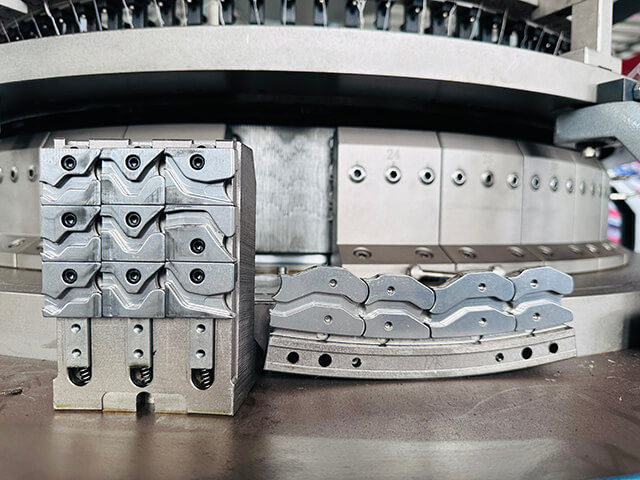
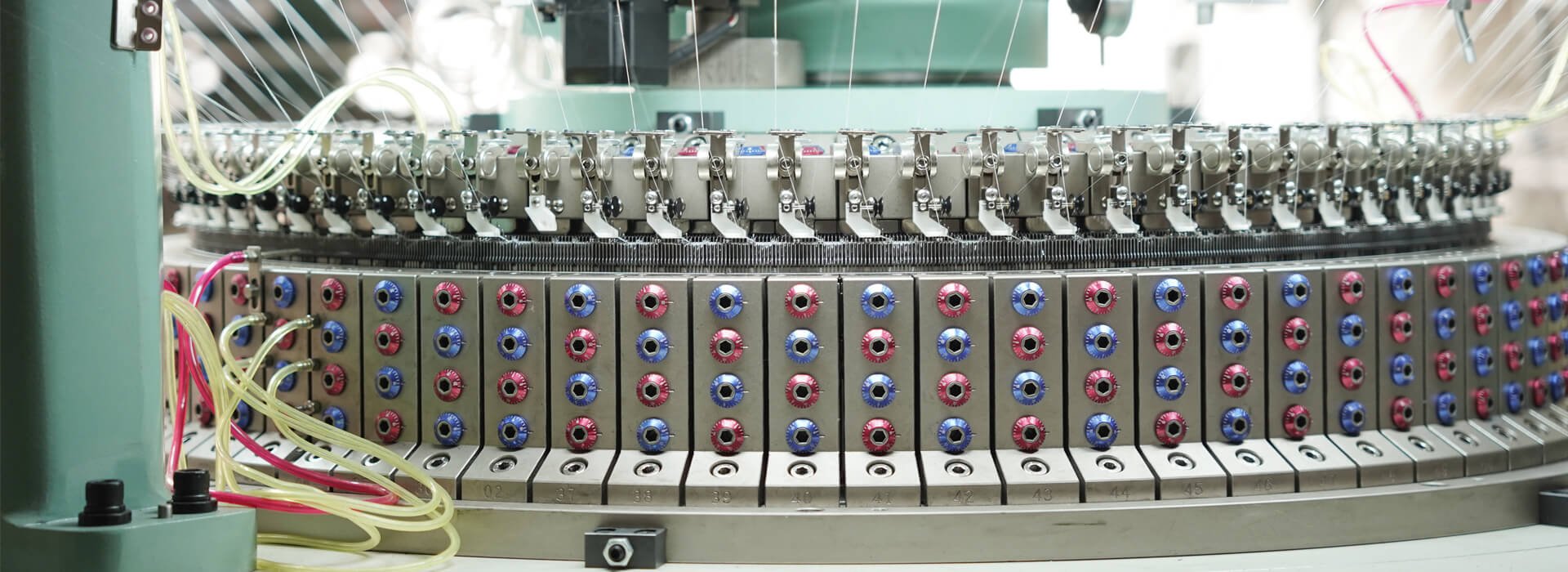
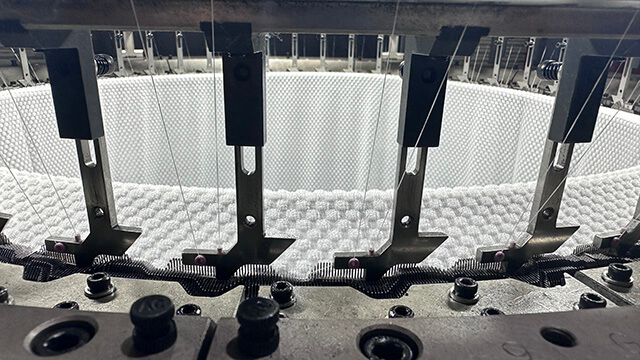
Inspect the knitting area, drive, bearings, gears, lubrication, feeders, take-down and winding systems according to service documentation. Record position, measurement method and part identity. Free movement by hand does not prove suitability at operating load.
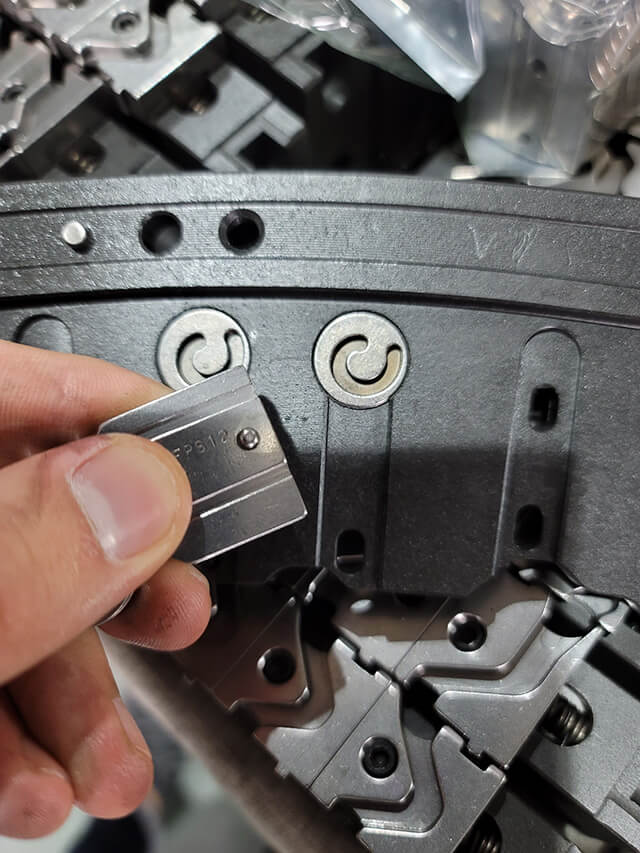
Where components are replaced, retain the removed part label and reason. A bulk replacement campaign can consume budget without showing which condition caused the fabric fault.
Back up accessible programs and parameters before alteration, noting controller identity and software revision. Compare installed sensors, drives, switches and safety devices with current documentation. Temporary bypasses or unexplained wiring require formal resolution.
Test energy isolation, guards, stops and operating modes under the approved commissioning plan before yarn enters. Clearing faults is not the same as proving protective function.
Select a simple structure and documented yarn, establish a slow baseline and mark the roll. Map vertical lines, periodic bands, holes, oil and restart bars to machine position and time. Change one verified cause, then produce an adjacent comparison.
Process the accepted section through the intended relaxation or finish. Repeat after a normal stop and warm restart; used-machine acceptance needs evidence of stability, not a few clean revolutions.
No. It rarely proves identity, installed options, guarding, sustained condition or finished-fabric quality.
Preserve and photograph diagnostic evidence first. Cleaning can remove leak, corrosion and wear clues.
Only when the manufacturer documentation and competent review confirm applicability to the exact configuration.
Choose a simple documented structure that makes position-linked faults visible before introducing complex pattern or yarn variables.
After safety functions, configuration records and a repeatable finished-fabric trial pass with remaining risks formally closed.
Used equipment should earn trust through evidence. Identity, preserved condition, controlled repair, configuration recovery and a marked repeat trial turn an uncertain asset into a known production machine without hiding gaps behind fresh paint.
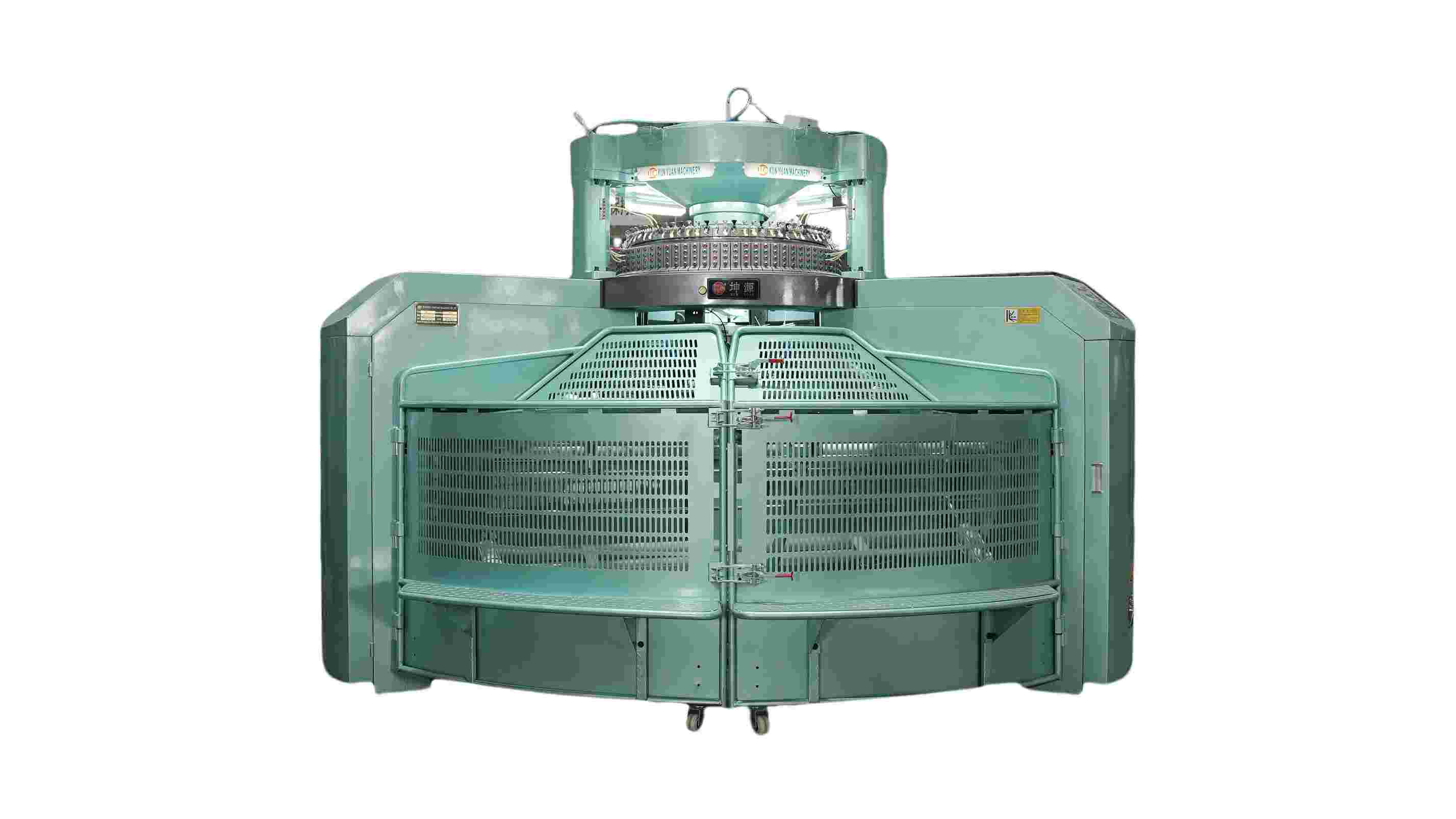
Use this fault map when comparing a second-hand unit with the circular knitting machine range and price unresolved identities, repairs and trial risk as explicit project items.

 Tel: +86-13859034518
 Email: info@kunyuanmachine.com
 MP/WhatsApp: +86-13859034518
 Manufacturer Address:Bacuo Village, Yonghe Town, Jinjiang City, Fujian Province