Design the size map before discussing machine features
Underwear production is a fit-control problem. The tube, zones, elastic yarn and finishing response must work as one garment system; a general claim about seamless knitting does not prove that system.
Begin with the graded size chart and the finished garment, not a nominal cylinder diameter. Mark where the product needs support, ventilation, modesty, softness or recovery, and identify which openings or seams remain after knitting.
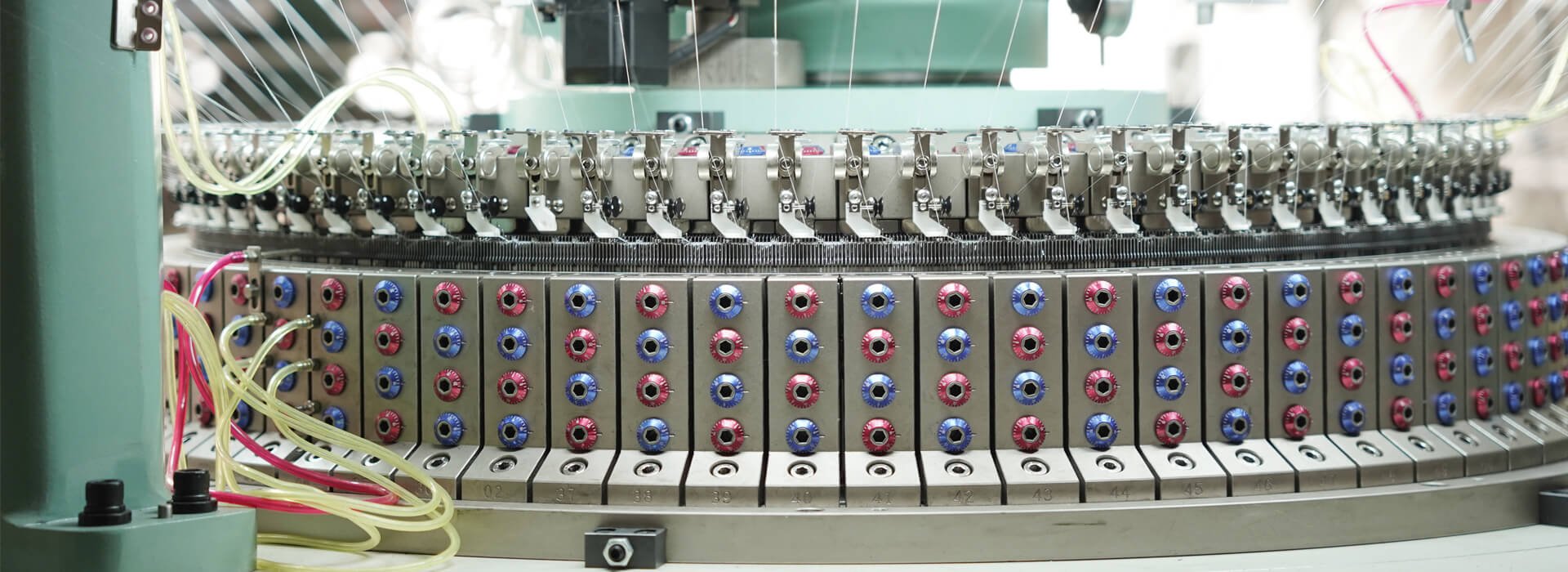
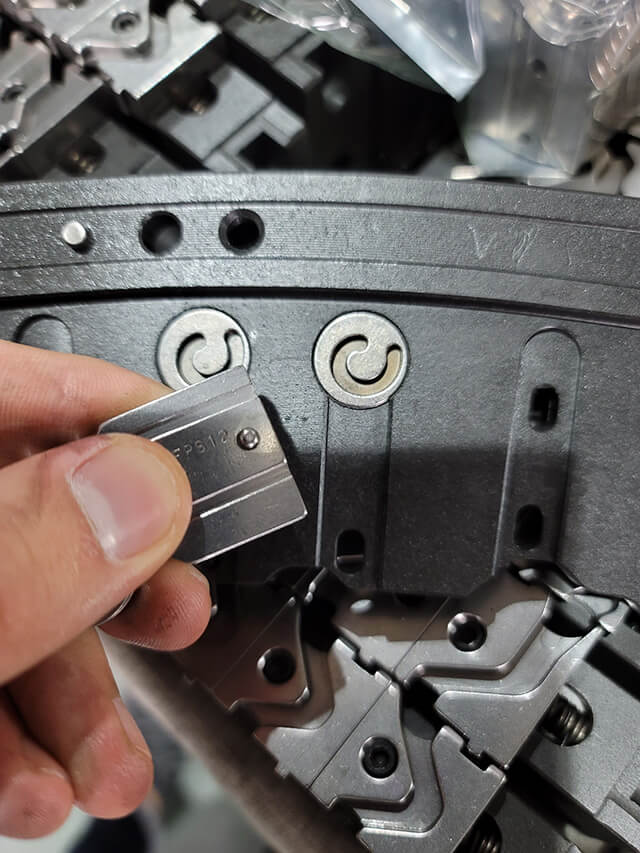
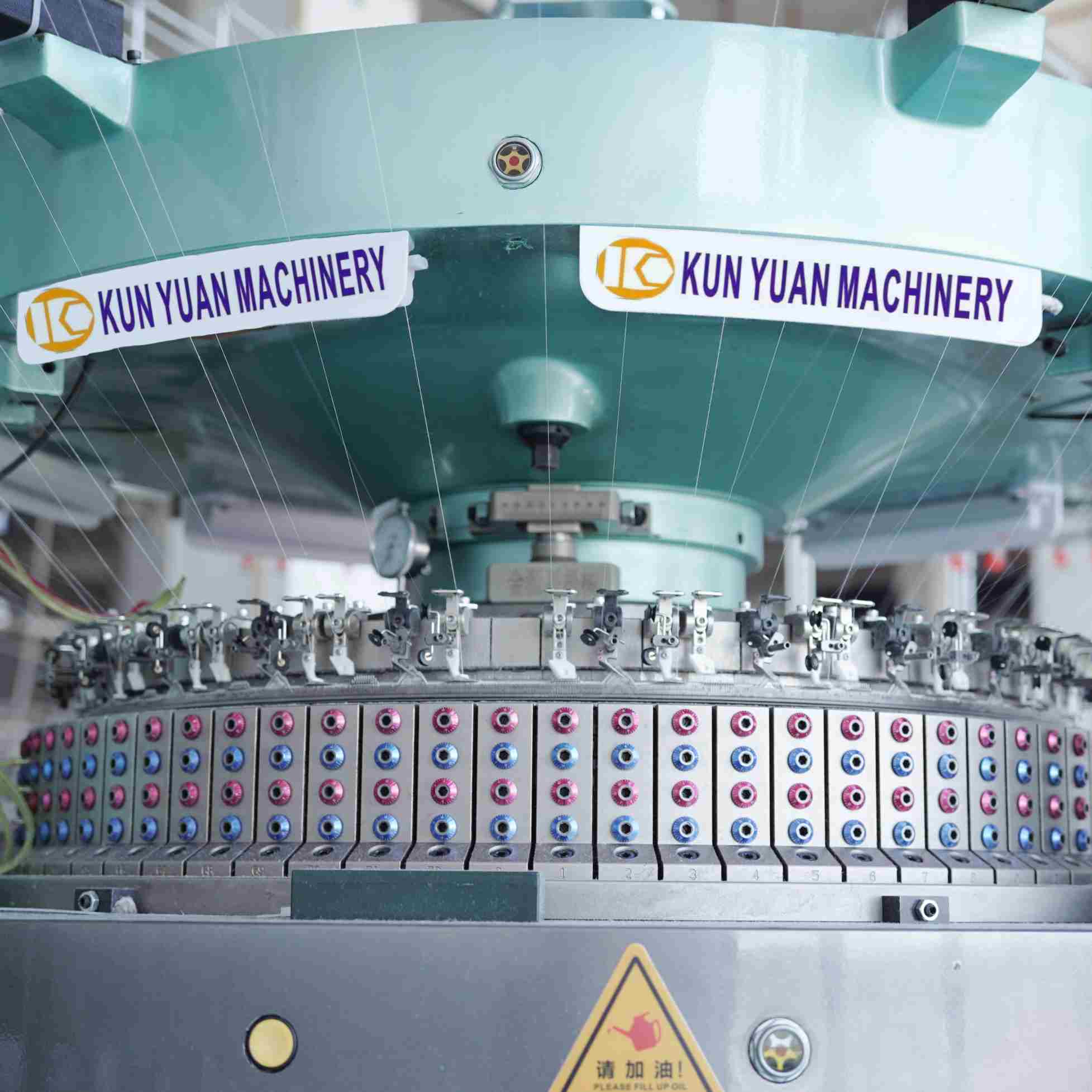
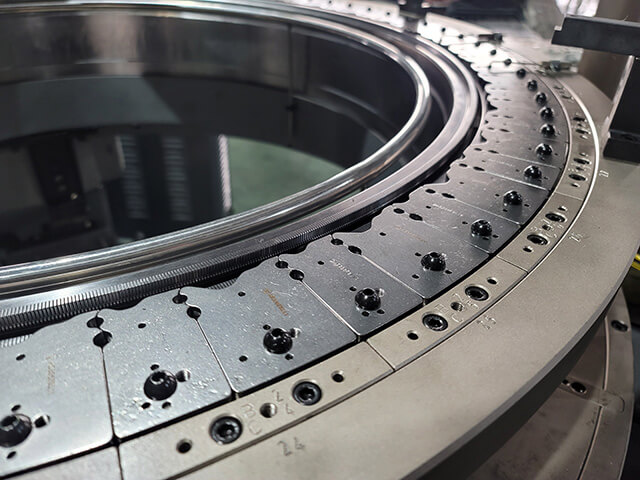
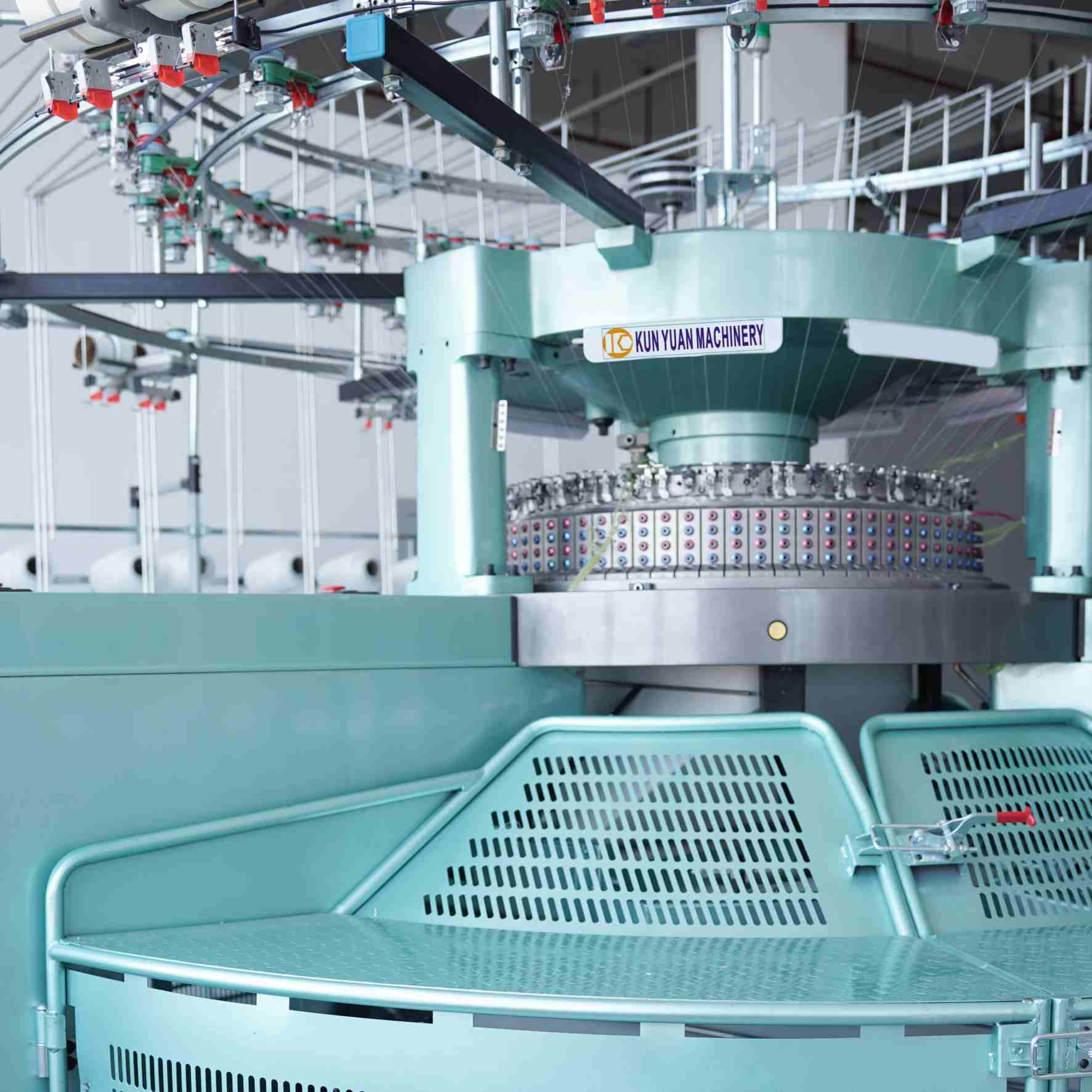
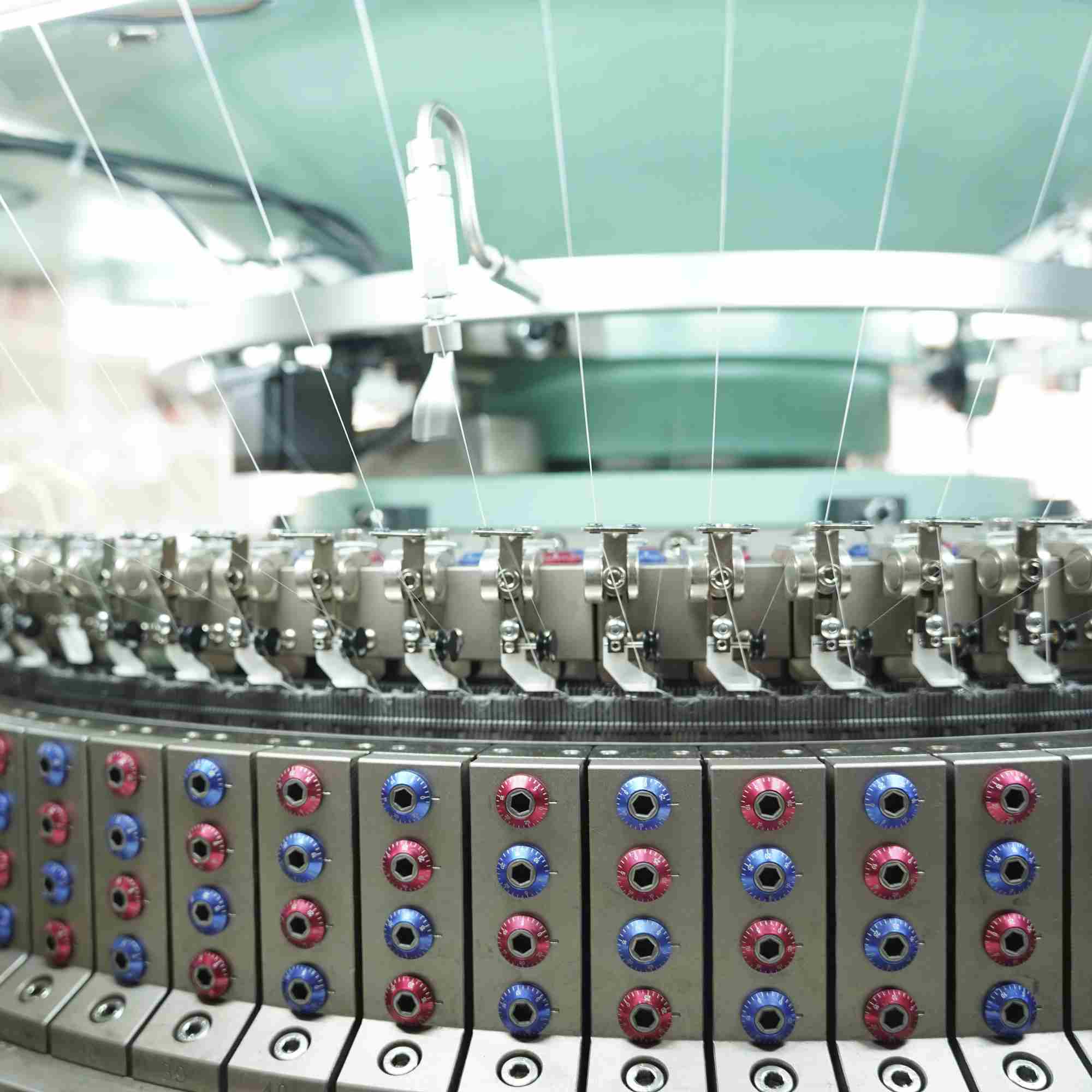
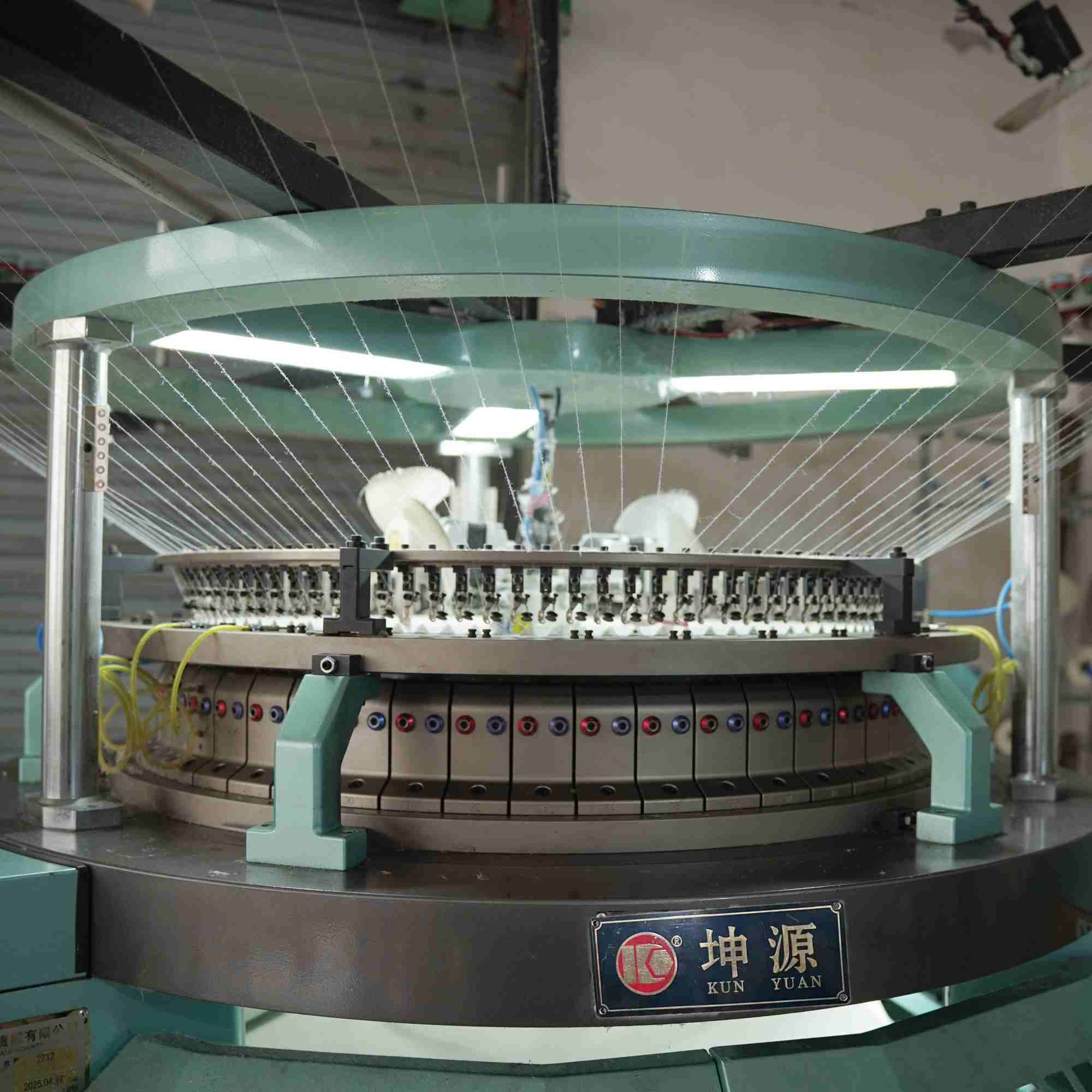
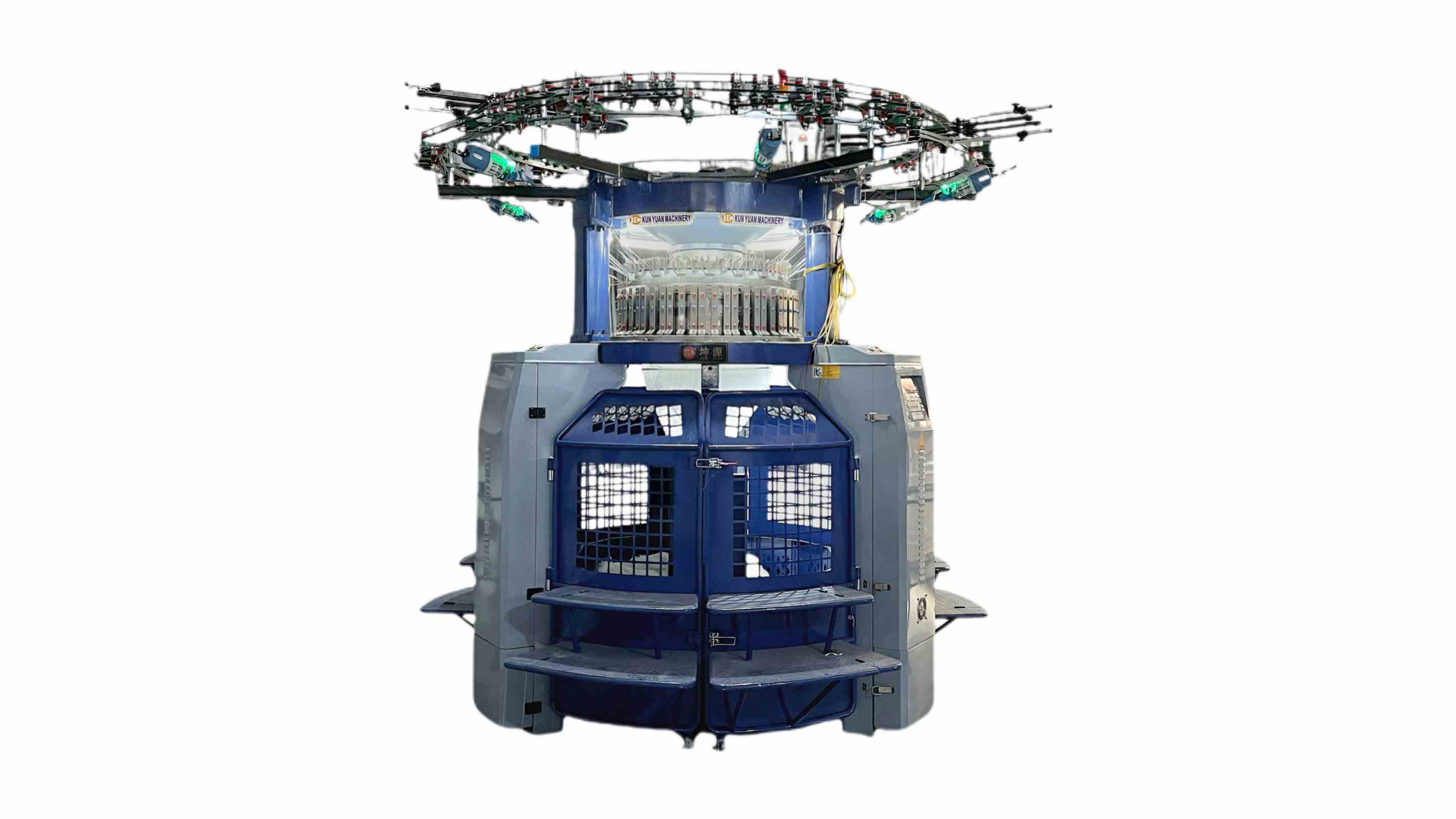
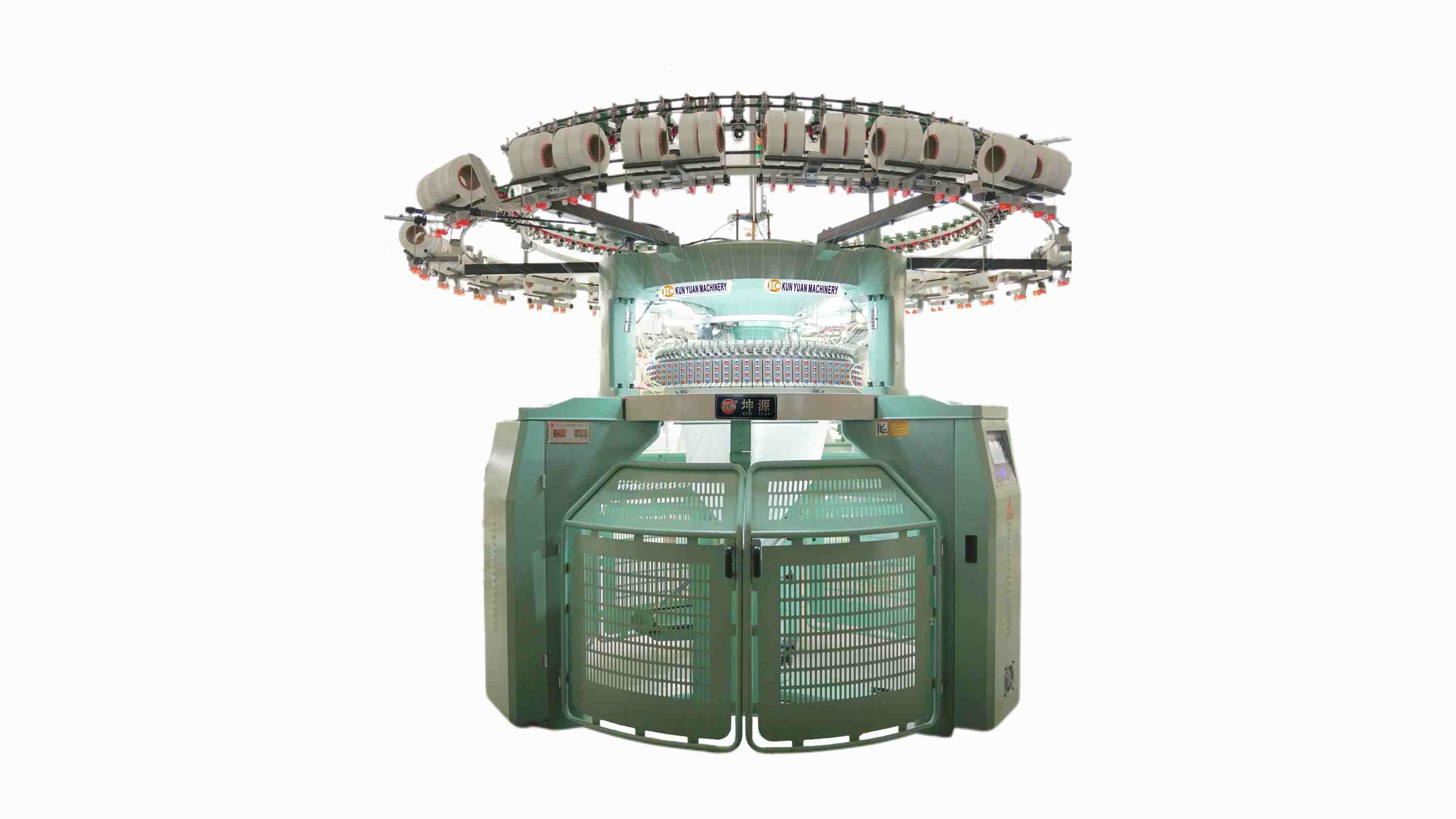
The retained Kunyuan photographs are machine and fabric references. They do not certify that every underwear style can be produced on one setup. Needle count, selection capability, yarn feeds, garment separation and finishing route need model-specific confirmation.
Use the actual style chart and machine program; the image identifies the discussion area only.
Translate the body map into knitting zones
Separate the garment into functional areas before a program is written. Waist, seat, gusset, thigh and ventilation panels may ask for different stretch, opacity or surface behaviour. Record the finished dimensions and the direction in which each measurement is taken.
A zone drawing should also show transitions. An abrupt change in stitch or elastic delivery can leave a visible line or a weak boundary, while an overly gradual transition may miss the intended support. The trial must judge both function and appearance after relaxation.
Record each yarn role, feeder path and package rather than relying on a colour-coded program alone.
Assign yarn roles instead of one generic yarn list
List ground yarn, covered or bare elastic, plating yarn and any colour or effect yarn separately. Include material, count system, package, lot and intended zone. Elastic feed deserves its own tension and storage plan because a stable ground-yarn route does not prove stable recovery.
Run packages from production supply where possible. A laboratory cone with perfect winding can hide stops that appear on bulk packages. Keep one labelled package and a thread-path photograph with the approved garment.
The accepted garment record should identify the program and the physical machine configuration together.
Treat the program as controlled production data
Store the approved pattern file, machine and controller identification, software revision and checksum or dated copy. Link that file to the size, yarn plan and sample. A program name such as medium-black is not enough when several revisions exist.
Document editable variables separately from protected machine parameters. Operators need to know which stitch, selection, feed and take-down values may be adjusted during normal work and which require technician approval.
Approve dimensions after the real relaxation and finishing route
Measure a marked garment at the machine, after the agreed relaxation period and after washing or finishing conditions that represent the product. Record length, girth, opening dimensions and zone position, then add stretch and recovery checks where the specification requires them.
Do not average away a local fit problem. A garment can meet overall girth while the waistband recovers poorly or the gusset sits in the wrong place. Keep measurements by zone and size.
Release a size family, not one showcase sample
Select at least the smallest, middle and largest planned sizes, plus any style with a difficult colour, elastic or structure change. Record knitting time, stops, manual interventions, finishing response and grade consistency.
The commercial release should state which sizes and yarns were demonstrated, which remain extrapolated, and what will trigger another trial. That boundary is more useful than a broad promise that all sizes are available.
Zone-to-acceptance matrix
Zone
Production variable
Finished check
Hold signal
Waist/opening
Elastic delivery and stitch plan
Opening size and recovery
Roll, cutting or poor return
Body/seat
Needle selection and ground yarn
Opacity, stretch and fit
Visible bands or tight spots
Ventilation panel
Mesh or stitch transition
Position and durability
Open holes or shifted panel
Gusset/leg
Shaping and finishing response
Comfort and dimensional balance
Twist, seam stress or asymmetry
Questions buyers ask about underwear knitting machines
Does seamless mean the garment has no sewing at all?
Not always. Circular seamless technology can reduce seams, but openings, gussets, labels or other operations may remain. Ask for the exact make-up route for the planned style.
How should cylinder size be chosen?
Start from finished garment dimensions, needle count, structure and stretch. A diameter label alone does not prove the size range.
Can one program be scaled to every size?
Scaling is possible only within the machine, needle and pattern limits. Prove representative boundary sizes and keep separate measurements.
What is the best acceptance sample?
Use production yarn and a finished garment identified by machine, program, size and date. Retain the matching settings and raw measurement sheet.
Which spare parts matter first?
Base the initial list on installed selectors, needles, yarn-control devices and the manufacturer's maintenance plan for the exact model, not on a universal kit.
Conclusion
An underwear machine earns approval when the size map survives knitting, relaxation and finishing with repeatable zone behaviour. The working record is the garment drawing, yarn plan, program version and measured size set—not a feature list.




 Tel: +86-13859034518
 Email: info@kunyuanmachine.com
 MP/WhatsApp: +86-13859034518
 Manufacturer Address:Bacuo Village, Yonghe Town, Jinjiang City, Fujian Province