

Hot Keyword:
Author:KUNYUAN Machine Manufacturer TIME:2026-08-28
A knitted hat may be a continuous tube cut and closed later, a shaped product with programmed changes, or a small-diameter item using a different needle and selection system. Those routes do not share one machine specification.
Send a finished reference and an opened construction sample when possible. Mark crown, body, cuff, lining, logo or pattern zones and every sewing, closing or finishing operation. The supplier needs the production route, not only the word beanie.
Separate an apparel small-diameter circular machine from a sock or hosiery platform unless the exact product and model documentation support the intended route. Similar cylinder diameters do not make the machines interchangeable.
Record finished circumference, relaxed height, cuff depth, crown construction, stretch and recovery, lining and decoration. State whether sizes change by cylinder, needle count, program, yarn or finishing.
Include difficult boundary styles: the smallest size, heaviest yarn, widest colour repeat and tightest crown. A machine selected from an easy plain sample can fail on the actual range.
For a cut-and-sew route, specify tube circumference, usable length, waste allowance and the closing method. For programmed shaping, identify which needles or feeds change and how the crown is closed.
Put the downstream labour and equipment beside the knitting operation. A faster tube has little value if cutting, closing or decoration becomes the bottleneck.
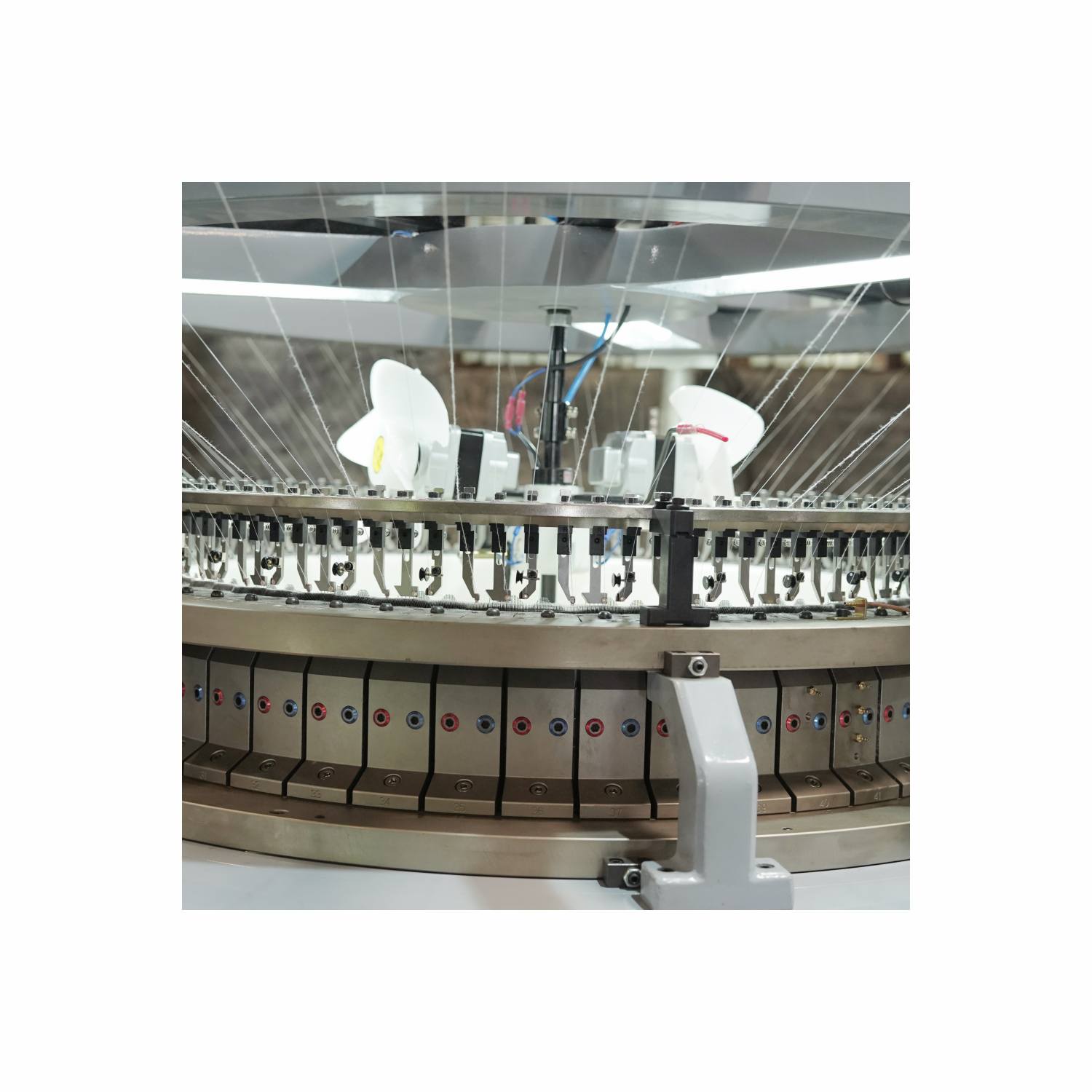
Send yarn material, count, ply, twist, package and any elastic or plating plan. Ask for the model's approved gauge and needle range rather than applying a universal yarn chart.
Knit a cuff and body that will receive the real wash or finishing treatment. Measure recovery and hand after that route; a greige tube can change substantially.
Logos, stripes, jacquard and texture use different selection and yarn-handling events. Supply the actual repeat file or chart and mark the section that is hardest to knit.
Inspect the reverse for floats, tails and trapped yarn as well as the visible face. Confirm the operator can reload the program and reproduce the transition after a stop.
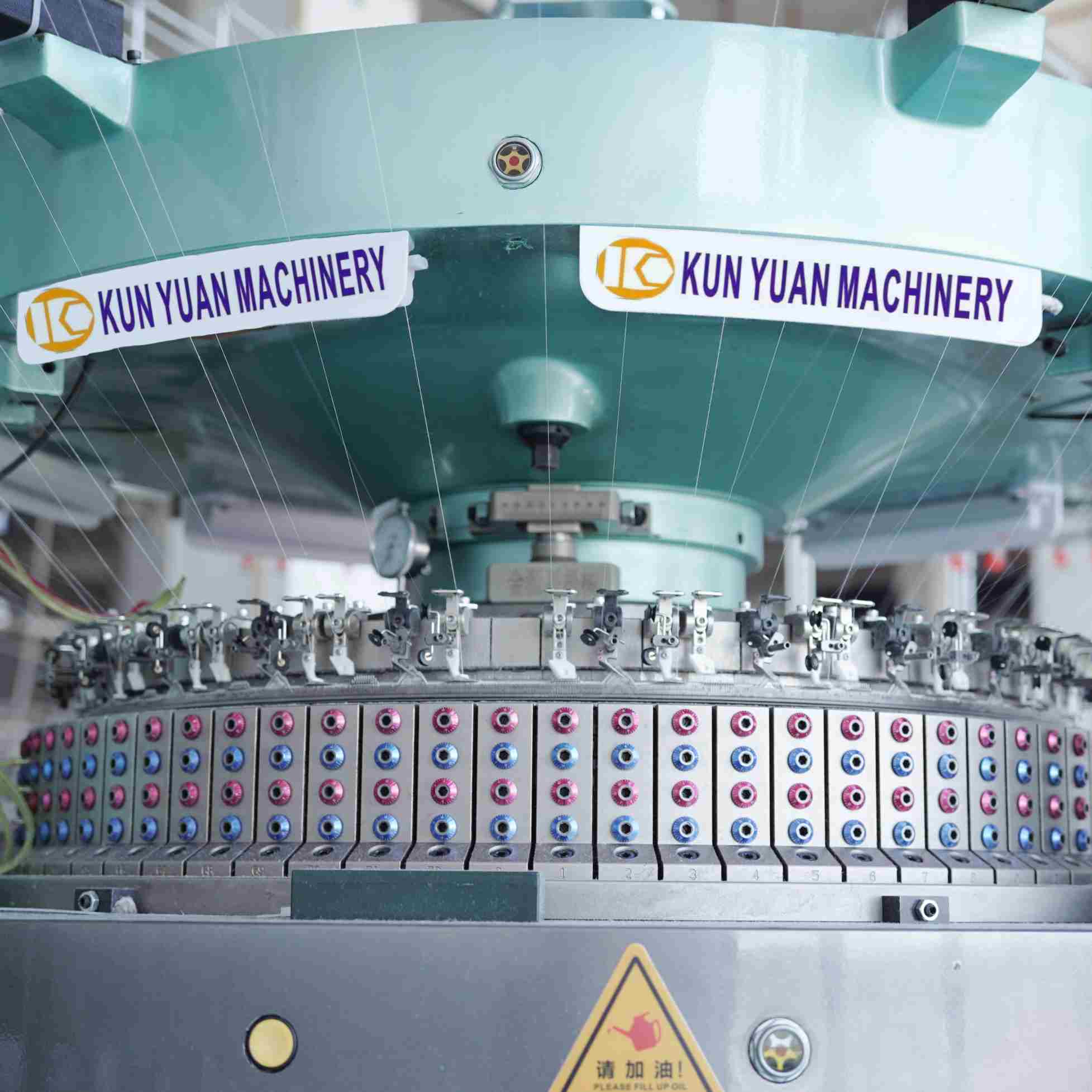
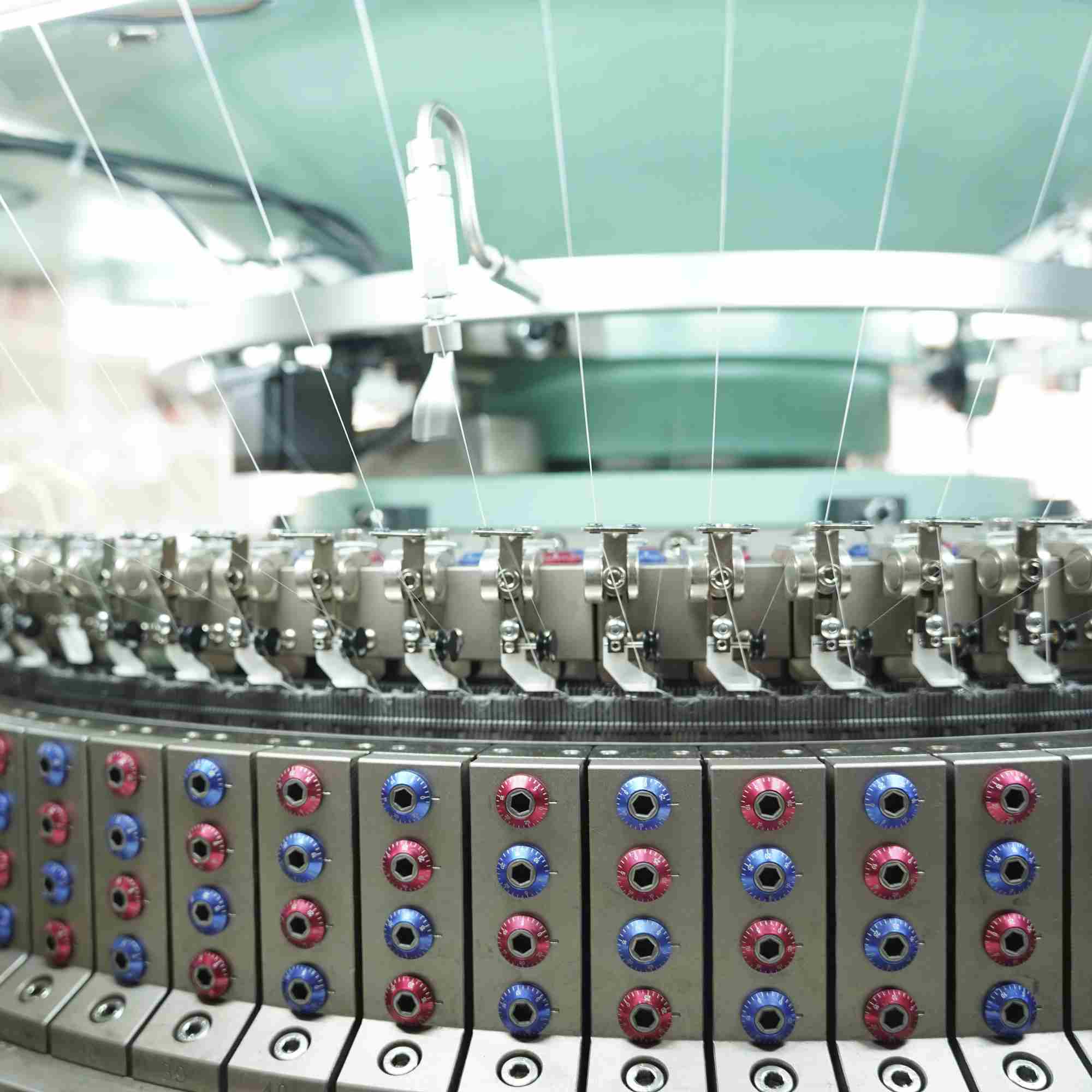
Run representative sizes and structures with production packages. Record stable speed, stops, interventions, dimensions, weight, crown appearance, cuff recovery and make-up time.
The quotation should list styles demonstrated, styles requiring change parts and styles outside the offered scope. That prevents a broad application claim from becoming a hidden change order.
| Decision | Tube-and-close route | Programmed/shaped route | Evidence |
|---|---|---|---|
| Knitting duty | Stable tube and cuff | Zone or needle changes | Program and roll/garment record |
| Downstream work | Cutting and crown closing | Closing and finishing may remain | Time study and quality sample |
| Main risk | Waste and make-up balance | Selection and transition reliability | Boundary-style trial |
| Release | Tube dimensions and recovery | Shape, size and program repeatability | Signed sample set |
Not automatically. Some platforms share small diameters, but cylinder, dial, selection, take-down and product handling differ. Confirm the exact model and route.
Only within the needle, structure, stretch and program limits. Prove the smallest and largest commercial sizes instead of assuming scale.
Send physical samples, dimensions, yarn data, crown/cuff construction, pattern repeat, make-up route, volume and quality limits.
Use the busiest colour or selection sequence, inspect both sides and retain the program, feeder map and stop log.
Include finished dimensions, recovery, appearance, stable run, stops, make-up result and a named list of styles included or excluded.
The right small-diameter machine is the one that closes the entire hat route: tube or shaping, cuff, crown, pattern, finishing and repeatable size. A cylinder label without that route is not a purchase specification.
Send the crown drawing, size set and make-up route with your enquiry for the body size circular knitting machine range rather than requesting a price from the hat label alone.

 Tel: +86-13859034518
 Email: info@kunyuanmachine.com
 MP/WhatsApp: +86-13859034518
 Manufacturer Address:Bacuo Village, Yonghe Town, Jinjiang City, Fujian Province