

Hot Keyword:
Author:KUNYUAN Machine Manufacturer TIME:2026-08-29
Three Thread Fleece Circular Knitting Machine: Yarn Paths and Finishing Trial frames the three-yarn brief around one practical outcome: coordinate ground, tie and fleece yarns so the knitted construction survives raising, brushing, shearing or other planned finishing without losing stability. Its feed-path control uses measured inputs and retained production evidence, so the three-yarn brief decision for Three Thread Fleece Circular Knitting Machine does not depend on brochure speed or one untraceable finished-face approval sample.
The three-yarn brief objective is to coordinate ground, tie and fleece yarns so the knitted construction survives raising, brushing, shearing or other planned finishing without losing stability. For this Three Thread Fleece Circular Knitting Machine stage, the team should state each yarn count and material, feed ratio, plated position, target raw GSM, target finished hand, width, shrinkage and sweatshirt performance requirement.
The three-yarn brief decision also needs to a clean raw roll cannot prove the final result because finishing intensity changes bulk, weight, width, hairiness and the visibility of plating faults. Its practical proof is to keep yarn certificates, route photographs, feeder consumption readings, raw samples and finished panels linked to one settings revision. Name the responsible observer for three-yarn brief, identify the Three Thread Fleece Circular Knitting Machine configuration for that three-yarn brief, then mark the corresponding fabric roll for three-yarn brief.
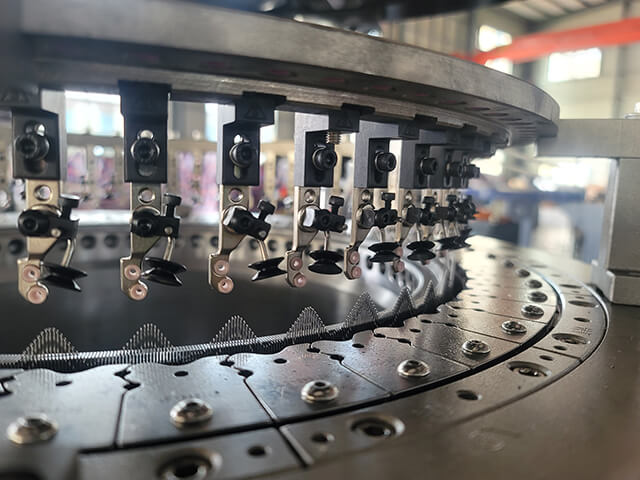
The feed-path control objective is to identify each path at the creel and feeder, then record stitch length, yarn demand, tension range, sinker and cam setup for the accepted construction. For this Three Thread Fleece Circular Knitting Machine stage, the team should inspect tie coverage, fleece float regularity, ground visibility, barre risk, feeder stops and the response of the reverse face after raising.
The feed-path control decision also needs to state each yarn count and material, feed ratio, plated position, target raw GSM, target finished hand, width, shrinkage and sweatshirt performance requirement. Its practical proof is to judge both fabric faces after the agreed finishing sequence and confirm GSM, width, shrinkage, appearance, strength and saleable yield. Name the responsible observer for feed-path control, identify the Three Thread Fleece Circular Knitting Machine configuration for that feed-path control, then mark the corresponding fabric roll for feed-path control.
The plating evidence objective is to an unstable yarn ratio can create uncovered ground, excessive weight variation, weak tie points or waste during aggressive raising and shearing. For this Three Thread Fleece Circular Knitting Machine stage, the team should inspect tie coverage, fleece float regularity, ground visibility, barre risk, feeder stops and the response of the reverse face after raising.
The plating evidence decision also needs to a clean raw roll cannot prove the final result because finishing intensity changes bulk, weight, width, hairiness and the visibility of plating faults. Its practical proof is to identify each path at the creel and feeder, then record stitch length, yarn demand, tension range, sinker and cam setup for the accepted construction. Name the responsible observer for plating evidence, identify the Three Thread Fleece Circular Knitting Machine configuration for that plating evidence, then mark the corresponding fabric roll for plating evidence.
The finished-face approval objective is to judge both fabric faces after the agreed finishing sequence and confirm GSM, width, shrinkage, appearance, strength and saleable yield. For this Three Thread Fleece Circular Knitting Machine stage, the team should keep yarn certificates, route photographs, feeder consumption readings, raw samples and finished panels linked to one settings revision.
The finished-face approval decision also needs to an unstable yarn ratio can create uncovered ground, excessive weight variation, weak tie points or waste during aggressive raising and shearing. Its practical proof is to coordinate ground, tie and fleece yarns so the knitted construction survives raising, brushing, shearing or other planned finishing without losing stability. Name the responsible observer for finished-face approval, identify the Three Thread Fleece Circular Knitting Machine configuration for that finished-face approval, then mark the corresponding fabric roll for finished-face approval.
| finished-face approval gate | Buyer definition for finished-face approval | finished-face approval evidence retained |
|---|---|---|
| Input boundary | State each yarn count and material, feed ratio, plated position, target raw gsm, target finished hand, width, shrinkage and sweatshirt performance requirement. | Keep yarn certificates, route photographs, feeder consumption readings, raw samples and finished panels linked to one settings revision. |
| Operating method | Identify each path at the creel and feeder, then record stitch length, yarn demand, tension range, sinker and cam setup for the accepted construction. | Inspect tie coverage, fleece float regularity, ground visibility, barre risk, feeder stops and the response of the reverse face after raising. |
| Acceptance gate | Judge both fabric faces after the agreed finishing sequence and confirm gsm, width, shrinkage, appearance, strength and saleable yield. | An unstable yarn ratio can create uncovered ground, excessive weight variation, weak tie points or waste during aggressive raising and shearing. |
| Commercial handoff | Calculate material use by yarn system and include finishing loss, second-quality risk, cleaning demand and changeover time in the style estimate. | Provide a threading map, approved ratios, setting limits, stop-response rules and labeled raw and finished standards to the production team. |
The yield calculation objective is to calculate material use by yarn system and include finishing loss, second-quality risk, cleaning demand and changeover time in the style estimate. For this Three Thread Fleece Circular Knitting Machine stage, the team should a clean raw roll cannot prove the final result because finishing intensity changes bulk, weight, width, hairiness and the visibility of plating faults.
The yield calculation decision also needs to keep yarn certificates, route photographs, feeder consumption readings, raw samples and finished panels linked to one settings revision. Its practical proof is to judge both fabric faces after the agreed finishing sequence and confirm GSM, width, shrinkage, appearance, strength and saleable yield. Name the responsible observer for yield calculation, identify the Three Thread Fleece Circular Knitting Machine configuration for that yield calculation, then mark the corresponding fabric roll for yield calculation.
The style handover objective is to provide a threading map, approved ratios, setting limits, stop-response rules and labeled raw and finished standards to the production team. For this Three Thread Fleece Circular Knitting Machine stage, the team should judge both fabric faces after the agreed finishing sequence and confirm GSM, width, shrinkage, appearance, strength and saleable yield.
The style handover decision also needs to state each yarn count and material, feed ratio, plated position, target raw GSM, target finished hand, width, shrinkage and sweatshirt performance requirement. Its practical proof is to an unstable yarn ratio can create uncovered ground, excessive weight variation, weak tie points or waste during aggressive raising and shearing. Name the responsible observer for style handover, identify the Three Thread Fleece Circular Knitting Machine configuration for that style handover, then mark the corresponding fabric roll for style handover.
For the three-yarn brief boundary, state each yarn count and material, feed ratio, plated position, target raw GSM, target finished hand, width, shrinkage and sweatshirt performance requirement. Each supplier should answer that exact three-yarn brief configuration with named Three Thread Fleece Circular Knitting Machine evidence.
The feed-path control record should show that teams identify each path at the creel and feeder, then record stitch length, yarn demand, tension range, sinker and cam setup for the accepted construction. In the linked run, they should also inspect tie coverage, fleece float regularity, ground visibility, barre risk, feeder stops and the response of the reverse face after raising.
For plating evidence, the material risk is that teams an unstable yarn ratio can create uncovered ground, excessive weight variation, weak tie points or waste during aggressive raising and shearing. Written plating evidence limits, named owners and a settings-linked Three Thread Fleece Circular Knitting Machine sample should close it.
The signed finished-face approval rule is to judge both fabric faces after the agreed finishing sequence and confirm GSM, width, shrinkage, appearance, strength and saleable yield. Its finished-face approval evidence belongs in the Three Thread Fleece Circular Knitting Machine dossier, not only in a verbal handover.
When evaluating yield calculation, calculate material use by yarn system and include finishing loss, second-quality risk, cleaning demand and changeover time in the style estimate. Write down the yield calculation assumptions so the compared Three Thread Fleece Circular Knitting Machine boundaries remain visible.
For Three Thread Fleece Circular Knitting Machine: Yarn Paths and Finishing Trial, a defensible result must coordinate ground, tie and fleece yarns so the knitted construction survives raising, brushing, shearing or other planned finishing without losing stability. Compare alternatives through the article's three-yarn brief inputs and finished-face approval evidence, then apply that acceptance gate to a representative run. Finally, provide a threading map, approved ratios, setting limits, stop-response rules and labeled raw and finished standards to the production team. The resulting style handover stays connected to saleable fabric, documented three-yarn brief scope and the style handover team responsible for sustaining it.
For “Three Thread Fleece Circular Knitting Machine: Yarn Paths and Finishing Trial,” use the three-yarn brief brief to send Kunyuan this configuration: State each yarn count and material, feed ratio, plated position, target raw gsm, target finished hand, width, shrinkage and sweatshirt performance requirement. Include the proposed finished-face approval method so the three-yarn brief engineering review stays tied to this style handover test boundary.
Review the related machine range
 Tel: +86-13859034518
 Email: info@kunyuanmachine.com
 MP/WhatsApp: +86-13859034518
 Manufacturer Address:Bacuo Village, Yonghe Town, Jinjiang City, Fujian Province