Diagnose from the first repeating course, not from the loudest symptom
Small-diameter machines pack loop-forming and yarn-control events into a short circumference. A single damaged needle, dirty trick, misaligned guide or unstable package can repeat quickly around a narrow product.
Begin maintenance with a marked sample and position record. Note machine direction, course, feed or needle relationship, yarn lot, program and the last change. Cleaning or replacing parts before that evidence is captured can erase the cause.
Follow the exact machine manual for lubrication, needle removal, guards and lockout. This article defines the diagnostic record, not a substitute maintenance interval or safety procedure.
Preserve the fabric symptom before opening the head
Mark the first and last affected courses and keep the product orientation. Decide whether the defect repeats by needle position, feed, colour, program event or time. Photograph face and reverse under consistent light.
If a break or hole is random, inspect yarn and package handling before blaming a needle. If it repeats at the same cylinder position, prioritise the corresponding trick and loop-forming parts.
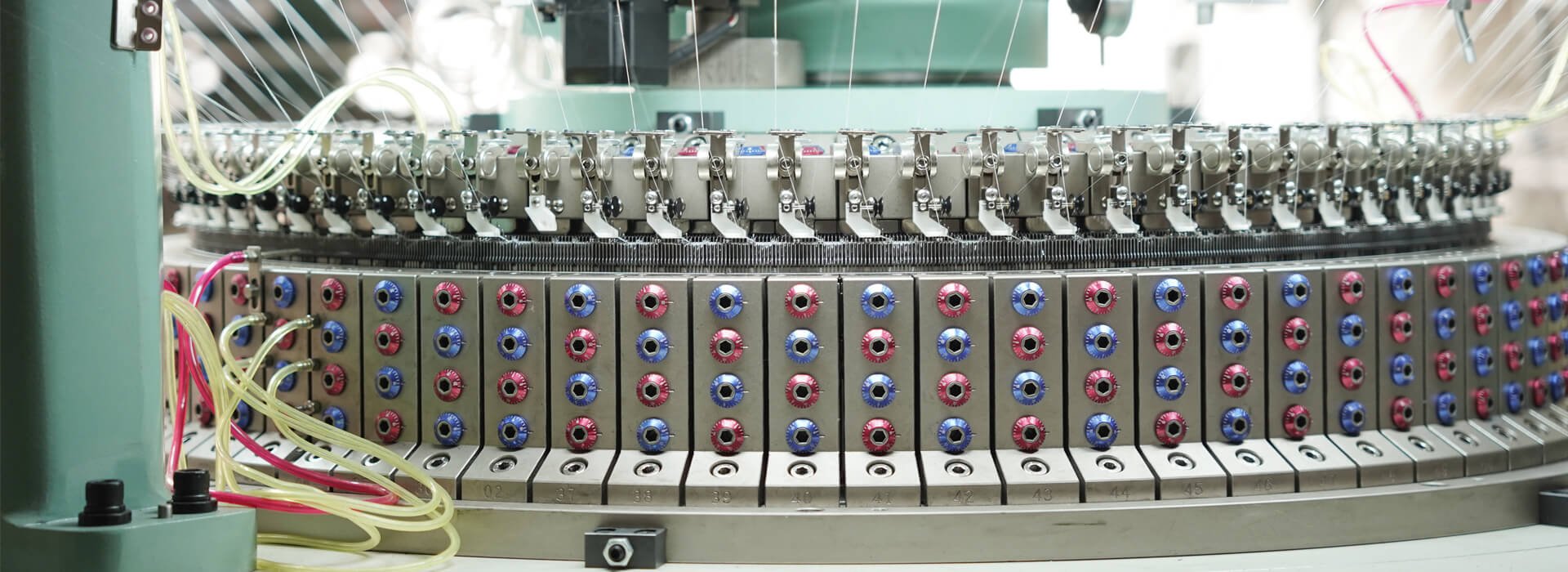
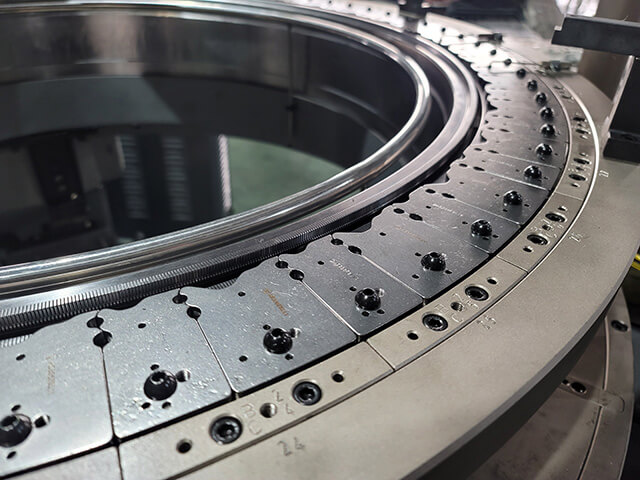
Inspect a needle as part of its track
Compare the suspected needle with a known sound part of the exact designation. Check hook, latch, butt, stem and signs of rubbing, then inspect the trick for lint, oil residue, burrs or restricted movement.
Replace only with confirmed compatible parts and follow the maker's method. Keep the removed item labelled so a recurring pattern can be reviewed.
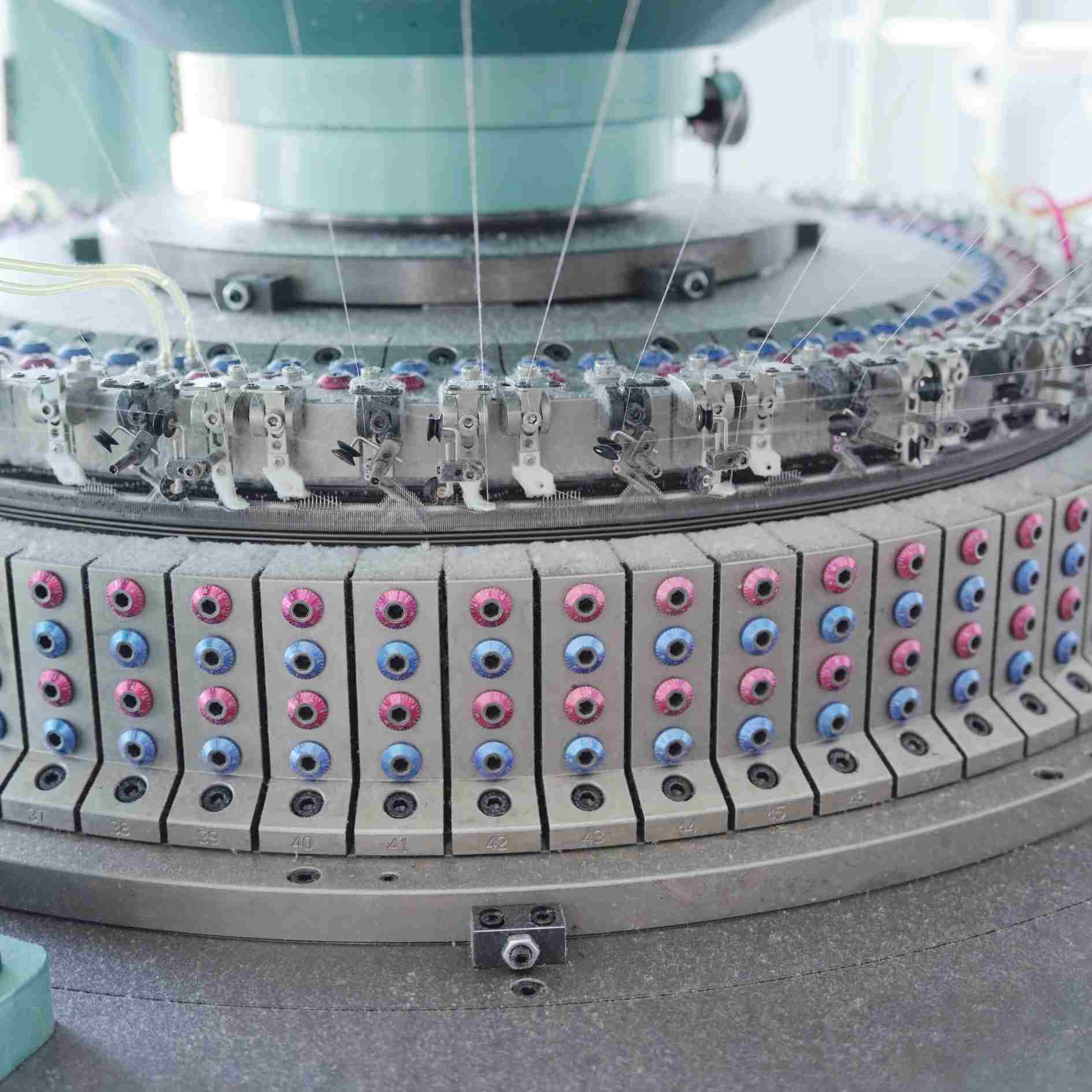
Trace package, guides and feed before changing stitch settings
Observe unwinding, joins, storage or positive feed, outlet braking, guide angle and needle entry. A polished guide can still damage yarn if its position shifts.
For patterned hats or small tubes, include colour-change and elastic-feed events. A defect that follows one yarn path needs a different repair from a defect locked to one needle.
Clean to the documented boundary and verify oil delivery
Remove lint with the approved method while protecting sensors and electrical parts. Avoid pushing debris deeper into tricks or using uncontrolled air near sensitive areas.
Use the specified lubricant and interval. Record product, quantity or setting, and visible delivery. Too much oil can stain fabric; too little can increase wear and heat.
Restart with the original yarn at a controlled setting
Turn or run slowly as permitted, then knit a marked sample before returning to normal speed. Compare the same course region, tension and program event with the preserved fault.
Close the record only when the symptom is absent across a meaningful run and no new line, heat, noise or oil mark appears. Record the technician, parts and next inspection date.
Record position before opening or cleaning the head.Inspect the needle in its track and compare the yarn path.Keep the removed part and marked restart sample with the log.
Small-diameter maintenance log
Symptom pattern
Likely system to isolate
Evidence before action
Restart proof
Same cylinder position
Needle, trick, cam or local guide
Marked course and position
Defect absent at same location
Same feed or colour
Package, feeder, guide or selector
Feed map and yarn label
Event repeats cleanly
Random holes/breaks
Yarn damage or handling
Package and path observation
Stable run with same lot
Oil/lint line
Cleaning and lubrication route
Product, position and interval
Clean fabric without heat rise
Small-diameter maintenance questions
How often should needles be replaced?
Use condition, fabric evidence and the exact manufacturer's maintenance guidance. A universal calendar can replace good parts or miss local damage.
Can one needle from another model be used if it fits?
No. Hook, latch, butt, stem and material must match the approved designation; apparent fit does not prove compatibility.
Should compressed air be used for cleaning?
Only where the manufacturer's procedure permits it and with controls that avoid driving debris into bearings, tricks, sensors or the knitting zone.
What belongs in the service record?
Keep symptom, machine and roll position, yarn lot, program, observations, action, part designation, lubricant/cleaning detail and restart sample.
When should a technician stop the restart?
Stop on contact, unexplained resistance, heat, noise, repeated defect, unsafe guard state or any alarm without a known corrective procedure.
Conclusion
Good needle care is not a parts-changing habit. It is a closed diagnosis: preserve the repeating evidence, isolate needle bed and yarn path, clean and lubricate within the manual, then prove the restart on a marked sample.
Carry the symptom log and confirmed part designations into service discussions for the body size circular knitting machine range instead of ordering maintenance parts from appearance.





 Tel: +86-13859034518
 Email: info@kunyuanmachine.com
 MP/WhatsApp: +86-13859034518
 Manufacturer Address:Bacuo Village, Yonghe Town, Jinjiang City, Fujian Province